The First Abdominal Surgery: No Anesthesia, No Fear
No anesthesia. No antiseptics. No one had ever walked out of an abdominal surgery alive, and yet on Christmas morning 1809, Jane Todd Crawford rode 60 miles on horseback to let a Kentucky frontier physician attempt the first abdominal surgery in recorded history. She sang psalms while he cut. What happened in those 25 minutes would rewrite what surgeons believed possible — and Crawford would outlive the doctor who saved her by 19 years.
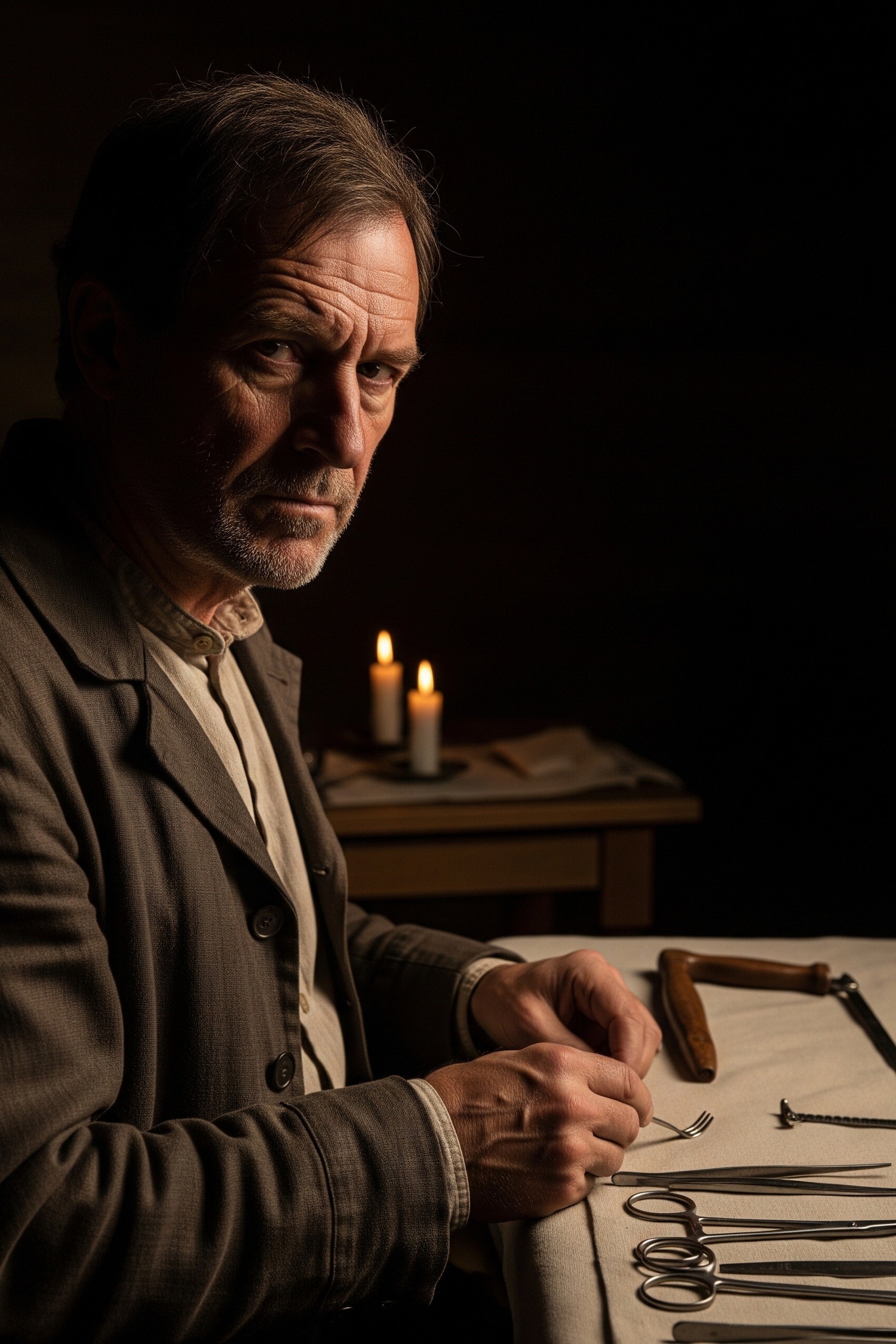
The patient who arrived at Dr. Ephraim McDowell’s door in Danville, Kentucky, had been told she was pregnant and overdue. She wasn’t. McDowell’s examination revealed something far more dangerous: a 22-pound ovarian tumor, massive and compressing her organs. Medical doctrine of the era called it inoperable. Medical doctrine also said opening the abdomen would kill you instantly from peritoneal infection. McDowell had trained under Dr. John Bell, one of Britain’s most respected surgical anatomists, in Edinburgh before returning to the American frontier in the 1790s. He knew the tumor would kill Crawford within weeks if left alone.
So why did he operate anyway?
Because the alternative was watching her die slowly, untouched, in a field in Green County with no option at all.
Key Facts
- On Christmas morning 1809, Dr. Ephraim McDowell performed the first recorded abdominal surgery in Danville, Kentucky, removing a 22-pound ovarian tumor from patient Jane Todd Crawford.
- Crawford rode approximately 60 miles on horseback to reach McDowell and reportedly sang psalms during the roughly 25-minute operation, which used only a nine-inch lateral incision.
- General anesthesia did not enter clinical practice until 1846, when William Morton demonstrated ether at Massachusetts General Hospital, and antiseptic technique was not systematized until Joseph Lister’s work in the 1860s.
- McDowell trained under Dr. John Bell in Edinburgh in the 1790s before returning to the American frontier, and he had performed the same operation 12 more times by 1817, achieving 8 survivals in 13 cases.
- McDowell published his account in the Philadelphia-based Eclectic Repertory and Analytical Review in 1817, eight years after the first operation, and his work was later compiled by medical historian Samuel Gross in 1859.
In short: On Christmas morning 1809, frontier physician Ephraim McDowell removed a 22-pound ovarian tumor from Jane Todd Crawford in Danville, Kentucky, performing the first documented abdominal surgery without anesthesia or antiseptics. The 25-minute operation succeeded, and by 1817 McDowell reported eight survivals in thirteen cases.
A Decision No Surgeon Had Documented Before
What McDowell felt during his examination was unmistakable — a fluctuating mass that moved with Crawford’s body, not a fetus in position for birth. Ephraim McDowell knew the anatomy. He knew the danger. He knew something else too: that dying on the table was preferable to the certainty waiting for her in Kentucky. The question wasn’t whether the surgery was dangerous. It was whether it was less dangerous than doing nothing at all.
But here’s the thing — what makes this moment astonishing isn’t just the courage. It’s what McDowell didn’t have. General anesthesia wouldn’t enter clinical practice until 1846, when William Morton demonstrated ether at Massachusetts General Hospital. Antiseptic technique wouldn’t be systematized until Joseph Lister’s work in the 1860s. McDowell had laudanum, which Crawford reportedly refused or received only minimally. He had a set of surgical instruments. He had anatomy knowledge that most of his contemporaries lacked entirely. He had a patient willing to sing psalms while he opened her abdomen.
Twenty-Five Minutes
Crawford was placed on a table. She began reciting scripture. McDowell made his incision — roughly nine inches, lateral through the abdominal wall. What followed was extraordinary in its simplicity and its audacity simultaneously.
He located the tumor. He ligated — tied off — the fallopian tube to cut the blood supply. He drained the cyst of its contents and removed the mass entirely. The entire peritoneal cavity was exposed during the procedure. No one had documented surviving that before.
Twenty-five minutes. Then closure.
The tumor weighed approximately 22 pounds once removed. Reports from the period, later compiled by medical historian Samuel Gross in his 1859 account of McDowell’s work, detail the operative precision. Modern surgery has become miraculously precise — we can now intervene before a patient is even born, as explored in remarkable detail in the story of Lynlee Hope, who underwent fetal surgery for a tumor before she was even delivered — but every one of those advances traces a direct line back to the moment McDowell proved the abdomen could be opened and survived.
By day five, Crawford was moving around her room. By day 25, she was discharged. She made the return journey to Green County on horseback — the same way she came. McDowell documented the case himself and submitted it to the Philadelphia-based journal Eclectic Repertory and Analytical Review, which published his account in 1817. Eight years after the operation. By that point, he had performed the same procedure 12 more times. Eight survivals in 13 cases. An 8-in-13 survival rate for elective abdominal surgery in 1817 was, by the standards of the era, almost unimaginable.
Battlefield surgeons were losing patients to far less invasive procedures simply from infection and shock.
What the Established Medical World Refused to Believe
The crowd outside McDowell’s home that Christmas morning included men prepared to hang him if Crawford died. Operating on a living person’s abdomen was, in 1809, considered tantamount to murder. He knew what was at stake for himself as well as his patient. He operated anyway.
When his account finally appeared in 1817, the initial reception in Europe was skepticism bordering on contempt. British and French surgeons — who considered themselves the leading medical minds of the era — questioned whether an American frontier physician could have genuinely accomplished what he claimed. The first abdominal surgery history written not in London or Paris but in a small Kentucky town by a self-trained provincial surgeon was, to established medical culture, nearly offensive.
It took years and multiple corroborating accounts before the European medical establishment accepted McDowell’s record as legitimate. According to a detailed historical analysis published by the Smithsonian Magazine, even then, credit was slow to follow. The delay matters profoundly, because the first abdominal surgery history isn’t just a story about one operation — it’s a story about who gets to define what’s possible. McDowell’s work sat largely unrecognized by the broader surgical community for nearly a decade. During that window, patients who might have been candidates for oophorectomy continued to die of untreated ovarian tumors because surgeons in major cities didn’t believe the procedure could succeed.
The knowledge existed. The proof existed. Institutional gatekeeping slowed its reach by years, possibly decades. Watching a medical breakthrough sit unpublished for eight years while people died of conditions that were already treatable — that’s not a minor historical detail. That’s a pattern that repeats.
The Walls That Surgery Could Break Through
McDowell went on to perform a total of 13 oophorectomies — surgical removal of an ovarian mass — before his death in 1830. The Medical College of Ohio, in Cincinnati, cited his work as foundational when it began formalizing surgical curricula in the 1820s. His published case reports became reference texts.
What Crawford’s survival specifically proved was equally significant. It demolished a belief that had dominated medicine for centuries: the prevailing assumption that exposing the peritoneal cavity to air caused rapid, systemic inflammatory response that was invariably fatal. This belief wasn’t baseless. It reflected genuine observations of post-operative sepsis and peritonitis. But it had calcified into an absolute prohibition that prevented any abdominal intervention at all. One woman’s survival in Kentucky in 1809 broke that assumption open.
By the time William Morton demonstrated ether anesthesia at Massachusetts General Hospital in 1846, the framework McDowell had established — that the abdomen could be entered, worked on, and closed with survival as a realistic outcome — was already shaping how surgeons thought about what was anatomically permissible. Without that conceptual shift, Morton’s anesthesia might have had far less immediate surgical application. The two advances compounded each other.
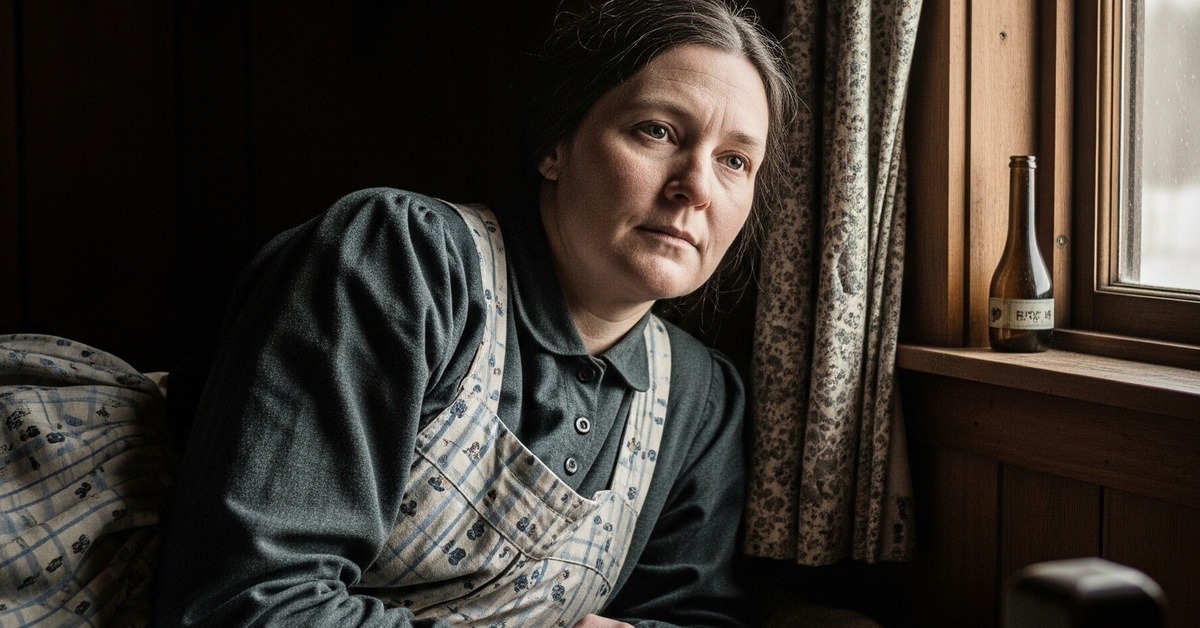
Crawford lived to 78 years old. Her grave is in Grayson County, Kentucky. McDowell’s is in Danville, the town where it happened. She outlived him by 19 years — the patient who was supposed to die in the operating room outlasting the surgeon who saved her.
How It Unfolded
- 1809 — On Christmas Day in Danville, Kentucky, Dr. Ephraim McDowell performs the first documented successful oophorectomy on Jane Todd Crawford, removing a 22-pound ovarian tumor in 25 minutes without anesthesia.
- 1817 — McDowell publishes his surgical account in the Eclectic Repertory and Analytical Review, documenting three successful cases; European reception is initially hostile and dismissive.
- 1825 — McDowell’s cumulative record of 8 survivals in 13 oophorectomies is formally recognized by American medical institutions as a transformative surgical achievement.
- 1846 — William Morton’s demonstration of ether anesthesia at Massachusetts General Hospital builds on McDowell’s conceptual framework, making abdominal surgery systematically safer for the first time.
By the Numbers
- 22 pounds — the recorded weight of the ovarian tumor removed from Jane Todd Crawford on December 25, 1809 (McDowell’s own case notes, 1817).
- 25 minutes — total operative duration from first incision to closure, as documented in McDowell’s published account.
- 60 miles — the distance Crawford rode on horseback, over rough frontier terrain, to reach McDowell’s home in Danville, Kentucky.
- 13 total oophorectomies performed by McDowell between 1809 and 1830, with 8 documented survivals — a 62% success rate in an era when abdominal surgery was considered fatal by definition.
- 32 years — the number of years Jane Todd Crawford lived after her surgery, dying in 1842 at the age of 78.
Field Notes
- McDowell never received a formal medical degree from an American institution. He studied under Dr. John Bell in Edinburgh but left before completing his course. The physician who performed the first documented successful abdominal surgery in history was, by the credentialing standards of his own era, not fully certified.
- Crawford’s tumor was an ovarian dermoid cyst — a type that can contain hair, teeth, and fatty tissue. Accounts from McDowell’s notes describe the contents as gelatinous. The mass had likely been growing for years before she sought help.
- The hostile crowd that gathered outside McDowell’s home on Christmas morning 1809 apparently dispersed once it became clear Crawford was surviving. Whether they genuinely intended to carry out a lynching or were venting collective fear remains unverified — but contemporaneous accounts treat the threat as real.
- Researchers still can’t determine with certainty how Crawford managed the 60-mile horseback ride home 25 days after surgery. Her abdominal wound would have been healing but fragile. How she tolerated the journey — and why it apparently didn’t cause complications — remains an open question in the medical history literature.
Frequently Asked Questions
Q: What makes the first abdominal surgery history so significant in modern medicine?
A single operation broke a categorical assumption that had paralyzed surgeons for centuries — the belief that opening the peritoneal cavity was invariably fatal. McDowell’s 1809 operation on Jane Todd Crawford proved that wasn’t true. That proof of concept enabled every subsequent abdominal procedure: appendectomies, cesarean sections, bowel resections, and organ transplants all descend from the conceptual door McDowell opened on Christmas Day in Kentucky.
Q: How did Jane Todd Crawford survive surgery without anesthesia or antiseptics?
Several factors likely contributed. McDowell was fast — 25 minutes minimized blood loss and shock. Crawford was physically strong, having ridden 60 miles on horseback just days before. Danville’s December cold may have reduced bacterial activity in the operating environment (and this matters more than it sounds — temperature control in 1809 was entirely environmental). McDowell’s technique, while operating without germ theory, was meticulous enough to avoid the most catastrophic contamination sources. Survival wasn’t guaranteed. It was the result of speed, skill, patient constitution, and what modern epidemiologists might charitably call favorable environmental conditions.
Q: Wasn’t surgery performed on the abdomen before 1809? What about ancient medicine?
There are ancient records — Egyptian papyri, Greek texts — describing incisions near the abdomen, mostly for draining surface abscesses or extracting arrowheads. What distinguishes the first abdominal surgery history? McDowell performed intentional entry into the peritoneal cavity to remove an internal organ mass, followed by closure and recovery. No prior documented case in the medical literature records a patient surviving that specific procedure. The distinction between surface wound treatment and true intra-abdominal surgery is exactly what makes 1809 the recognized turning point.
Editor’s Take — Dr. James Carter
What I keep returning to isn’t the surgery itself — it’s the eight-year gap between the operation and publication. McDowell had the proof. He had 13 cases. He waited. Maybe he was cautious about European ridicule. Maybe he needed more data. But in that silence, the knowledge that abdominal surgery could work sat in a Kentucky farmhouse while patients elsewhere died of tumors that were, by 1809, survivable. That gap is medicine’s real lesson here. Discovery without dissemination is just a very impressive secret.
Jane Todd Crawford’s psalms echoed in a small Kentucky room while a crowd outside debated whether to hang the man cutting into her. That’s where modern abdominal surgery was born — not in a European teaching hospital, not in a published theoretical framework, but in a frontier town on Christmas morning with no safety net and no precedent. Every appendectomy, every cesarean section, every organ removal performed today carries that moment somewhere in its lineage. What other medical certainties are we treating as walls right now that someone, somewhere, is quietly preparing to walk through?
Illustrations are AI-generated. Article fact-checked and human-edited.