Why a Squirrel Charging at You Is Actually a Cry for Help
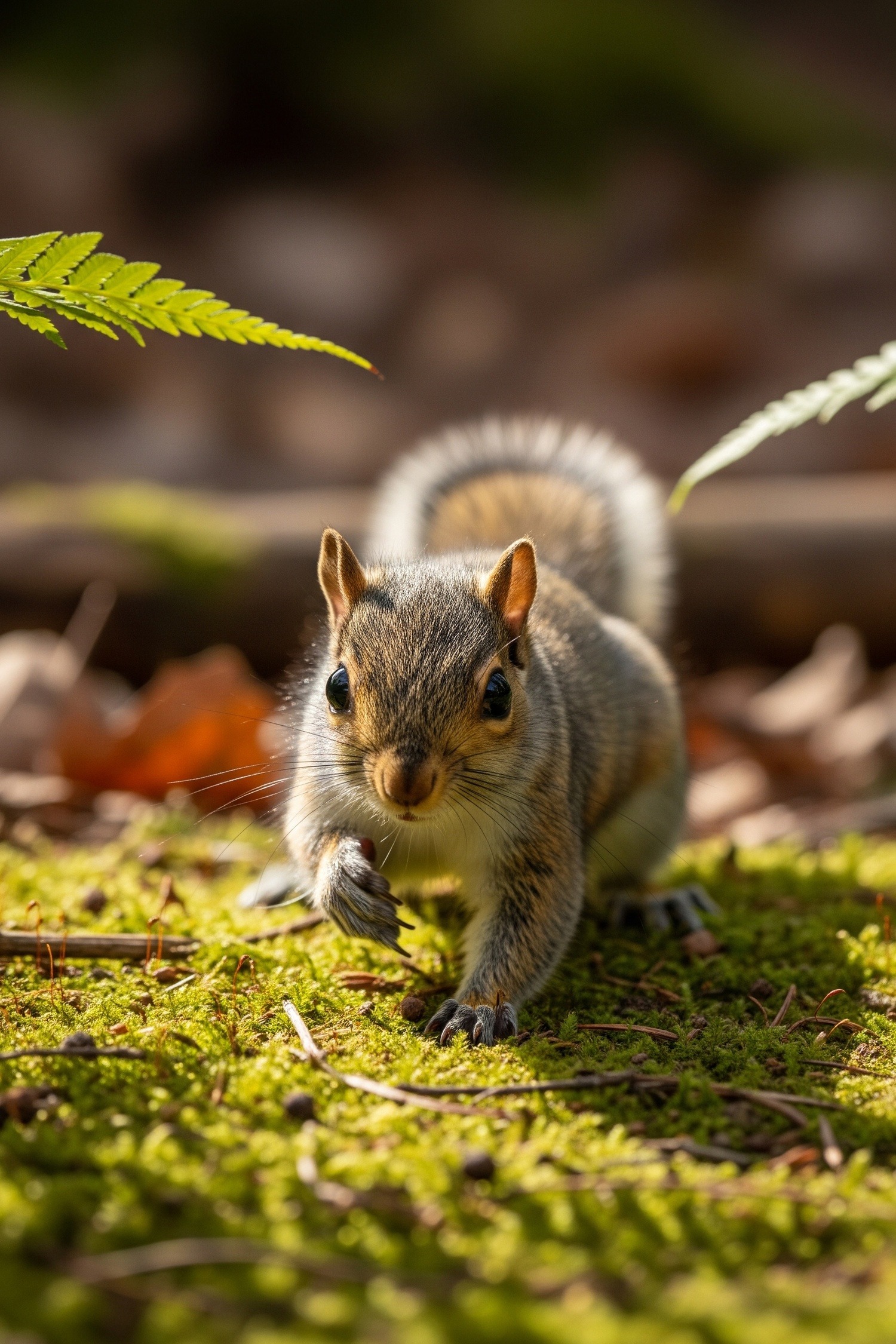
You’re watching a tiny gray squirrel sprint straight at you across the park grass, and every cell in your body is screaming to run. But that charging kit isn’t attacking. It’s dying, and it picked you because you’re the only warm thing it can reach.
The first thing that gets you — the thing that kept me reading for another hour — is how completely wrong our instincts are about this. A baby squirrel approaching without fear isn’t bold. It isn’t rabid. It’s operating on fumes, running the only survival program it has left. Move toward warmth. Move toward size. Move toward anything. The desperation just looks like confidence when it’s small enough and fast enough.
Key Facts
- Eastern gray squirrel kits are born blind and hairless and depend entirely on the nest for the first 10 to 12 weeks, reaching independent survival at 10 to 12 weeks.
- There are zero confirmed human rabies cases transmitted by squirrels in CDC surveillance history.
- Ground separation before independence carries mortality rates above 80% within 24 hours, according to wildlife rehabilitation field data.
- Licensed rehabilitators across North America handle over 4 million wild animals annually, with squirrels consistently in the top three species.
- Mother squirrels will retrieve fallen kits for up to 24 hours if the nest or a nearby tree remains intact.
In short: A baby squirrel approaching a human without fear is usually not bold or rabid; it is a kit out of options, redirecting attachment toward warmth. Eastern gray squirrels depend on the nest for 10 to 12 weeks, and the CDC has zero confirmed cases of squirrels giving rabies to humans.
What Actually Happens to a Baby Squirrel on the Ground
Eastern gray squirrels are born blind. Hairless. Completely dependent. For the first 10 to 12 weeks, they live in a nest and nowhere else. They can’t regulate their own body temperature. They can’t find food. They have zero skills that matter when they’re alone on concrete.
Wildlife biologist Dr. Joanna Burger — who’s spent years watching small mammals do whatever they do when humans aren’t around — found something specific: juvenile animals separated from their mothers start redirecting attachment instincts toward any large, warm object nearby. In a park, that’s you. In someone’s yard, that’s you. The squirrel doesn’t know what you are. It just knows you’re warm and big, and warm and big sometimes means surviving another hour.
Here’s where the cascade gets brutal. A kit on the ground is already losing body heat. Blood sugar drops fast. If it’s been separated for more than a few hours, dehydration starts. The window doesn’t close gradually — it slams. And that animal’s nervous system absolutely knows it’s happening.
The squirrel running toward you may have watched its siblings die on the ground next to it.
The Rabies Thing Isn’t Even Real
The moment people see an unfamiliar animal approaching without fear, one word surfaces. Rabies. And that fear — reasonable on the surface — causes people to turn away from animals that genuinely need help.
Here’s what the CDC actually found. Zero confirmed cases. Not theoretical zero. Not “probably never happens.” Not a single documented instance of a squirrel transmitting rabies to a human in recorded history. Decades of wildlife health surveillance across the entire United States. Zero.
Squirrels almost never survive the bites that would expose them to the virus. The rabies story we attach to them isn’t caution. It’s a projection.
According to CDC documented rabies data, small rodents like squirrels, chipmunks, and rabbits are almost never found infected at all. This isn’t a loophole. This is a complete absence of evidence.
Spring and Fall, Every Single Year
Licensed wildlife rehabilitators across North America watch this unfold on schedule. Spring peaks. Fall peaks. The calls come in the same sequence: “I found a baby squirrel on the ground. It followed me to my car. It climbed my shoe. I don’t know what to do.”
Turns out, rehabilitators will tell you the diagnostic every time: if a juvenile squirrel won’t leave and keeps approaching, that’s it. That’s the sign something is wrong. A healthy wild squirrel disappears the moment it detects a human. The one running toward you has already used up every other option.
For more on how wild animals signal distress in ways humans routinely misread, this-amazing-world.com has documented cases where misunderstanding cost animals their lives. And cases where thirty seconds of clarity saved them.
What You Actually Do
The correct intervention is simpler than you’d think, and it doesn’t require anything you don’t already have.
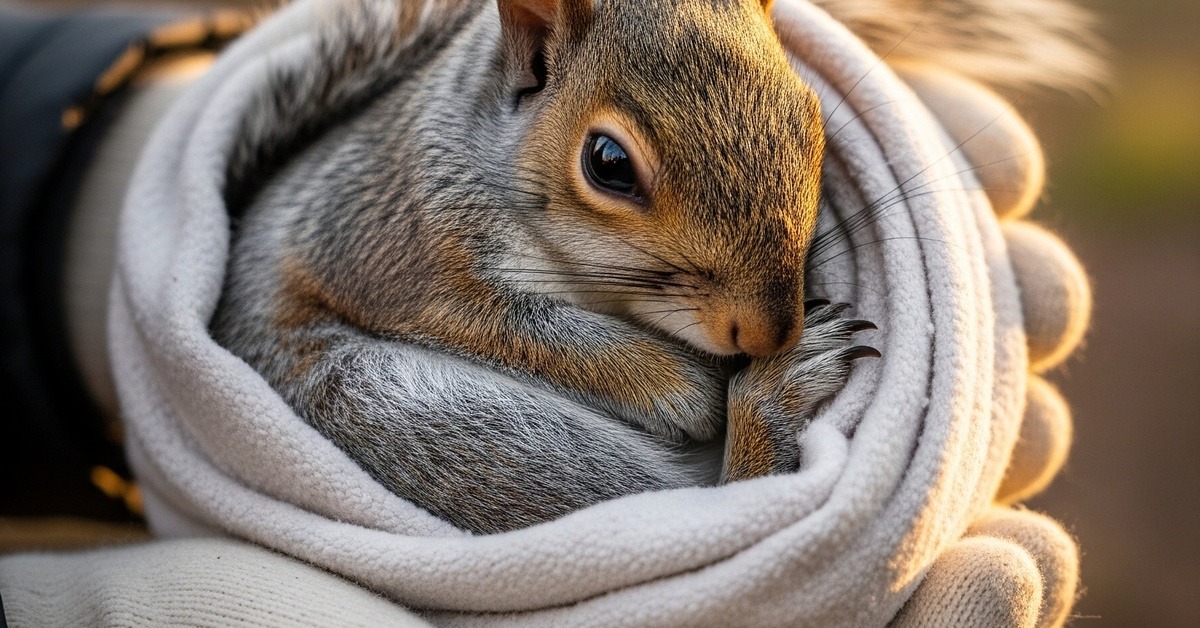
If a juvenile squirrel keeps approaching you: get a soft cloth or fleece. Put it in a small box — open box, not sealed. Warmth is the first priority. Don’t try to give it water with a dropper. This is the mistake people make constantly, and it kills them. Squirrel lungs are tiny. Liquid goes down wrong and aspiration pneumonia follows within hours.
What you do instead:
- Keep it warm and dark and quiet
- Call your nearest wildlife rehabilitation center immediately. The National Wildlife Rehabilitators Association keeps a directory. Most centers will guide you over the phone in minutes.
- Don’t feed it. Don’t try to keep it. Just don’t let it get cold.
- Mother squirrels will retrieve fallen kits for up to 24 hours if the nest is still intact — so sometimes the first step is placing the kit in an open box near the tree base and watching for maternal return over several hours.
That’s the whole protocol. Thirty seconds and a phone call. Sometimes that’s the entire difference.
By the Numbers
- Zero confirmed human rabies cases transmitted by squirrels in CDC surveillance history
- Eastern gray squirrel kits reach independent survival capacity at 10–12 weeks; before that, ground separation without intervention carries mortality rates above 80% within 24 hours according to wildlife rehabilitation field data
- Licensed rehabilitators across North America handle over 4 million wild animals annually — squirrels consistently rank top three in received species
- A healthy adult squirrel can detect human presence and flee at up to 50 feet; a juvenile approaching within arm’s reach has already crossed a behavioral threshold adults almost never reach
Field Notes That Change How You See Them
- Eastern gray squirrel kits don’t open their eyes until 4–5 weeks of age, meaning a kit “looking” at you with wide eyes may be responding entirely to sound and warmth.
- Squirrels and other small rodents have an immune response to rabies that is poorly understood but appears to result in death from the bite wound itself before the virus can establish — which explains why transmission records are essentially nonexistent.
- Mother squirrels will retrieve fallen kits for up to 24 hours if the nest or a nearby tree remains intact.
The Animals We Misread Are the Ones We Fail
Baby squirrel behavior is one entry in a long, repetitive catalog of animal signals that humans consistently get wrong. Hissing opossums that are actually frozen in terror. Deer fawns left “abandoned” by mothers who are grazing thirty feet away. Birds performing injury displays on the ground to draw predators away from nests. We built our fear responses around a handful of real dangers, then started applying them indiscriminately to animals that were trying to communicate something completely different.
The cost of that misreading isn’t theoretical.
It’s the squirrel that followed someone to their car and got left behind because they assumed aggression. It’s thousands of animals every year that made contact with the one species capable of helping them and got nothing back.
Understanding what an animal is actually communicating requires almost nothing. A moment of stillness. A willingness to watch behavior before labeling it. The recognition that fear can wear a convincing mask of confidence — in animals and in people.
That squirrel charging across the grass isn’t a threat. It’s an animal out of choices, and it picked you as the last one. You don’t need to become a wildlife expert. You need thirty seconds and a phone number. Sometimes that’s the whole difference.
Frequently Asked Questions
Q: Why is a baby squirrel approaching me instead of running away?
A healthy wild squirrel flees humans, so a juvenile that keeps approaching has already crossed a behavioral threshold and likely needs help. Wildlife biologist Dr. Joanna Burger found that juveniles separated from their mothers redirect attachment instincts toward any large, warm object nearby, which in a park or yard is you. Eastern gray squirrels depend on the nest for their first 10 to 12 weeks and cannot regulate body temperature or find food alone, so the approach signals desperation, not aggression.
Q: Can you get rabies from a squirrel?
There are zero confirmed human rabies cases transmitted by squirrels in CDC surveillance history, spanning decades of wildlife health monitoring across the United States. Small rodents like squirrels, chipmunks, and rabbits are almost never found infected at all. Squirrels appear to die from the bite wounds that would expose them to the virus before it can establish, which is why transmission records are essentially nonexistent. The common rabies fear around an approaching squirrel is a projection, not caution backed by evidence.
Q: What should I do if a baby squirrel approaches me?
Keep it warm, dark, and quiet, then call a wildlife rehabilitation center immediately. Place it on a soft cloth or fleece inside a small open box and do not seal it. Never give it water with a dropper, because a squirrel’s tiny lungs make aspiration pneumonia likely within hours. Do not feed it or try to keep it. If the nest is still intact, you can set the open box near the tree base, since mother squirrels retrieve fallen kits for up to 24 hours.
Q: How long can a baby squirrel survive on the ground alone?
Ground separation without intervention carries mortality rates above 80% within 24 hours, according to wildlife rehabilitation field data. A kit on the ground is already losing body heat, its blood sugar drops fast, and dehydration begins after a few hours, so the survival window slams shut rather than closing gradually. Eastern gray squirrels do not reach independent survival capacity until 10 to 12 weeks of age, meaning a younger kit alone on concrete has essentially no skills to survive without rapid human help.
Illustrations are AI-generated. Article fact-checked and human-edited. Our editorial standards.