The Plant That Survived Everything and Needs Nothing
Moss has been here for 450 million years. It watched the dinosaurs come and go, survived every climate catastrophe the planet threw at it, and did the whole thing without roots. The weird part? We still treat it like decoration.
You’ve seen it a thousand times. That soft green coating on a brick wall. The fuzz between sidewalk cracks after rain. The thing that makes wet logs feel alive under your fingers. It’s background noise in the landscape — until you actually start asking what it’s doing there. And that’s when ancient moss survival stops looking like a simple biology fact and starts looking like proof of something we’ve fundamentally misunderstood about how life works.
Key Facts
- Moss-like plants, classified as bryophytes, first colonized land around 450 million years ago, before trees, flowering plants, and rooted life.
- Around 12,000 known moss species exist today, found from Arctic tundra to tropical rainforests to Antarctic cliffs.
- Sphagnum peatlands cover approximately 3% of Earth’s land surface but store around 30 to 33% of all terrestrial soil carbon (IUCN Peatland Programme, 2021).
- Some sphagnum peat deposits are estimated to be over 10,000 years old, older than agriculture and writing.
- A single gram of dried sphagnum moss absorbs up to 20 times its own weight in water, outperforming most synthetic absorbents.
In short: Ancient moss survival spans 450 million years, predating trees and rooted plants. Mosses, called bryophytes, absorb water through their entire surface rather than roots, and sphagnum peatlands store roughly a third of Earth’s terrestrial soil carbon. Mosses even survive complete desiccation, reviving when rehydrated after decades.
450 Million Years of Not Needing to Change
Moss belongs to a group called bryophytes. The fossil record puts them on land around 450 million years ago. Before trees. Before flowering plants. Before anything with actual roots had even figured out how to leave the ocean.
Think about that timeline. These early moss colonists arrived on bare rock and started building soil from nothing. As documented in bryophyte research, they were essentially terraforming the planet for everything that came after. Ferns arrived next. Then conifers. Then flowering plants with their fancy root systems and seeds. And the whole time, moss just kept doing its thing, exactly the same way it started.
Around 12,000 known species exist now.
Arctic tundra. Tropical rainforests. The cracks of sidewalks in New York and Berlin and Tokyo. Antarctic cliffs where nothing else can cling. The pattern isn’t about finding the perfect environment — it’s about moss deciding every environment is good enough.
It Drinks Through Its Skin
Here’s how most plants survive: roots dig into soil. Water gets pulled up through them like a straw. Nutrients follow. Elaborate plumbing. Took millions of years to evolve, and it works great if you happen to have soil.
Moss skipped that entire innovation.
Every millimeter of every leaf absorbs water directly from the air. Rain arrives, and the plant drinks across its entire surface simultaneously. Those thread-like anchors holding it to rock or bark? They’re called rhizoids, and they’re not roots at all — they grip like fingers holding a ledge, not pipes drinking from a well. It’s a completely different philosophy, and it’s worked continuously for nearly half a billion years without needing a single upgrade.
Because moss doesn’t depend on soil chemistry the way rooted plants do, it colonizes places nothing else touches. Bare rock. Concrete. Glass. The side of a building in a rainy city. It doesn’t need permission from the landscape. Read more about nature’s most unexpected survival strategies at this-amazing-world.com.
The Carbon Vault Nobody Was Watching
This is where ancient moss survival stops being a botanical detail and becomes a planetary story. Sphagnum moss alone — just one genus among thousands — covers roughly 3% of Earth’s land surface. Larger than India. And those peatlands? They’re storing an estimated one-third of all the carbon locked in soil worldwide.
Let that sink in.
One plant family. No flowers. No marketing. Carrying a third of the planet’s buried carbon on a soft green surface.
The carbon didn’t accumulate yesterday. Some peat deposits are thousands of years deep — compressed layers of ancient moss that never fully decomposed, slowly accumulating into one of the most significant carbon sinks on Earth. It’s been doing this work quietly since before humans existed. Since before humans even knew what carbon was.
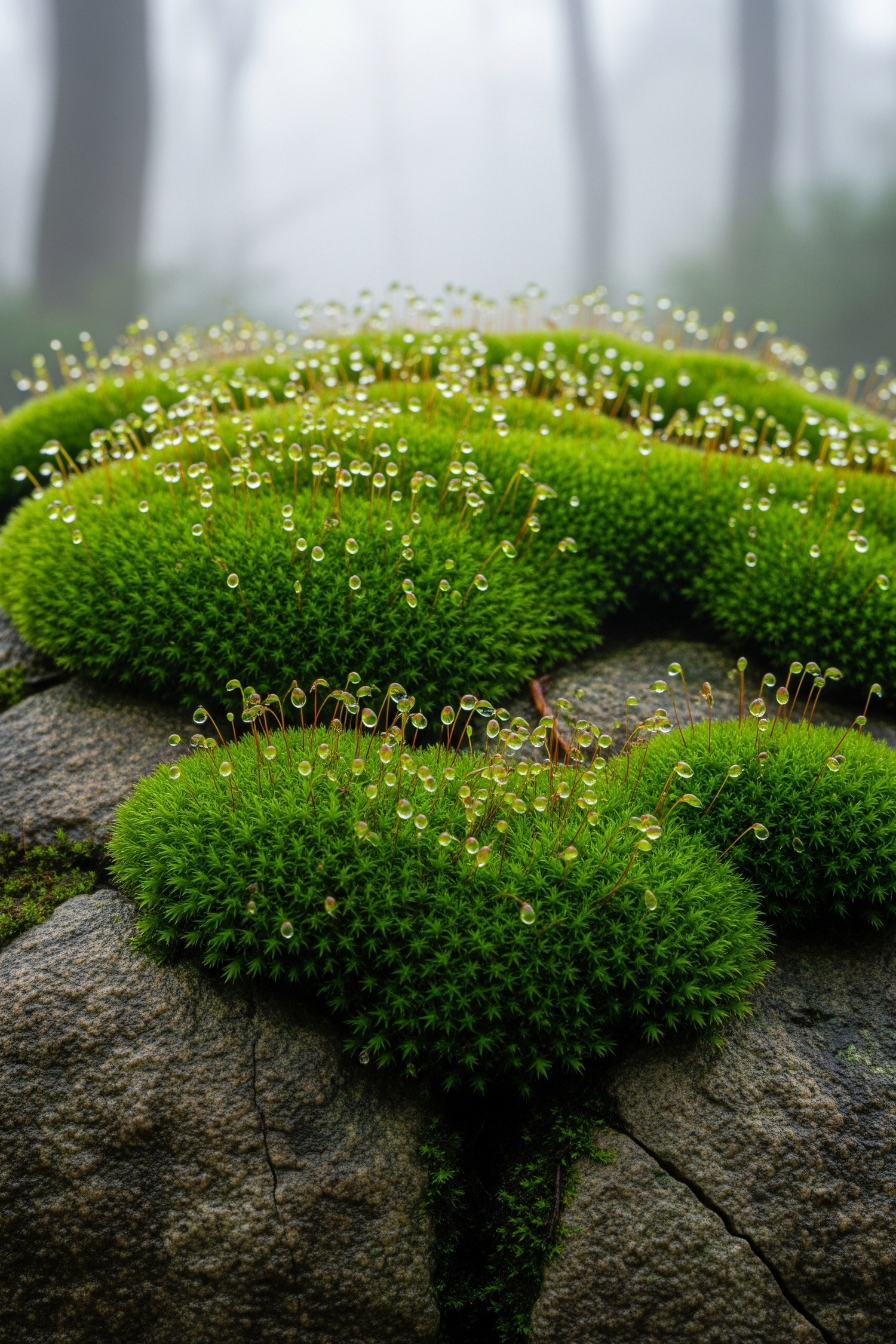
The Pause Button
Dry it out completely. Leave it in a drawer for decades. Looks dead. Brown, crisp, finished.
Add water.
Hours pass. Sometimes minutes. The green returns. That last fact kept me reading for another hour — researchers have successfully rehydrated moss specimens that had been completely desiccated for decades and watched them resume normal growth like nothing happened. This isn’t resilience in the human sense of pushing through difficulty. It’s biological suspension. A pause button built into every cell, waiting.
When water vanishes, moss enters a state called desiccation tolerance. Metabolism slows to nearly nothing. The plant isn’t suffering. It’s suspended. And the implications for science are actually startling — understanding how moss protects its cellular machinery during complete dehydration has informed research into drought-resistant crops, preservation of biological samples, and potentially ways to store medications and biological materials without refrigeration.
A plant that looks dead on a rock wall might be teaching us how to feed the future.
By the Numbers
- 450 million years — roughly when moss-like plants first colonized land, beating trees by 100 million years
- Sphagnum peatlands cover approximately 3% of Earth’s land surface but store around 30–33% of all terrestrial soil carbon (IUCN Peatland Programme, 2021)
- Some peat deposits formed by sphagnum moss are estimated to be over 10,000 years old. Older than agriculture. Older than writing. Older than civilization itself.
- A single gram of dried sphagnum moss absorbs up to 20 times its own weight in water — outperforming most synthetic absorbent materials
Field Notes
- World War I field medics collected sphagnum moss for wound dressing because its natural acidity created an antibacterial environment. When conventional bandages ran out, moss performed well enough that it became an adopted standard in some theaters of the war — a plant that had never been trained to heal anything suddenly became essential medical equipment.
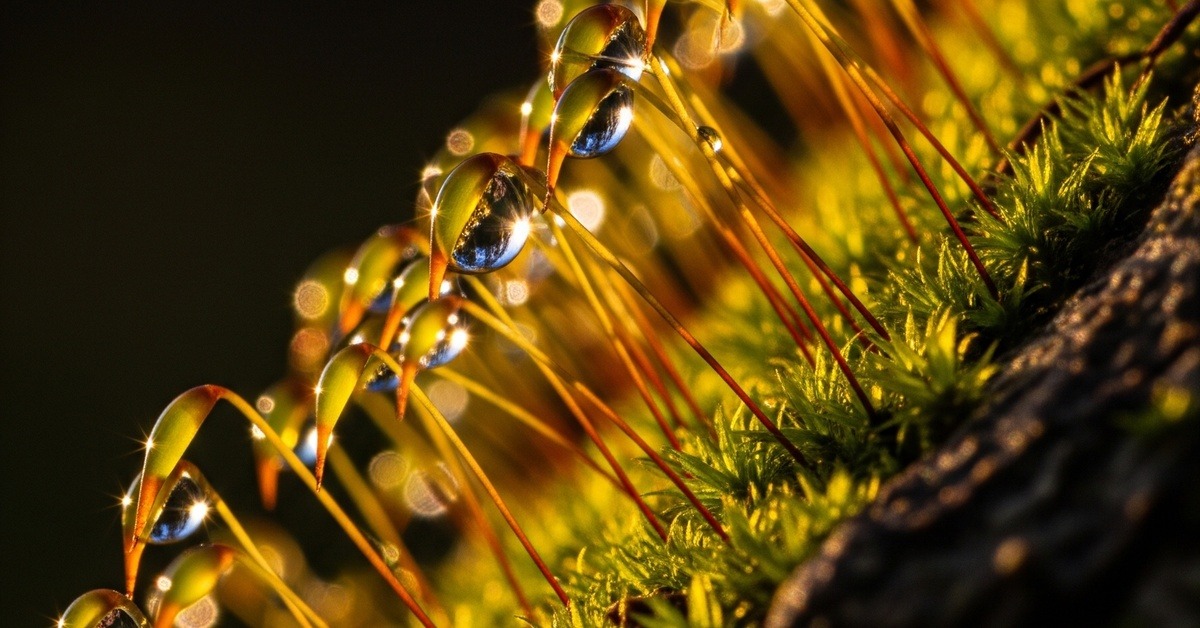
- Some moss species use splash-cup dispersal.
- Falling raindrops physically launch spore capsules outward. The plant engineered rainfall into its reproduction strategy without developing a single specialized structure to do it.
- Moss doesn’t just grow on the north side of trees — that navigation myth persists despite being wrong. Moss grows wherever moisture and shade combine, which means it covers every surface equally, creating a green so uniform it looks almost deliberate.
Ancient Moss Survival in a Warming World
Climate scientists are watching peatlands with growing urgency now. When permafrost thaws in northern latitudes, the frozen layers of ancient moss that have stored carbon for millennia begin decomposing. That carbon releases back into the atmosphere as methane and CO₂. The mechanism that made ancient moss survival so powerful becomes, under warming conditions, one of the largest natural sources of greenhouse gas on the planet.
The carbon bank doesn’t just hold. It can also withdraw.
But here’s the thing — that’s not moss failing. It’s moss responding to conditions it’s literally never encountered before. It survived every mass extinction. Every ice age. Every tectonic reshuffling. What it wasn’t designed for was a warming rate measured in decades instead of millennia.
Moss doesn’t ask for attention. It just covers the ground, filters the rainwater, banks the carbon, and keeps going — the way it’s been doing since before anything with a backbone crawled onto land. It’s the oldest living proof that elegance beats complexity, and that sometimes the thing nobody notices is the thing holding everything together. There’s more at this-amazing-world.com — and the next one gets even stranger.
Frequently Asked Questions
Q: How long has moss survived on Earth?
The fossil record places moss-like plants, called bryophytes, on land around 450 million years ago, beating trees by roughly 100 million years. They colonized bare rock before flowering plants, conifers, or anything with true roots left the ocean, essentially terraforming the planet by building soil from nothing. Through every mass extinction, ice age, and climate catastrophe since, ancient moss survival has continued largely unchanged, with around 12,000 known species existing today across nearly every environment.
Q: How does moss absorb water without roots?
Moss absorbs water directly through its surface; every millimeter of every leaf drinks moisture from the air or rain simultaneously across the whole plant. The thread-like anchors holding moss to rock or bark are called rhizoids, not roots, gripping like fingers rather than drawing water like pipes. Because moss does not depend on soil chemistry, it colonizes bare rock, concrete, glass, and buildings, places rooted plants cannot reach, a strategy unchanged for nearly half a billion years.
Q: Why is moss important for storing carbon?
Sphagnum moss, a single genus, covers roughly 3% of Earth’s land surface, larger than India, and those peatlands store an estimated 30 to 33% of all terrestrial soil carbon (IUCN Peatland Programme, 2021). The carbon accumulated over millennia as moss layers failed to fully decompose; some peat deposits are over 10,000 years old. This makes sphagnum one of the most significant carbon sinks on Earth, quietly doing the work since before humans existed.
Q: Can moss really come back to life after drying out?
Yes. Moss enters a state called desiccation tolerance, slowing its metabolism to nearly nothing when water vanishes. It looks dead, brown and crisp, but it is biologically suspended. Researchers have successfully rehydrated specimens completely dried for decades and watched them resume normal growth within hours, sometimes minutes. Understanding how moss protects its cellular machinery during full dehydration has informed research into drought-resistant crops and refrigeration-free storage of medications and biological samples.
Illustrations are AI-generated. Article fact-checked and human-edited. Our editorial standards.