An Island Was Born in 11 Hours. Here’s How It Happened
An island that wasn’t there at sunrise was fully formed by dinner. The scientists monitoring it couldn’t quite believe they were watching it happen in real time.
September 2022. A seamount called Home Reef did something the Tonga-Kermadec arc has done before, but almost never in a way humans could document from start to finish. It erupted. Lava and rock and ash climbed through 900 meters of water. And by the time the sun set, there was solid ground where the Pacific had been that morning. No planning. No warning. Just the planet doing what it does when pressure builds underground and has nowhere else to go.
Key Facts
- In September 2022, the Home Reef seamount on the Tonga-Kermadec arc erupted and built about 1 acre of new land in roughly 11 hours.
- Within four days the new island had grown to 8 acres, tracked by NASA and the Copernicus Emergency Management Service.
- Home Reef previously produced short-lived islands in 1984 and 2006, both eroded back into the ocean within months.
- The Tonga-Kermadec arc spans 2,500 kilometers with ocean trenches deeper than 10,000 meters.
- New volcanic islands have less than a 50% survival rate after five years, with durable ones built from dense basalt rather than loose ash.
In short: The Home Reef volcanic island rose from the Pacific in September 2022, when a Tonga-Kermadec seamount erupted and built 1 acre of land in just 11 hours, reaching 8 acres within four days. Scientists watched this rare real-time geology unfold, knowing erosion may reclaim it as it did Home Reef’s 1984 and 2006 islands.
What Actually Happens When a Volcano Decides to Make an Island
Home Reef sits on the Tonga-Kermadec volcanic arc, a 2,500-kilometer chain of underwater volcanoes. This is one of the most seismically angry places on the planet. The seamount wasn’t random — it was already close to the surface, already unstable, already ready.
When it went, the eruption didn’t just spill material into the water. It stacked it. Layer by layer, debris piled up on the seafloor. Lava hit cold seawater and hardened instantly, locking each new layer in place before the next arrived. The key wasn’t just the volume of material — though there was plenty of that. It was the heat, the speed, and the fact that the seamount had a short distance to climb. Doesn’t sound dramatic until you realize it happened in 11 hours.
Volume and heat. That’s really it.
Watching an Island Build Itself
Day one: roughly 1 acre of new rock, still steaming, visible on satellite imagery if you were looking for it. NASA and Copernicus Emergency Management Service were looking. Day four: 8 acres. The island didn’t stabilize. It kept growing as the eruption continued feeding it new material. Volcanologist Shane Cronin, who’s spent years studying this region, called it “geology caught in real time” — and he’s right. That phrase kept me reading for another hour.
Most of Earth’s surface formed over timescales that make human brains hurt. Millions of years. Incomprehensible. This was breakfast-to-lunch geology. You could watch it with your own eyes.
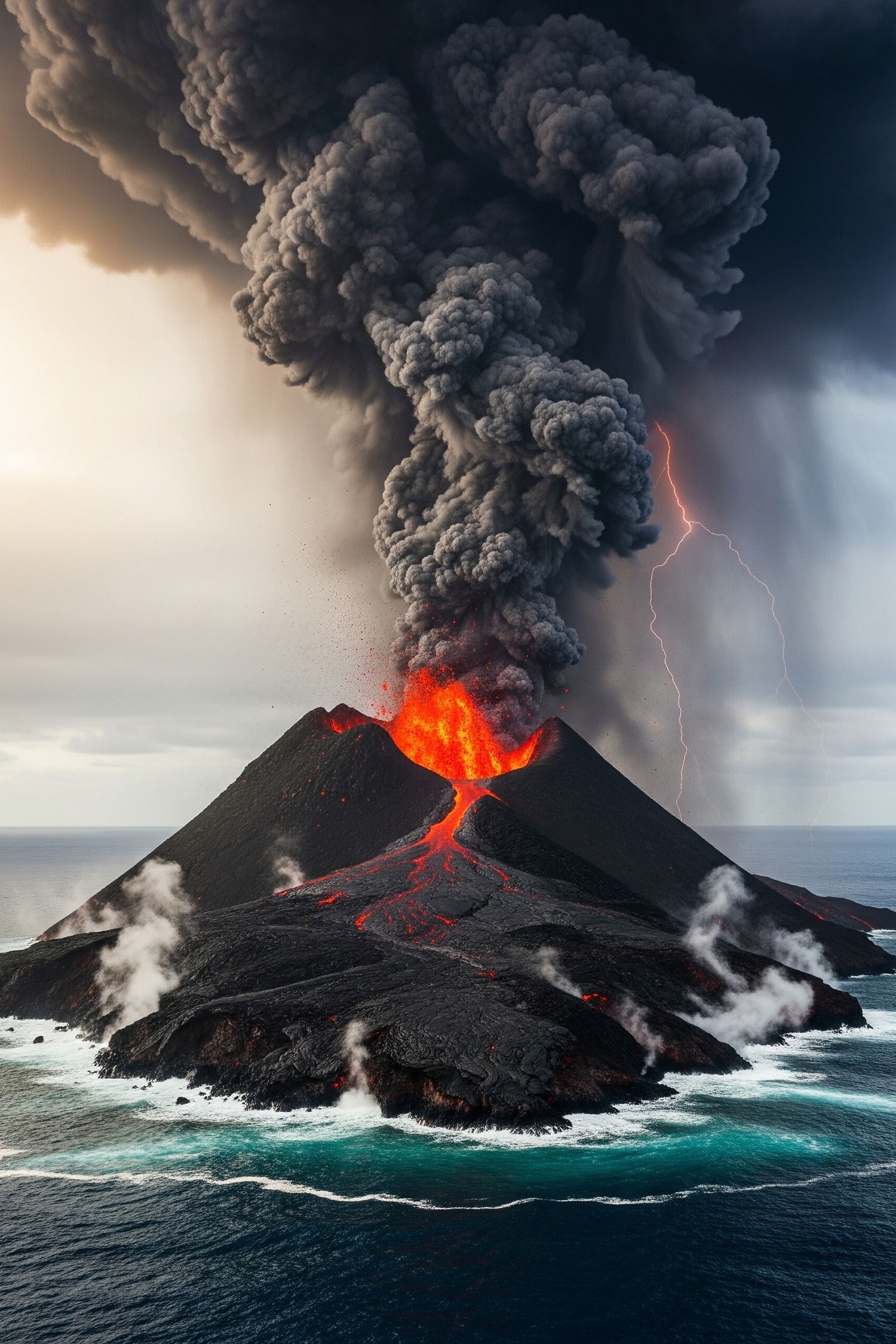
Home Reef Has Made Islands Before. They Didn’t Last.
The seamount pulled off this trick in 1984. Again in 2006. Both times, the island appeared. Both times, the ocean took it back. Within months, waves eroded the loose volcanic material until there was nothing left to see. Here’s the uncomfortable reality of volcanic island formation in this region: new land is fragile, porous, made of stuff that doesn’t know how to fight. Ash erodes. Tephra disappears. Dense basalt fights back.
Some islands last years. Others vanish in weeks.
The difference depends on what hardened and what didn’t.
Scientists were watching the 2022 island for exactly this reason. Would this one hold, or would it follow the script?
Disappearing Islands Aren’t Failures
Here’s the thing about islands that vanish — they’re actually one of the most useful natural experiments Earth runs. When new land forms and then erodes, scientists get real-time data on colonization, erosion rates, and how geological structures age. The 2022 Home Reef island immediately started collecting floating pumice, volcanic debris, and within days, biological visitors showed up.
- Seabirds landed on it almost immediately.
- Life doesn’t wait for an invitation or for the ecosystem to feel stable enough. It just shows up and starts living.
- Organisms were nesting, feeding, and breeding within the first week.
That’s not a small observation. It tells us something real about how ecosystems bootstrap themselves onto raw, sterile rock. Every island on Earth started as nothing. The fact that animals show up within days of new land forming suggests the colonization machinery is always running, always ready, always waiting for somewhere to land.
By the Numbers
- The Home Reef island: 1 acre in 11 hours, then 8 acres within four days.
- The Tonga-Kermadec arc spans 2,500 kilometers with ocean trenches deeper than 10,000 meters — some of the deepest water on the planet.
- Nine months before Home Reef erupted, the January 2022 Hunga Tonga–Hunga Ha’apai explosion rocked the same arc. Largest atmospheric explosion since 1883 Krakatoa. Energy equivalent to hundreds of nuclear bombs, visible from space, heard from countries away.
- New volcanic islands have less than 50% survival rate after five years. The ones that stick around are usually built from dense basalt, not loose ash.
What the Discolored Water Actually Was
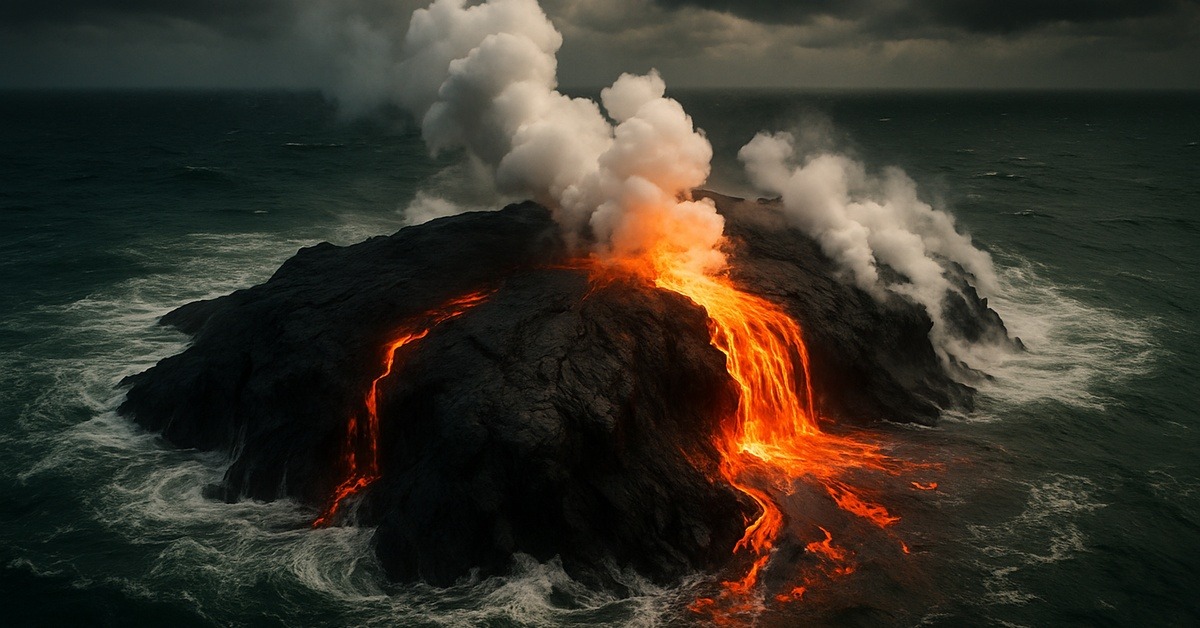
The water surrounding the new island — pale green to rust orange — wasn’t pollution. It was superheated, mineral-rich volcanic fluid mixing with the Pacific. A natural chemistry experiment visible from space.
- Pumice rafts drifted away from Home Reef after the eruption — massive floating islands of lightweight volcanic rock that can travel thousands of kilometers.
- These rafts carry hitchhikers: barnacles, coral larvae, small crustaceans. They’re ecological delivery systems, seeding new ecosystems across entire ocean basins.
- The discoloration changed daily as chemical reactions continued and the plume dispersed.
Why This Matters Beyond the Footage
An 11-hour island isn’t just a geology story. It’s a story about how Earth reinvents itself without asking permission, and how much we miss when we aren’t watching. The Tonga-Kermadec arc is where the engine of geological change sits closest to the surface. Most visible. Most raw. Watching an island build itself in real time is about as close as humans get to watching the planet think out loud.
But here’s what matters more: Tonga’s population lives within reach of one of the most volcanically active chains on Earth. These eruptions affect ocean chemistry, atmospheric aerosols, local fisheries, and the communities living on islands throughout the region. That’s not a distant scientific concern.
That’s someone’s home.
A piece of land that didn’t exist at dawn existed by nightfall. It steamed. It grew. Birds landed on it. The ocean’s already working to take it back. That tension — between the planet building and the planet reclaiming — is happening right now in the Pacific. And it’s far from finished.
Frequently Asked Questions
Q: How fast did the Home Reef volcanic island form in 2022?
Home Reef erupted in September 2022 and built roughly 1 acre of new land in about 11 hours, fast enough to watch on satellite imagery from breakfast to dinner. Within four days the island had grown to 8 acres as the eruption kept feeding it material. NASA and the Copernicus Emergency Management Service tracked the growth. Volcanologist Shane Cronin described it as geology caught in real time, an unusually rapid and well-documented case of island formation.
Q: Where is Home Reef located?
Home Reef is a submarine seamount on the Tonga-Kermadec volcanic arc, a 2,500-kilometer chain of underwater volcanoes in the South Pacific near Tonga. The arc is one of the most seismically active places on Earth, with ocean trenches deeper than 10,000 meters. Just nine months before Home Reef’s 2022 eruption, the January 2022 Hunga Tonga-Hunga Ha’apai explosion struck the same arc, the largest atmospheric explosion since Krakatoa in 1883.
Q: Will the Home Reef island last, or will it disappear?
It may not last. Home Reef produced islands in both 1984 and 2006, and waves eroded each one within months because they were made of loose ash and tephra. New volcanic islands have less than a 50% survival rate after five years, and the ones that endure are usually built from dense basalt rather than fragile volcanic debris. Scientists monitored the 2022 island specifically to see whether enough material hardened for it to survive.
Illustrations are AI-generated. Article fact-checked and human-edited. Our editorial standards.