The Largest Animal Ever: Blue Whale’s Stunning Return
Imagine standing beneath something so massive that your mind refuses to process it — 21,000 pounds of the blue whale largest animal ever lived, suspended above your head in fiberglass and air. Every dinosaur that ever walked this planet weighs less. It nurses its young like we do. It breathes air. And we almost made it extinct.
The American Museum of Natural History’s model in the Milstein Hall of Ocean Life has been greeting New York visitors since 1969. For three decades, it had no belly button — a small anatomical absence on a creature that gestates in the womb. The 2001 renovation fixed that oversight. But the real question isn’t about museum accuracy. It’s about what’s happening right now, in the deep cold water where these animals still live, still sing, and still — slowly, tentatively — return.
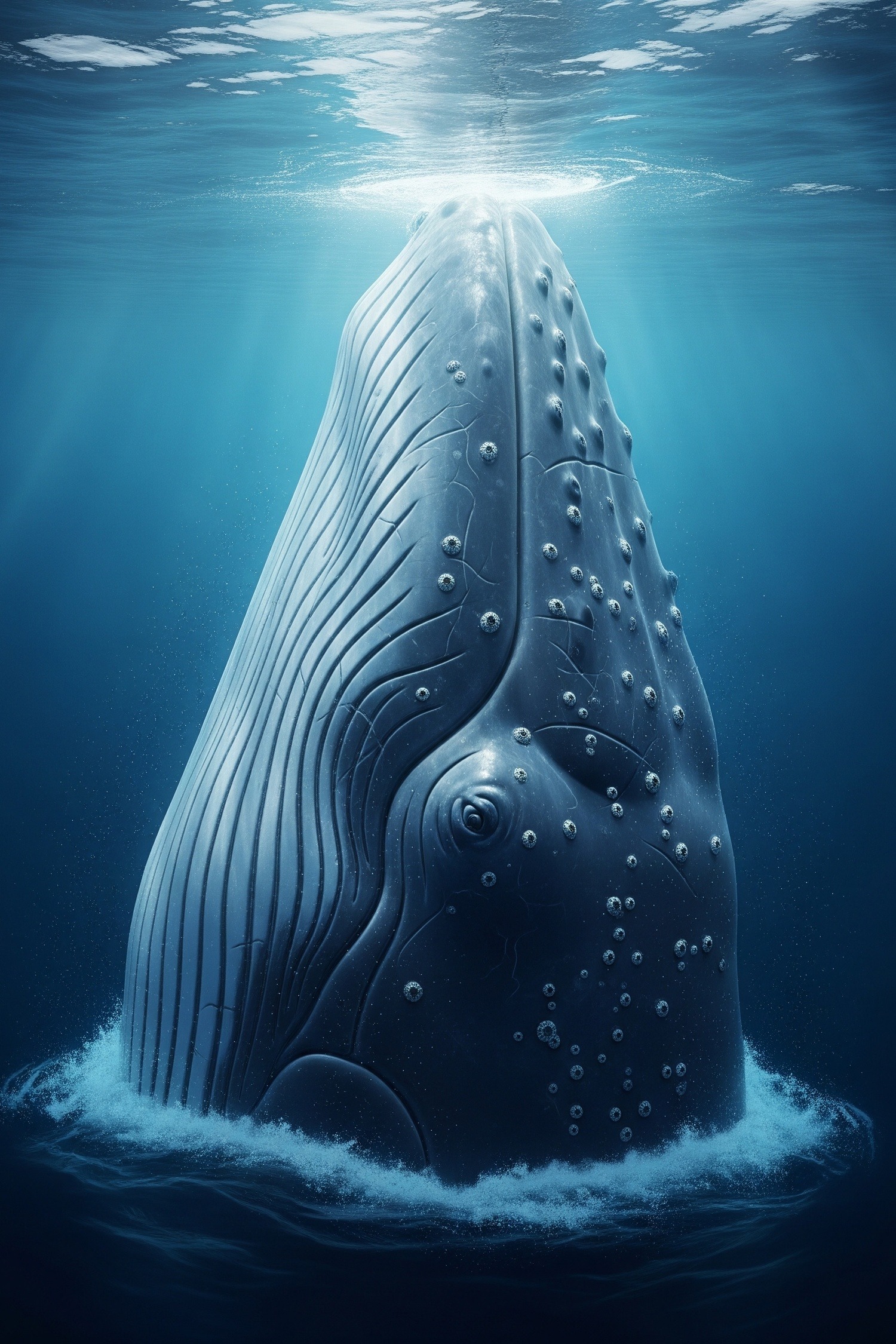
Key Facts
- Blue whales (Balaenoptera musculus) can reach up to 30 meters in length and weigh as much as 200 metric tons.
- The largest individual reliably measured, a female recorded by British Antarctic Survey scientists in the South Atlantic, stretched 33.6 meters from rostrum to fluke.
- Twentieth-century whalers killed an estimated 360,000 blue whales in the Southern Ocean between 1904 and 1967, more than 5,500 animals per year on average.
- The International Whaling Commission issued a global moratorium on commercial whaling in 1986, when the blue whale population was reduced to about 1,000 to 3,000 animals.
- Global blue whale numbers across all subpopulations are estimated at 10,000 to 25,000 individuals today, versus a pre-whaling population that may have exceeded 350,000.
In short: The blue whale, Balaenoptera musculus, can reach 30 meters and 200 metric tons, making it the largest animal ever known. Industrial whaling killed an estimated 360,000 in the Southern Ocean between 1904 and 1967, reducing the species by more than 99 percent before a 1986 moratorium. Today between 10,000 and 25,000 blue whales remain.
The Biggest Animal in Earth’s Entire History
Scale is hard to process in the abstract, so consider it this way. Balaenoptera musculus — the blue whale — can reach up to 30 meters in length and weigh as much as 200 metric tons. The largest individual ever reliably measured, a female recorded by British Antarctic Survey scientists in the South Atlantic in the early twentieth century, stretched 33.6 meters from rostrum to fluke. No dinosaur comes close. Argentinosaurus, long considered the heaviest dinosaur, is estimated to have weighed somewhere between 70 and 80 metric tons — less than half a large blue whale.
The blue whale’s tongue alone can weigh as much as an elephant. Its heart, roughly the size of a small car, beats as slowly as two times per minute during a deep dive. Blood vessels wide enough for a human child to crawl through carry oxygen to muscles that can power an animal the length of three double-decker buses through open water at sustained speeds of 20 kilometers per hour.
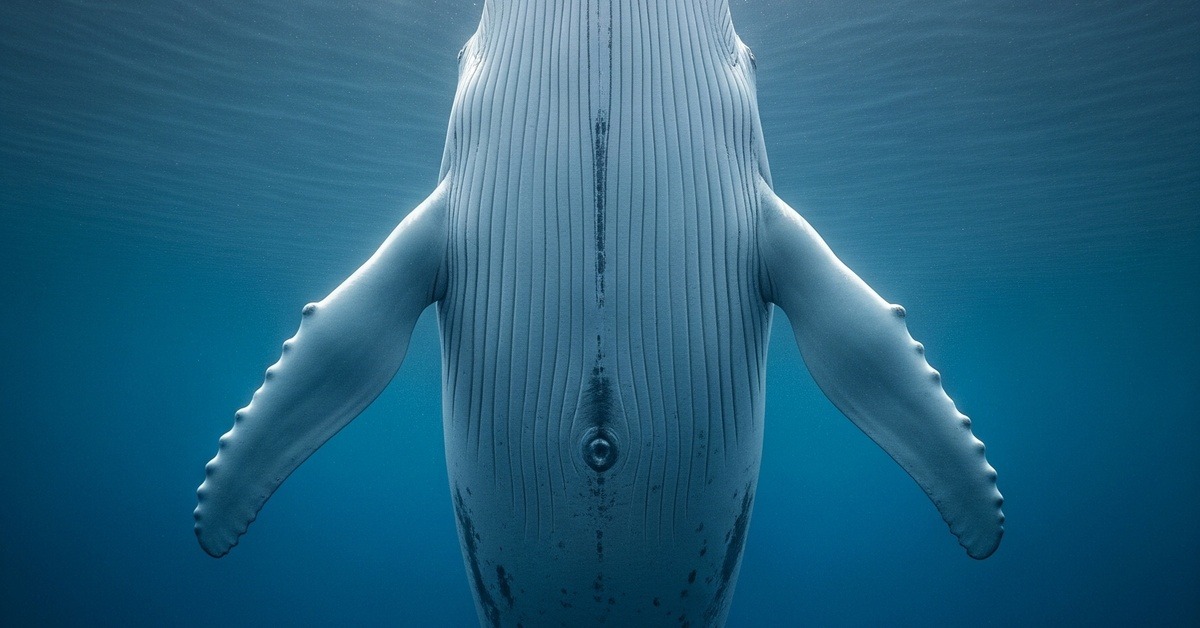
What’s easy to miss in all that data is the sheer biological improbability of the thing. Evolution doesn’t typically produce excess. Every gram of body mass has to be fed, oxygenated, moved through resistance. And yet here is an animal that grew, over millions of years of selection pressure, to a size that no land-based creature could ever achieve — because water bears weight in ways that air simply can’t. The ocean made something possible that the terrestrial world never could. That’s not metaphor. That’s physics.
Standing beneath the AMNH model, even knowing it’s fiberglass, something registers in the body before the mind catches up. The intellect knows the number: 21,000 pounds. The nervous system just goes quiet.
How We Almost Erased Them From the Ocean
Before commercial hunting scaled up in the late nineteenth century, blue whale populations in the Southern Ocean alone were estimated at roughly 250,000 individuals. The story of industrial whaling compressed this abundance into collapse — one of the most comprehensive ecological catastrophes in recorded human history. By the time the International Whaling Commission issued a global moratorium on commercial whaling in 1986, the blue whale population had been reduced to somewhere between 1,000 and 3,000 animals. That’s more than 99 percent gone in under a century.
Twentieth-century whalers killed an estimated 360,000 blue whales in the Southern Ocean between 1904 and 1967 — an average of more than 5,500 animals every single year. The numbers aren’t imprecise because scientists weren’t paying attention. They’re imprecise because counting whales across millions of square kilometers of open ocean is genuinely hard, even now. It bears comparison to other stories of population recovery that feel almost unbelievable in retrospect: much as the reintroduction of wolves to Yellowstone reshaped an entire ecosystem, the near-extinction of blue whales didn’t just reduce a number. It reshaped the chemistry of the ocean itself.
Blue whales are what ecologists call ecosystem engineers. A single adult consumes up to 40 million krill per day during feeding season — approximately 3,600 kilograms of biomass. Their fecal plumes, rich in iron and nitrogen, fertilize the phytoplankton blooms that produce roughly half of Earth’s atmospheric oxygen. Remove the whales, and you don’t just lose the whales. You alter the nutrient cycles of entire ocean basins.
Researchers at Flinders University in Australia published modelling data in 2021 suggesting that restored cetacean populations could meaningfully increase oceanic carbon sequestration — a function the species had been providing for millions of years before industrial hunting stripped it away in roughly sixty. Here’s the thing: the hunting didn’t stop because it became unprofitable. It stopped because there were almost no whales left to find.
The Slow, Uncertain Road Back
What does recovery actually look like? The IUCN Red List currently classifies the blue whale as Endangered, and the most robustly studied subpopulation — the Eastern North Pacific group that migrates along the California coast — has shown genuine signs of recovery. Estimates suggest that population may now be approaching its pre-whaling levels of roughly 2,000 animals. According to research published by the National Geographic Society, global blue whale numbers across all subpopulations are estimated at 10,000 to 25,000 individuals today.
Compare that to a pre-whaling global population that may have exceeded 350,000. Even at the optimistic end of current estimates, we’re at perhaps seven percent of historical abundance. The math is still alarming.
The blue whale largest animal ever lived faces threats that didn’t exist when the whaling ban took effect. Ship strikes kill dozens of animals every year — possibly more, since many carcasses are never recovered. Entanglement in fishing gear is a documented cause of injury and death. Climate change is shifting krill distribution patterns in ways that may be forcing whales to travel further between feeding grounds, burning energy reserves and complicating breeding. But something else is happening too — something less visible. The low-frequency sonar noise generated by commercial shipping now permeates ocean basins at levels that may interfere with the whale’s own acoustic communication system, a system that evolved over millions of years specifically because sound travels so well through water.
Recovery, in other words, isn’t just a matter of stopping the direct killing. It’s a matter of whether everything else humans are doing to the ocean allows the space for animals this large, this slow to reproduce, and this ecologically critical to actually persist.
What the Blue Whale Tells Us About the Living Planet
In 2019, a team at the University of Washington published a study in the journal Current Biology tracking the singing behavior of blue whales in the Eastern North Pacific. They found that the pitch of blue whale songs has been shifting downward across all recorded populations since the 1960s — a global phenomenon with no fully agreed-upon explanation. One leading hypothesis is that it reflects population recovery: as more whales are in the water, individual males don’t need to call as loudly or at as high a frequency to be heard, and song structure changes accordingly. Another hypothesis points to changes in ocean ambient noise levels.
The data are real. The mechanism is still being worked out. What’s striking is that the whales’ voices are literally changing as the species comes back — as if the ocean itself has a different acoustic character now than it did when these animals were nearly gone. Watching a species relearn how to communicate in its own recovered habitat, you realize we’ve been measuring recovery all wrong — not just by counting living animals, but by listening to whether the water itself has memory.
Blue whale calls register at up to 188 decibels, making them among the loudest sounds produced by any animal on Earth. They operate at frequencies between 10 and 40 hertz — below the range of human hearing — and under the right oceanographic conditions, they can travel more than 1,600 kilometers. A calling whale in the waters off Baja California can, in theory, be detected by hydrophones near Hawaii.
The blue whale largest animal ever lived didn’t just occupy physical space in the ocean. It occupied acoustic space. For the decades when populations were near collapse, that acoustic space was emptier than it had been since before the Pleistocene. There’s something almost geologic about that — a silence carved into the ocean over sixty years of hunting, slowly being filled again. Not quickly. Not completely. But measurably.
How It Unfolded
- 1864 — Norwegian whaler Svend Foyn patents the explosive harpoon cannon, making industrial-scale hunting of large whales commercially viable for the first time.
- 1904 — Commercial whaling begins in the Southern Ocean, initiating the most intensive period of blue whale killing in history; an estimated 360,000 animals will be taken over the next sixty years.
- 1966 — The International Whaling Commission grants blue whales protected status in the Southern Hemisphere, though illegal Soviet hunting continues for years afterward.
- 1986 — The IWC global moratorium on commercial whaling takes effect, ending large-scale direct hunting of blue whales worldwide.
- 2019 — University of Washington researchers confirm a decades-long global shift in blue whale song frequency, signalling measurable changes in population density and ocean acoustics.
By the Numbers
- 350,000 — estimated global blue whale population before industrial hunting began in the early twentieth century (IUCN)
- 10,000–25,000 — estimated current global blue whale population across all subpopulations (IUCN Red List, 2018)
- 33.6 meters — the longest reliably measured blue whale, a female recorded in the South Atlantic in the early twentieth century
- 40 million — krill consumed by a single blue whale in a single feeding day during peak season, approximately 3,600 kilograms
- 188 decibels — peak sound level of a blue whale call, among the loudest sounds produced by any living animal, audible at distances exceeding 1,600 kilometers
Field Notes
- In 2001, the American Museum of Natural History’s blue whale model received a bellybutton during a full renovation — correcting an anatomical error that had gone unnoticed for thirty-two years, and quietly confirming that even the world’s most prominent natural history institutions sometimes get the details wrong the first time.
- Blue whale calves are born at roughly 7 meters long and gain approximately 90 kilograms per day during nursing — making them the fastest-growing mammals on Earth, fuelled entirely by milk that is roughly 40 percent fat.
- The Eastern North Pacific subpopulation is the most studied and appears closest to pre-whaling numbers — but Antarctic blue whales, which once made up the majority of the global population, remain critically depleted and are recovering far more slowly, if at all.
- Researchers still can’t fully explain why blue whale song pitch has been declining globally since the 1960s. Both population recovery and ocean noise pollution remain plausible drivers, and the two hypotheses aren’t mutually exclusive — which means the answer, when it comes, may tell us something important about both.
Frequently Asked Questions
Q: Is the blue whale truly the largest animal ever lived, including prehistoric creatures?
Yes — this is a well-supported scientific conclusion, not just a claim about modern fauna. Even the largest known dinosaurs, including Argentinosaurus and Patagotitan, are estimated to have weighed 70–80 metric tons at most. A large blue whale can reach 200 metric tons. No prehistoric land animal, and no known marine reptile from the Mesozoic era, comes close to matching that mass.
Q: Why can’t blue whales grow this large on land?
Body weight on land must be supported by skeletal and muscular structure working against gravity. The energy cost of moving a 200-tonne body on limbs becomes prohibitive beyond a certain size — which is partly why the largest dinosaurs were already pushing physiological limits. In water, buoyancy offsets gravitational load almost entirely, freeing metabolic resources for growth rather than just locomotion. The ocean, in a very real sense, is the only environment on Earth where an animal this size can exist.
Q: Are blue whale populations actually recovering, or is that overstated?
It depends heavily on the subpopulation. The Eastern North Pacific group is genuinely recovering and may be approaching pre-whaling levels. Other subpopulations — particularly Antarctic blue whales, which once numbered in the hundreds of thousands — remain at a fraction of historical abundance and show little measurable recovery. The global picture is therefore mixed: real progress in some regions, ongoing crisis in others. The species remains listed as Endangered by the IUCN, and that designation is not bureaucratic caution. It reflects the data.
Editor’s Take — Alex Morgan
What stays with me isn’t the size. It’s the acoustic silence. For sixty years, the largest animal in Earth’s history was so depleted that entire ocean basins went quiet at 20 hertz. The whales’ own songs changed in response — pitch dropping as more animals returned, the ocean slowly relearning a sound it had known for millions of years. We came within a generation of making that silence permanent. The fact that we didn’t isn’t a conservation success story. It’s a very narrow escape that most people still haven’t fully processed.
The blue whale’s return is not a finished story. It’s an ongoing experiment — conducted across ocean basins we’ve barely mapped, involving an animal whose biology we still don’t fully understand, against a backdrop of shipping noise, climate disruption, and prey distribution shifts that didn’t exist when hunting stopped. Somewhere in the North Pacific right now, a blue whale is calling at a frequency you can’t hear. The call is travelling hundreds of miles through cold, dark water. Whether there are enough whales left to answer it, in enough ocean left undisturbed to carry the sound — that’s the question the next fifty years will answer.
Illustrations are AI-generated. Article fact-checked and human-edited. Our editorial standards.