The Oldest Civilization Timeline: 6 Cradles That Built the World
Building the oldest civilization timeline is harder than it looks, because the answer keeps moving. Every decade, a buried temple, a radiocarbon revision, or a re-examined cuneiform tablet pushes the start of “civilization” further back — or quietly disqualifies a society we used to crown as first. This is a working timeline of the planet’s earliest civilizations, anchored to the dates archaeologists actually defend in 2026 and built to show not just who came first, but who invented the very idea of a city.
Key Facts
- The Sumerians of Mesopotamia are still considered the world’s first true civilization, with urban life coalescing in the Uruk period (4000–3100 BC) and the earliest written texts appearing around 3300 BC.
- Only six societies are recognized as “pristine” civilizations — independent inventions of city-life: Mesopotamia, Egypt, the Indus Valley, China, Caral-Supe (Peru), and the Olmec (Mexico).
- Göbekli Tepe in modern Turkey (c. 9500–8000 BC) predates farming, pottery, and cities — proving that monumental architecture preceded civilization by more than five thousand years.
- Caral-Supe in coastal Peru (c. 3500–1800 BC) built 18-meter pyramids without pottery, without metallurgy, and without any visual art that has survived.
- The earliest confirmed Chinese writing does not appear until the Late Shang dynasty (c. 1250 BC) — making Chinese civilization, by the strict literacy test, younger than once believed.
In short: The world’s oldest civilizations did not appear at once. They emerged in six independent cradles between roughly 4000 BC and 1200 BC, each solving the same problem — how do thousands of strangers live together? — in radically different ways. Everything that came earlier (Jericho, Çatalhöyük, Göbekli Tepe) was extraordinary, but not yet a civilization in the technical sense.
Key Facts
- The Sumerians of Mesopotamia built the first true cities during the Uruk period (4000–3100 BC), with cuneiform writing appearing around 3300 BC.
- Only six societies are recognized as pristine civilizations: Mesopotamia, Egypt, the Indus Valley, China, Caral-Supe (Peru), and the Olmec (Mexico).
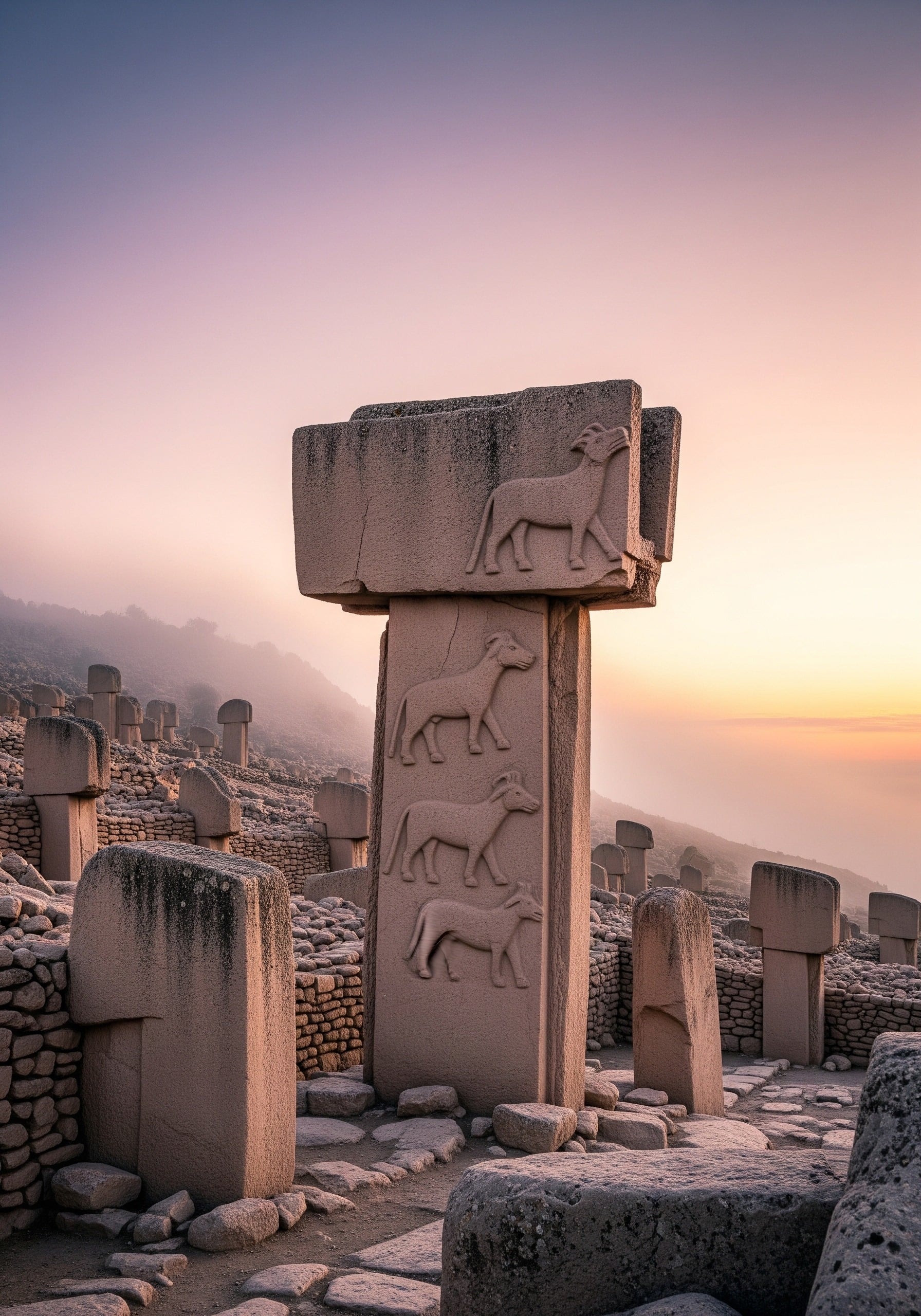
- Göbekli Tepe in Turkey (c. 9500–8000 BC) raised T-shaped limestone pillars up to 5.5 meters tall and 16 tons, predating farming and pottery.
- Caral-Supe in coastal Peru (c. 3500–1800 BC) built 18-meter pyramids without pottery or metallurgy.
- The earliest confirmed Chinese writing appears only in the Late Shang dynasty (c. 1250 BC).
In short: The world’s six pristine civilizations emerged independently between roughly 4000 BC and 1200 BC: Mesopotamia, Egypt, the Indus Valley, China, Caral-Supe, and the Olmec. Mesopotamia’s Sumerians built the first cities in the Uruk period and invented cuneiform around 3300 BC. Earlier sites like Göbekli Tepe were remarkable but not yet civilizations.
What “Oldest Civilization” Actually Means
Before any timeline makes sense, the word has to be pinned down. Archaeologists use a working definition that traces back to Gordon Childe in 1950: a civilization is a society with cities, centralized administration, social stratification, full-time specialists, monumental public architecture, and — usually — a writing system. By that test, a village of three hundred people is not a civilization. Neither is a confederation of chiefdoms. You need a recognizable state.
This matters because popular lists often mix categories. The Australian Aboriginal cultural tradition is roughly 50,000 years old and one of the most continuous on Earth, but it did not produce urbanized states. The Jōmon of Japan made the world’s oldest known pottery (c. 14,500 BC) but lived as sedentary hunter-fisher-gatherers, not as a civilization. Both deserve respect; neither belongs on a timeline of civilizations in the technical sense.
The Pre-Civilization World: Neolithic Megastructures
The first surprise in any honest oldest civilization timeline is what comes before it. Roughly 11,500 years ago, on a windswept ridge in southeastern Turkey, hunter-gatherers began raising T-shaped limestone pillars up to 5.5 meters tall and 16 tons in weight. This is Göbekli Tepe, built between roughly 9500 and 8000 BC by people who had not yet domesticated wheat, did not make pottery, and lived nowhere we would call a town. Before Göbekli Tepe, archaeology assumed agriculture produced civilization, which produced temples. The site reversed the equation: monumental religious gathering may have helped produce agriculture.
{IMAGE_2}
Jericho, in the lower Jordan Valley, was settled by around 9600 BC and walled with a stone tower by about 6800 BC — making it a strong contender for the oldest fortified town on Earth. A thousand years later, Çatalhöyük in central Anatolia (c. 7500–5700 BC) housed perhaps 8,000 residents in tightly packed mud-brick houses entered through the roof. None of these places had writing, kings, or a state. They were proof that humans could live together at scale long before they invented civilization, and they are the deep roots — the ten-thousand-year run-up — that the first cities of Mesopotamia would finally grow out of.
Mesopotamia: The First Civilization (c. 4000–3100 BC)
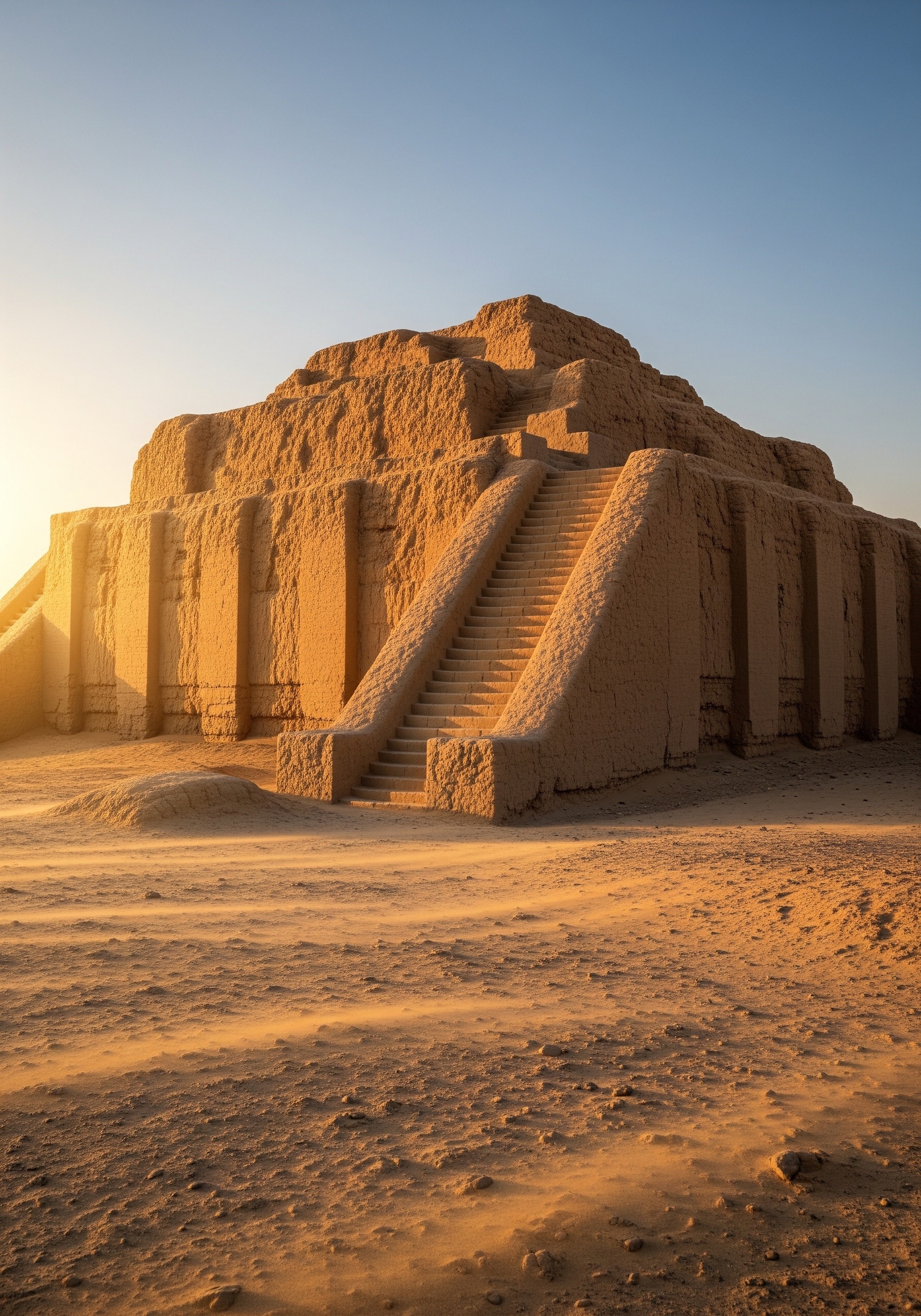
Between the Tigris and Euphrates, in what is today southern Iraq, the Sumerians did something no one had done before. During the Uruk period (4000–3100 BC) they built the planet’s first true cities — Uruk itself, Eridu, Ur, Lagash — with populations in the tens of thousands, centralized temples (ziggurats), a bureaucracy of scribes, and around 3300 BC the world’s earliest known writing system: cuneiform pressed into damp clay with a cut reed. Proto-writing appears earlier still, around 3800 BC, on accounting tokens.
The Sumerians invented or refined the wheel, the plow, the sail, the sexagesimal number system (which is why an hour still has 60 minutes), large-scale irrigation, codified law, and the institution of the king. By any reasonable test — cities, writing, state, monumental architecture, full-time specialists — Mesopotamia is the place the human story crosses the line. Everyone who came after, in this hemisphere or that one, was reinventing what the Sumerians did first.
Ancient Egypt: Unification and Pharaonic Order (c. 3500–3150 BC)
Egyptian civilization arose almost on Mesopotamia’s heels. The Gerzeh phase of the Naqada culture (c. 3500 BC) shows social stratification and luxury craft production along the Nile, and around 3150 BC the kingdoms of Upper and Lower Egypt were unified — traditionally under the king Narmer. The Early Dynastic Period followed, hieroglyphic writing appeared by about 3200 BC, and within five centuries the Old Kingdom was raising the pyramids at Giza.
What set Egypt apart was its geography. Where Mesopotamia was a patchwork of squabbling city-states, the Nile gave Egypt a single ribbon of fertile land defended by deserts on both sides. The result was an unusually unified, unusually stable state that maintained recognizable cultural continuity for nearly 3,000 years.
The Indus Valley: The Engineered Civilization (c. 2600–1900 BC)
The third great cradle sat along the Indus River and its tributaries in modern Pakistan and northwest India. Its Neolithic roots run extraordinarily deep — Mehrgarh, in Balochistan, was farming wheat and barley by 7000 BC. The Early Harappan phase begins around 3300 BC, but the spectacular Mature Harappan phase (c. 2600–1900 BC) is the one that earns the cradle title.
At its peak the civilization covered an area larger than ancient Egypt and Mesopotamia combined and supported perhaps 5 million people. Mohenjo-daro and Harappa were laid out on a grid, with standardized fired-brick housing, the world’s first known urban sanitation systems, sealed wells, covered drains, and a Great Bath that probably served a ritual function. Their script, found on thousands of small seals, has never been deciphered — making the Indus the only major Bronze Age civilization whose voice we cannot yet hear.
Caral-Supe: The Americas’ Forgotten Pyramid Builders (c. 3500–1800 BC)
For most of the twentieth century, the Americas were assumed to have produced civilization roughly two thousand years after the Old World. That timeline was rewritten in the late 1990s, when Peruvian archaeologist Ruth Shady carbon-dated monumental construction at Caral, in Peru’s arid Supe Valley, and showed that Caral-Supe was a contemporary of the early Egyptian and Sumerian states.
What makes Caral-Supe genuinely strange is the list of things it did without: no pottery, no surviving visual art, no metallurgy, no defensive walls, and very possibly no warfare. What it did have were huge stepped pyramids — the Pirámide Mayor at Caral is 160 by 150 meters and 18 meters high — sunken circular plazas, knotted-cord quipu devices that may be the oldest record-keeping system in the Americas, and 32 flutes carved from pelican bone. Civilization, Caral demonstrates, did not have to look the way the Old World looked.
China: A Late but Continuous Cradle (c. 1900 BC onward)
China occupies an unusual spot on the timeline. Its Neolithic record is exceptionally long and rich — the Jiahu culture (c. 7000–5700 BC) made the oldest known playable musical instruments and produced an early fermented beverage 9,000 years ago. But true urbanism, bronze metallurgy, and state-level organization arrive comparatively late. The Erlitou culture (c. 1900–1500 BC), often identified with the semi-legendary Xia dynasty, is the earliest large-scale bronze-producing culture in China. The Shang dynasty (c. 1600–1046 BC) gives us the first confirmed Chinese writing — oracle-bone inscriptions from around 1250 BC.
So by the strict definition, Chinese civilization is roughly 1,500 to 2,000 years younger than Mesopotamia. What it has, though, that no other civilization can match is unbroken continuity: the writing system that begins on those Shang oracle bones is the direct ancestor of the characters used by 1.4 billion people today.
The Olmec: Mother Culture of Mesoamerica (c. 1600–400 BC)
The youngest of the six pristine civilizations rose in the humid lowlands of the Mexican Gulf coast. The Olmec heartland, around the Tuxtla Mountains in modern Veracruz and Tabasco, produced ritual deposits at El Manatí as early as 1600–1500 BC, and its first great urban center, San Lorenzo, flourished from roughly 1200 to 900 BC. La Venta succeeded it, lasting from about 900 to 400 BC, when the Olmec collapsed for reasons still debated — environmental shift, agricultural failure, or both.
The Olmec are called Mesoamerica’s “mother culture” because nearly every distinctive feature of later Maya, Zapotec, and Aztec civilization — the ritual ballgame, ceremonial bloodletting, the Long Count calendar, monumental stone heads, the jaguar deity, and possibly the earliest American writing — appears with the Olmec first. They are the last truly independent invention of civilization in human history.
The Oldest Civilization Timeline at a Glance
The Six Pristine Civilizations — A Reference Table
| Civilization | Region | Core Dates | Signature Innovation |
|---|---|---|---|
| Sumer / Mesopotamia | Southern Iraq | 4000–3100 BC | Cuneiform writing, the wheel, codified law |
| Ancient Egypt | Nile Valley | 3500–3150 BC (unified) | Hieroglyphs, pyramid engineering, divine kingship |
| Caral-Supe | Coastal Peru | 3500–1800 BC | Stepped pyramids, quipu, urban life without pottery |
| Indus Valley | Pakistan / NW India | 2600–1900 BC (Mature) | Grid cities, sanitation, standardized weights |
| Erlitou / Shang China | Yellow River basin | 1900–1046 BC | Section-mold bronze casting, oracle-bone writing |
| Olmec | Gulf coast of Mexico | 1600–400 BC | Colossal heads, Long Count calendar, ballgame ritual |
Pristine vs. Derived: Why the List Stops at Six
If you make a list of every civilization in history, it runs into the hundreds. The list of pristine civilizations — societies that invented urban statehood with no civilized neighbors to copy — has exactly six entries. Every other civilization, from the Minoans to the Hittites to the Maya to Rome, is a derived civilization: it built on, traded with, or was directly seeded by an earlier one. This distinction is why an honest oldest civilization in the world timeline looks small. Most of the world’s great cultures are descendants. Only six are founders.
It is also worth noting that the cradle list itself has shifted. A century ago, scholars believed Egypt was a colony of Mesopotamia, China was seeded from the west, and the Americas had no real civilization. Better excavation and better dating have killed all three assumptions. Expect more revisions: the Amazon basin and the African Sahel are both producing finds — like the geometric earthworks at Acre, Brazil, or the urban complex at Jenné-jeno in Mali — that may not redraw the cradle map but will certainly enrich it.
From Oldest to Youngest: The Successor Civilizations
Most readers searching for oldest to youngest civilization rankings are really asking about the bigger, more famous societies that followed the founders. A compressed sequence: Minoan Crete (c. 2700–1450 BC), Hittites (c. 1600–1180 BC), Mycenaean Greece (c. 1750–1050 BC), Phoenicia (c. 1500–300 BC), Iron Age Greece (c. 1100 BC onward), the Persian Empire (c. 550–330 BC), Maurya India (c. 322–185 BC), Han China (206 BC – 220 AD), Rome (753 BC – 476 AD), the Maya Classic period (c. 250–900 AD), Aksum (c. 100–960 AD), the Inca (1438–1533 AD), and the Aztec Triple Alliance (1428–1521 AD). Every one of them is downstream — culturally, technologically, or by direct lineage — from those original six. For a closer look at any of these threads, see our guides on the Mesopotamian cradle, the riddle of the Indus script, and the rediscovery of Caral-Supe.
Frequently Asked Questions
Q: What is the oldest civilization in the world?
A: Mesopotamia — specifically the Sumerian civilization, which coalesced during the Uruk period (4000–3100 BC) in what is now southern Iraq. It is the first society to combine cities, centralized administration, monumental architecture, and writing in one place.
Q: Is Egypt older than Mesopotamia?
A: No. The two are close — Egypt unified around 3150 BC, while Sumerian cities had already been growing for nearly a thousand years — but every line of evidence (writing, urban scale, state institutions) points to Mesopotamia as the earlier full civilization. Egypt is the oldest unified nation-state, which is a different distinction.
Q: What is the oldest civilization in the Americas?
A: Caral-Supe, also called Norte Chico, on the coast of modern Peru. It emerged around 3500 BC and built large stepped pyramids by 3100 BC — roughly contemporary with the first dynasties of Egypt. It was effectively unknown to mainstream scholarship until Ruth Shady’s radiocarbon dating in 2001.
Q: How many “cradles of civilization” were there?
A: Six are recognized as pristine, independent inventions of civilization: Mesopotamia, Egypt, the Indus Valley, China, Caral-Supe (Peru), and the Olmec (Mexico). Every other ancient civilization was influenced by or descended from one of these.
The oldest civilization timeline is, in the end, a story about an idea — that thousands of people who do not know one another can live together inside a shared system of writing, walls, and rules. Six times in human history, in six independent places, that idea was discovered from scratch. Everything since is variation on the theme.
Illustrations are AI-generated. Article fact-checked and human-edited. Our editorial standards.