The Tiny Guard Dogs Buried in Assyria’s Walls for 2,700 Years
Someone pressed a dog’s name into wet clay. Then they buried it in a wall. Nobody was supposed to find it — that’s the whole point. And 2,700 years later, we’re still trying to understand why.
The ruins of Nineveh, the ancient Assyrian capital, gave up something weird in the 1800s. Archaeologists working through the North Palace — built by King Ashurbanipal around 645 BCE — kept finding these tiny clay figurines. Smaller than your hand. Smaller than a bar of soap. Each one shaped like a dog. Each one with a name carved into it. Not a pet’s name. Something like “Biter of his foe” or “Catcher of the enemy” or, and I kept reading about this one for hours, “Don’t think, bite.” The inscriptions weren’t there for decoration. They were there because the Assyrians believed that naming something with intention gave it power. So they named clay dogs and sealed them into walls.
Key Facts
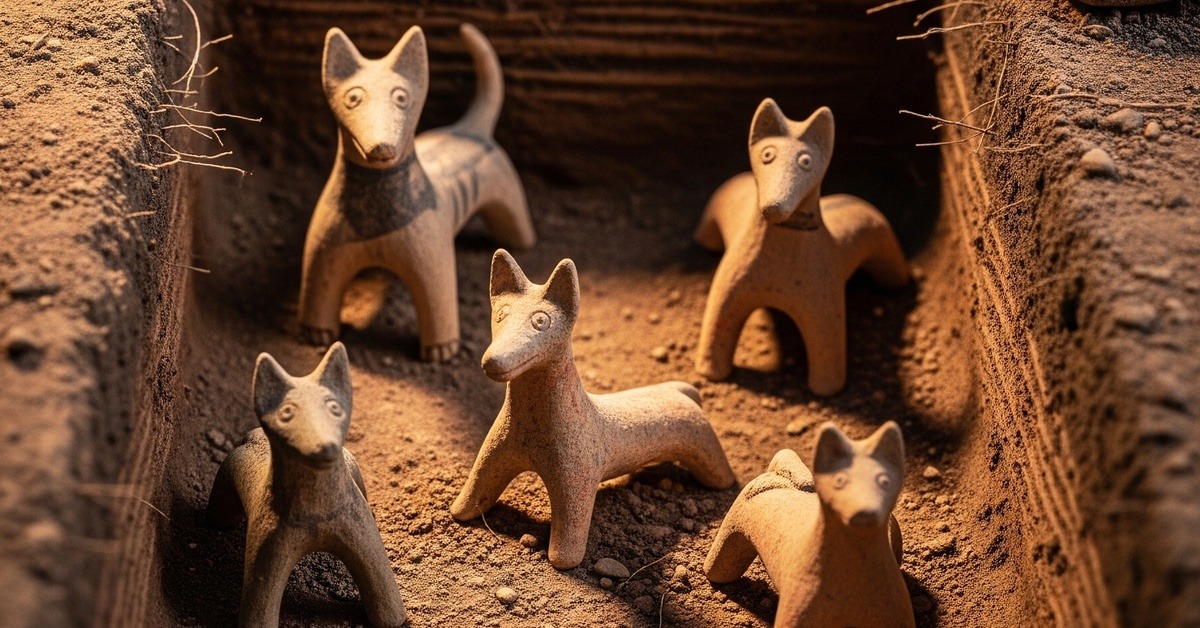
- Archaeologists working in the North Palace at Nineveh, built by King Ashurbanipal around 645 BCE, recovered tiny clay dog figurines deliberately buried in foundations, doorways, and behind walls.
- At least forty-three separate Assyrian clay dog figurines have been recovered from the North Palace so far, each roughly 7 centimeters (about 3 inches) in length.
- The figurines bore cuneiform inscriptions of names such as ‘Biter of his foe,’ ‘Catcher of the enemy,’ and ‘Don’t think, bite,’ intended to give the objects protective power.
- Ashurbanipal also assembled one of the ancient world’s first great libraries in the same palace, containing about 30,000 clay tablet fragments recovered by Austen Henry Layard starting in 1849.
- Ritual texts specified color coding for the figurines: white dogs for east-facing doorways, black for north, red for south, speckled for west, and yellow for entrances.
In short: At Nineveh’s North Palace, built by Assyrian king Ashurbanipal around 645 BCE, archaeologists have recovered at least 43 inscribed clay dog figurines about 7 centimeters long, buried in foundations and doorways as named protective guardians. Cuneiform ritual texts specified color and placement, linking the figurines to the healing goddess Gula.
Assyrian clay dog figurines weren’t art. They were weapons.
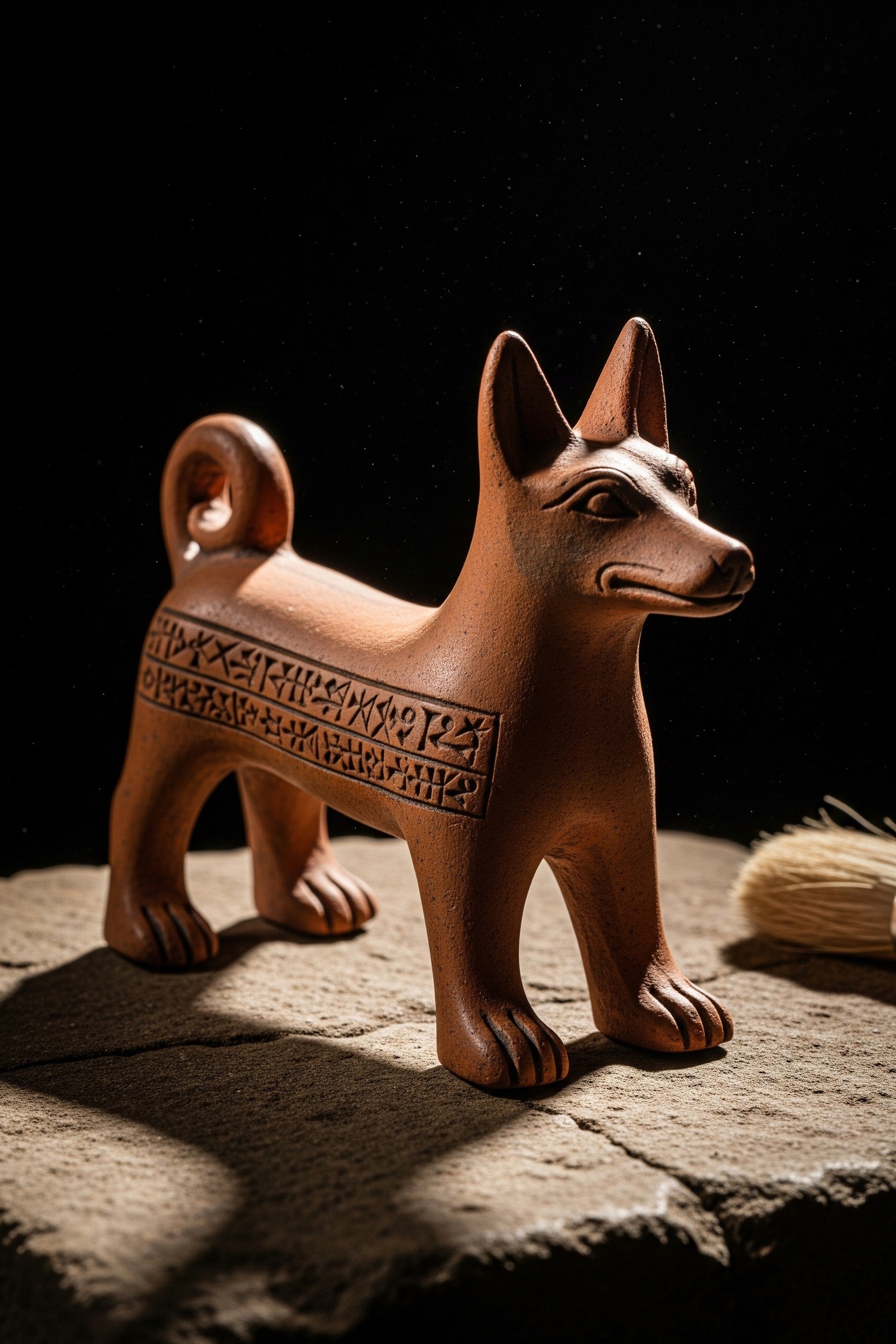
The figurines turned up in the foundations. In doorways. Behind walls where no human eye would ever see them again. Irving Finkel, who studies ancient Mesopotamian texts at the British Museum, has spent years looking at these inscriptions — trying to understand what the Assyrians actually thought they were doing when they made these things and then hid them.
Here’s what the texts say: protection doesn’t require witnessing. The dog doesn’t need you to see it to do its job. You build the wall over it. You live in the palace. Something watchful is in there with you. Working. Always working.
That’s a completely different architecture of safety than what we’re used to.
They built a library and an army in the same building
This is the part that actually made me stop and re-read the sources.
Ashurbanipal wasn’t just a king who buried protective clay dogs in his walls. He was the man who assembled one of the ancient world’s first great libraries. Thirty thousand clay tablet fragments — medical texts, astronomical charts, the Epic of Gilgamesh, rituals, everything. All in the same palace where the figurines were hidden.
He understood something most rulers didn’t: knowledge and power were the same thing. Which means when he commissioned these clay dogs with their threatening names, he wasn’t ordering folk magic from the margins. This was official. Intentional. Part of the same intellectual framework that produced cuneiform scholarship. The symbolic and the practical weren’t separate categories in his world — they were the same category, just expressed differently.
By the Numbers
- 2,670 years old approximately — from around 645 BCE, placing the figurines among the best-documented protective burial objects in Mesopotamian archaeology.
- The North Palace at Nineveh contains evidence of at least forty-three separate Assyrian clay dog figurines recovered so far, though archaeologists believe more remain buried and unsealed.
- Each figurine measures roughly 7 centimeters (about 3 inches) in length — small enough to conceal in a wall cavity, deliberate enough that someone took time to carve breed-specific details into the clay.
- Ashurbanipal’s library: 30,000 clay tablet fragments recovered by Austen Henry Layard starting in 1849.
- Color coding was part of the system. White dogs for east-facing doorways, black for north, red for south, speckled for west, yellow for entrances — each color with a specific function according to ritual texts found nearby.
Field Notes — What the Ritual Texts Actually Say
- The placement wasn’t random. Specific instructions in cuneiform tablets tell priests exactly where each colored dog should go. The magic, if you want to call it that, was a spatial system.
- Dogs in Mesopotamian religion belonged to Gula, the goddess of healing. So these guardian figures existed at the intersection of two things the Assyrians saw as interconnected: protection and medicine. Keeping illness out was the same as keeping enemies out.
- Similar figurines turn up across the ancient Near East — Egypt, Babylon, even Hittite sites. Either the idea spread across cultures with limited contact, which raises questions about how information actually moved in the ancient world, or independent civilizations arrived at the same conclusion about dogs and walls. That’s the unsettling part.
One figurine stands out from all the rest
Most of the inscriptions follow a pattern. Martial. Aggressive. Clearly designed to project threat to whatever exists beyond the wall.
And then there’s “Don’t think, bite.”
Four words. Pressed into three inches of clay by someone who died before Rome was built. Someone in that palace had a sense of humor about their demons, or they were just being practical. Maybe that’s the same thing. The phrase has a clarity to it that feels almost modern — like it could show up in a graphic novel or a modern tactical manual. It did the job. The palace stood. The walls held. Ashurbanipal kept building his library while his clay dogs kept watch in the darkness.
Why this still matters
We haven’t stopped doing this. We’ve just changed the objects.
Door knockers shaped like lions. Horseshoes hammered above the frame. Security cameras aimed at the driveway. The specific thing we put at our thresholds evolves, but the impulse stays exactly the same — we want something watchful at the boundary between safe and not-safe. Something that says to whatever’s out there: this far, no further.
The Assyrians just named theirs and buried them.
Even now, with all our technology and motion sensors and alarm systems, we haven’t fully abandoned the symbolic layer. We still want the thing that works when we’re not watching. We still want something in the wall.
Three inches of clay. A name pressed in with a stylus by someone working by lamplight. A wall sealed over it forever. A civilization built on top. The Assyrian clay dog figurines aren’t relics of superstition — they’re a mirror showing us what fear looks like when it’s organized, named, and put to work. And that hasn’t changed. Still there. Still watching. Still doing its job in the dark.
Frequently Asked Questions
Q: What were the Assyrian clay dog figurines used for?
The figurines were buried in the foundations, doorways, and walls of King Ashurbanipal’s North Palace at Nineveh around 645 BCE to serve as hidden protective guardians. According to ritual texts and British Museum researcher Irving Finkel, the Assyrians believed that naming an object with intention gave it power. Each clay dog was inscribed with an aggressive name such as ‘Biter of his foe’ or ‘Don’t think, bite,’ so the figurine could continually ward off enemies and illness without anyone needing to see it once the wall was sealed.
Q: How does the clay dog ritual connect to Ashurbanipal’s library?
The same palace that hid the inscribed clay dogs also housed Ashurbanipal’s library of roughly 30,000 clay tablet fragments, including medical texts, astronomical charts, the Epic of Gilgamesh, and rituals. The text argues this shows the symbolic and the practical were the same intellectual category for Ashurbanipal, not separate ones. Commissioning protective figurines was not folk magic from the margins but an official, intentional act consistent with the cuneiform scholarship being produced in the same building.
Q: Why did the Assyrians use dogs specifically as protective figures?
In Mesopotamian religion, dogs belonged to Gula, the goddess of healing. The guardian figurines therefore stood at the intersection of two ideas the Assyrians treated as interconnected: protection and medicine. Keeping illness out was the same act as keeping enemies out. The text also notes that similar figurines turn up across the ancient Near East in Egypt, Babylon, and Hittite sites, suggesting either that the idea spread across cultures with limited contact or that independent civilizations arrived at the same conclusion about dogs and walls.
Q: What did the color coding of the figurines mean?
Cuneiform ritual texts found near the palace gave priests specific instructions about where each colored dog should go, making the system a spatial one rather than random. White dogs were placed at east-facing doorways, black ones at the north, red at the south, speckled at the west, and yellow at entrances. Each color carried a specific function. Combined with the inscribed names and the small size of about 7 centimeters, this allowed the figurines to be precisely positioned within walls and thresholds while remaining invisible.
Illustrations are AI-generated. Article fact-checked and human-edited.