Germany Shut Down Every Fur Farm — Here’s How They Did It
Germany’s last fur farm closed in 2019. Not with protests or headlines or some dramatic industry collapse — just a cage door that swung shut and never opened again, because someone in a government office rewrote a few lines about cage sizes and the whole thing became impossible to keep running.
Here’s what gets me about this story: the fur industry had survived decades of undercover footage, celebrity campaigns, and public outrage. What actually killed it wasn’t any of that. It was a bureaucratic document. A regulation so precisely written that every single German fur farm — all 20 of them — became economically unviable within two years. No dramatic last stand. No industry coalition fighting back. Just the lights going off.
Key Facts
- Germany had 20 active fur farms when welfare regulations passed in 2017, and zero by 2019.
- Germany rewrote its animal welfare laws in 2017, setting mandatory cage size and enrichment standards rather than banning fur farming outright.
- Standard mink enclosures measured roughly 30 by 90 centimeters, less than 0.3 square meters, while mink naturally travel up to 5 kilometers per day.
- The Netherlands, which banned fur farming in 2013, had over 160 mink farms at peak, all gone by 2024.
- Global fur farm production declined more than 50% since 2013 (International Fur Federation, 2022).
In short: The Germany fur farm ban happened not through outright prohibition but through the 2017 animal welfare law, which set cage size and enrichment standards so costly that all 20 German fur farms closed by 2019. The strategy of writing scientifically defensible, unmeetable rules has since spread across Europe.
The regulation nobody saw coming
In 2017, Germany rewrote its animal welfare laws. The key detail? They didn’t ban fur farming outright. They set cage size and environmental enrichment standards that were based on actual research about how these animals behave — and then made compliance mandatory. Mink farms needed larger enclosures. Running water. Enrichment structures. Things that would cost hundreds of thousands to retrofit.
So they didn’t retrofit. They shut down.
Researcher and animal law expert Dr. Jochen Bölsche had been documenting for years how catastrophically these farms fell short of basic welfare benchmarks. When the law changed, the math became unavoidable: invest millions in infrastructure upgrades or close the doors. Every farm chose the latter.
What the animals were actually living in
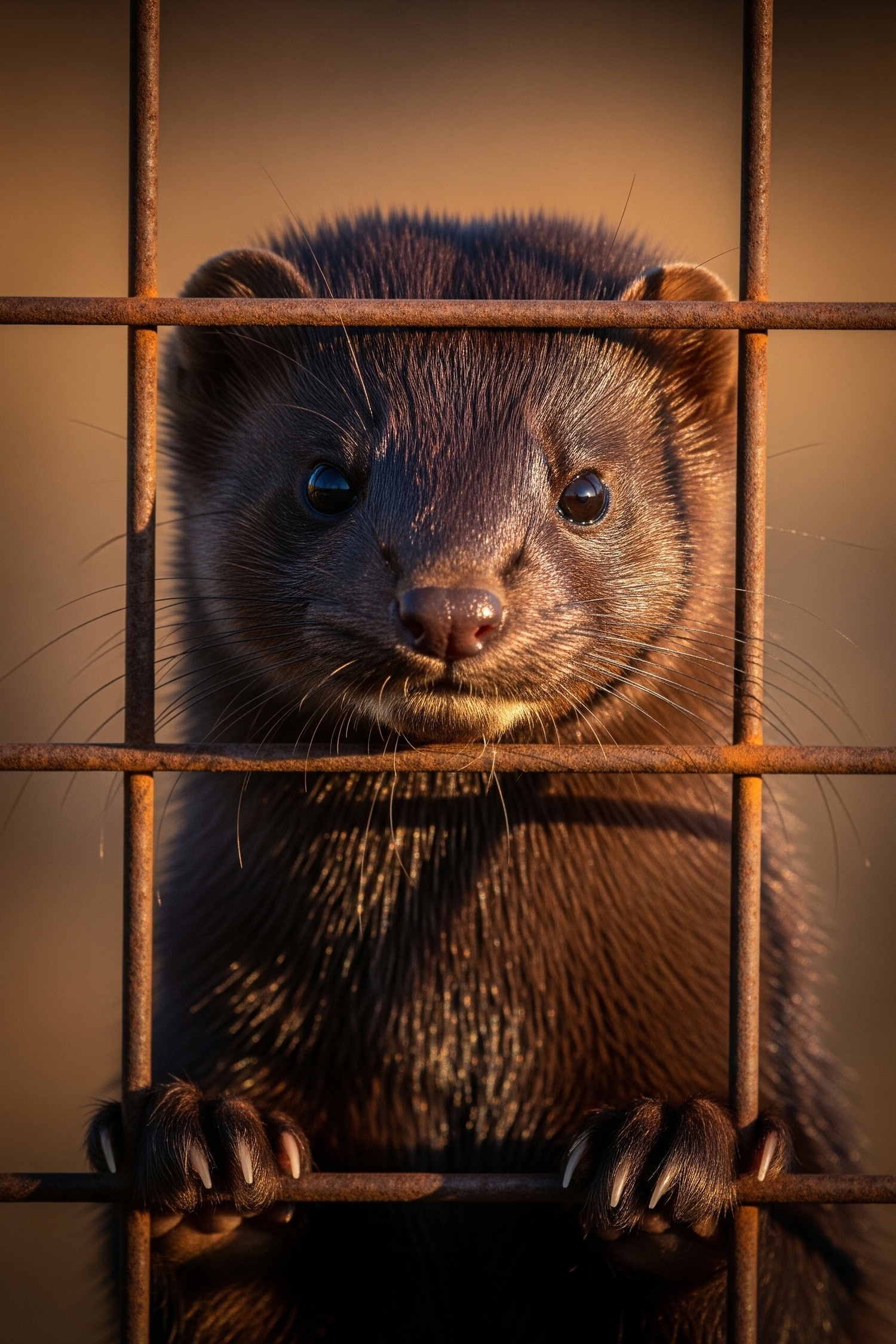
Mink aren’t domesticated. They’re solitary creatures that naturally roam several kilometers a day.
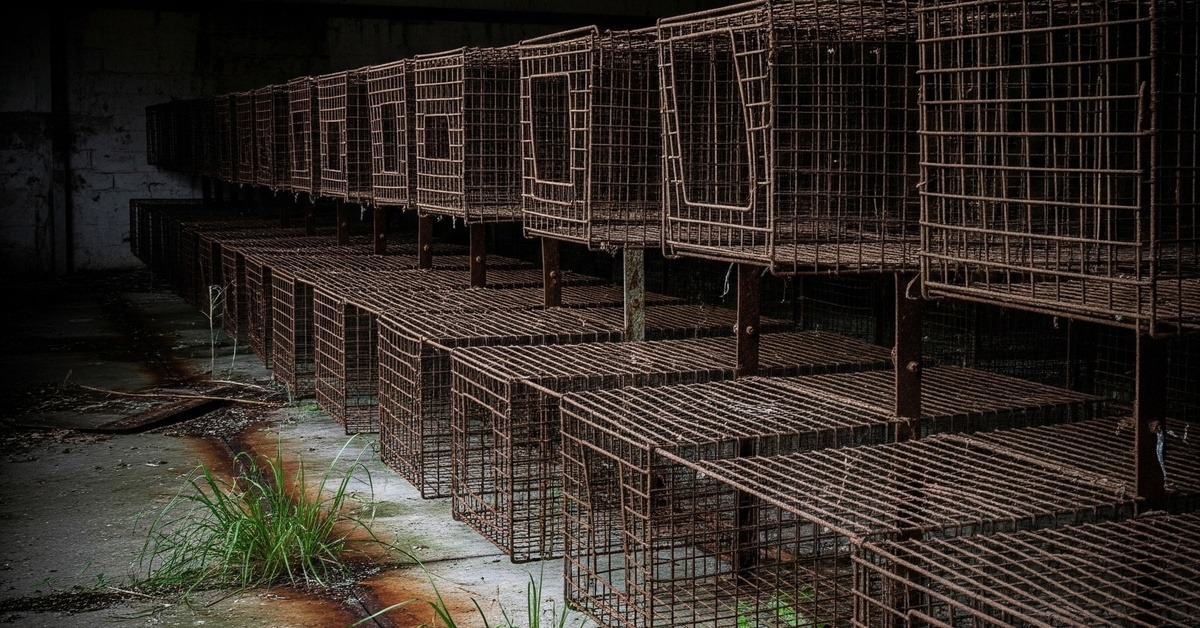
On a fur farm, they lived in wire cages roughly 30 by 90 centimeters — less than one-third of a square meter. The repetitive pacing, the self-mutilation, the bar-biting that researchers observed: these weren’t quirks or behavioral oddities. They were an animal expressing the simple biological fact that its body was in a place its nervous system couldn’t tolerate. You can read more about mink behavior and natural range here.
Farmed foxes weren’t doing better. The industry had selectively bred them to be abnormally large for maximum pelt yield, which meant anxiety behaviors were off the charts — but nobody really talked about it because normalized cruelty stops looking like cruelty after a while.
Why outrage didn’t work, but a spreadsheet did
Animal rights groups had been running undercover operations for years. Footage. Celebrity endorsements. Public campaigns that actually shifted opinion in a major way. None of it moved the law fast enough.
What worked was different: regulations written in the language of cage dimensions and enrichment requirements, grounded in peer-reviewed data about animal stress responses. The industry had no rhetorical counter-argument that held up. You can’t tell a court that mink don’t need access to running water when the research is sitting right there.
The fur industry survived bad press for decades. It didn’t survive a spreadsheet.
If you want to understand how policy is reshaping other industries built on animal use, this-amazing-world.com has been tracking those shifts across dozens of countries. That last fact kept me reading for another hour.
Germany wasn’t first, but it mattered most
The Netherlands banned fur farming in 2013. Austria, Croatia, several other European nations had already exited before Germany moved. But Germany was different — it had been one of the larger producers on the continent, with farms dating back decades, family operations with generations of history. This wasn’t a symbolic gesture from a tiny agricultural player.
This was significant economic weight simply leaving the industry.
The dominoes started falling almost immediately. France announced a phase-out of mink farming. Ireland moved toward prohibition. Poland — historically one of Europe’s largest fur producers — faced repeated legislative attempts to follow the German model. Each time, regulators cited the same playbook: set welfare standards that are scientifically defensible and structurally impossible to meet.
The strategy that’s spreading
Here’s the technical distinction that matters: instead of banning fur farming by name (which invites legal challenges from agricultural lobbies claiming economic discrimination), regulators set welfare requirements the industry structurally cannot meet. It sounds like a minor semantic difference. It’s not.
The fur industry frames these moves as ideological overreach. But it’s hard to make that case stick when the scientific literature on mink stress responses is as conclusive as it is.
By the numbers
- 20 active fur farms in Germany when regulations passed in 2017. Zero by 2019.
- Mink naturally travel up to 5 kilometers per day; standard enclosures measured roughly 30 x 90 centimeters — less than 0.3 square meters per animal.
- The Netherlands had over 160 mink farms at peak production, one of the densest concentrations in Europe. All gone by 2024.
- Global fur farm production has declined more than 50% since 2013, driven primarily by European legislative exits and shifting luxury market demand (International Fur Federation, 2022).
The details that don’t fit neatly
- Mink require environmental complexity — running water, burrow-like structures, varied terrain. Wire cages can’t provide this, no matter the size.
- Many farmed mink descend from North American mink brought to Europe in the early 1900s. When animals escaped or were released from European farms, they established invasive wild populations now threatening native species across multiple countries.
- During COVID-19, mink farms in Denmark, the Netherlands, and Spain became significant transmission sites for SARS-CoV-2 variants. This added a public health dimension to the welfare debate that earlier policy discussions never anticipated.
Why this matters beyond fur
The Germany fur farm ban is really about regulatory language. When it’s written carefully. When it’s grounded in data. When it’s enforced consistently.
That kind of precision can accomplish what decades of public campaigns couldn’t. The lesson extends everywhere — not just animal welfare. When the gap between how an industry actually operates and what the law now requires becomes too wide to bridge, industries don’t adapt. They exit.
The mink and foxes on those German farms didn’t get rescue. They didn’t get green pastures or a happy ending. What they got was an ending to a system that couldn’t justify itself once someone looked at it clearly and wrote down what they saw. They got the cage door swinging shut.
In the long arc of how societies reckon with normalized cruelty, that’s actually quite a lot.
The last farm just stopped operating. Quiet. Permanent. The kind of change that doesn’t announce itself, just shifts something massive while nobody’s looking. If you want more of this — stories about how weird policy decisions are reshaping the world in ways nobody expected — this-amazing-world.com has been tracking them. The next one is even stranger.
Frequently Asked Questions
Q: How did Germany ban fur farming without an explicit prohibition?
Germany rewrote its animal welfare laws in 2017, setting mandatory cage size, running water, and enrichment standards grounded in research on animal stress. Compliance required hundreds of thousands of euros in retrofits per farm. Instead of upgrading, all 20 German fur farms shut down. By 2019 there were zero active fur farms, an economic exit rather than a named ban that would invite legal challenges from agricultural lobbies.
Q: What conditions did mink endure on German fur farms?
Mink are solitary animals that naturally roam several kilometers a day, up to 5 kilometers. On fur farms they lived in wire cages roughly 30 by 90 centimeters, less than 0.3 square meters per animal. Researchers observed repetitive pacing, self-mutilation, and bar-biting. The cages could not provide the running water, burrow-like structures, and varied terrain mink require, no matter the cage size.
Q: Which other countries followed Germany’s model?
The Netherlands banned fur farming in 2013, ending over 160 mink farms by 2024, while Austria and Croatia exited earlier. After Germany’s 2017 law took effect, France announced a mink farming phase-out, Ireland moved toward prohibition, and Poland faced repeated legislative attempts. Global fur farm production fell more than 50% since 2013, driven primarily by European legislative exits and shifting luxury market demand.
Q: Did COVID-19 affect the fur farming debate?
Yes. During COVID-19, mink farms in Denmark, the Netherlands, and Spain became significant transmission sites for SARS-CoV-2 variants. This added a public health dimension to the welfare debate that earlier policy discussions never anticipated. Combined with welfare science and shifting luxury demand, it reinforced the regulatory pressure that drove European fur farming into decline through the late 2010s and early 2020s.
Illustrations are AI-generated. Article fact-checked and human-edited. Our editorial standards.