The Ugly Little Animal That Could Save Snakebite Victims
An opossum’s blood can neutralize snake venom. Not just one kind. Dozens. And somehow, we’ve known about this protein for decades without actually doing much about it.
There’s something almost darkly funny about how biology works sometimes. You’ve got this marsupial — genuinely one of the least charismatic animals on the continent, shaped like a rat that lost a fight — casually carrying around the solution to a problem that kills roughly 100,000 people every year. A hundred thousand. And the animal that might hold the answer? Most people want it dead.
Key Facts
- Snakebites kill roughly 100,000 people every year worldwide.
- The opossum protein is called LTNF (Lethal Toxin-Neutralizing Factor) and was identified by researchers at the University of California San Francisco.
- LTNF neutralizes venom from many species, including rattlesnakes, copperheads, cottonmouths, and even some Old World vipers.
- The Virginia opossum’s core body temperature runs between 94 and 97 degrees Fahrenheit, low enough that the rabies virus cannot replicate efficiently inside it.
- Traditional antivenom production has not fundamentally changed since the 1890s and relies on injecting venom into horses or sheep to harvest antibodies.
In short: The Virginia opossum carries a small peptide called LTNF that binds to and disarms venom proteins from many snake species at once. Identified at UC San Francisco, it could one day replace the 1890s-style horse-serum antivenom that is regional, allergenic, and refrigeration-dependent. The opossum also runs a body temperature too cold for rabies to replicate.
The Protein That Changes Everything (If We Ever Figure It Out)
The protein is called LTNF. Lethal Toxin-Neutralizing Factor. Researchers at the University of California San Francisco identified it years ago, and here’s where it gets genuinely strange: it doesn’t just work against one snake’s venom. Rattlesnakes, copperheads, cottonmouths, even some Old World vipers thousands of miles away — one small peptide handles them all. It physically binds to venom proteins and disarms them before they can tear through tissue.
Not by accident.
The Virginia opossum has been co-evolving alongside venomous predators for tens of millions of years. Its immune system didn’t just adapt. It built something elegant. Something our chemists are only now starting to understand — and even then, mostly in theory.
Which raises the obvious question: can we synthesize it?
That’s been the nagging question for decades now.
What Makes Venom So Hard to Fight in the First Place
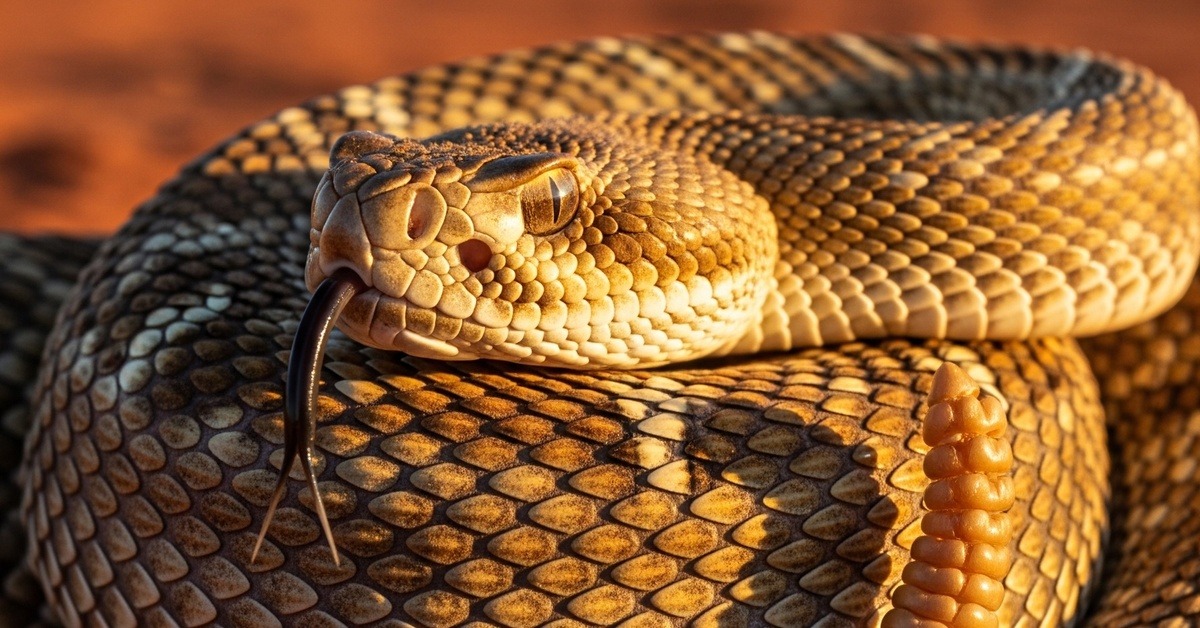
To appreciate why a single peptide stopping dozens of venoms is so remarkable, you have to understand what venom actually is. It isn’t one chemical. A single snake’s venom is a cocktail — often dozens of different proteins and enzymes mixed together, each evolved to do a specific kind of damage. Some venoms are hemotoxic: they attack blood, breaking down clotting factors so a victim bleeds internally or, conversely, clots uncontrollably. Others are neurotoxic: they jam the signals between nerves and muscles, paralyzing the diaphragm until breathing stops. Many vipers add cytotoxic components that dissolve tissue around the bite, which is why severe envenomation can mean amputation even when it doesn’t mean death.
And here’s the cruel part for medicine: each species mixes its cocktail differently. A rattlesnake’s venom shares almost nothing chemically with the venom of a cobra or a saw-scaled viper. Evolution doesn’t standardize. It improvises, region by region. That’s exactly why antivenom has always been a regional, fragmented business.
What makes LTNF so interesting is that it appears to ignore this complexity. Rather than recognizing the unique shape of each toxin the way an antibody does, it seems to latch onto more fundamental structural features that many venom proteins happen to share. If that holds up, it’s the difference between needing a separate key for every lock and finding a master key that works on the family of locks itself.
Why Current Antivenom Is Basically From Another Century
The process hasn’t changed much since the 1890s. You take venom, inject it into a horse or sheep, let their immune system produce antibodies, extract those antibodies, refine them into something that might save a human life. It works. It’s also wildly regionally specific — antivenom made for a North American rattlesnake means nothing to someone bitten by a Russell’s viper in Cambodia. You’re stuck. The venom doesn’t care where you are. The treatment does.
LTNF targets the structural properties of venom toxins directly. No geography required.
A synthetic version could theoretically work across continents. That’s the dream, anyway. That last fact kept me reading for another hour — the idea that we could solve this with one discovery instead of wrestling with dozens of different snakes, dozens of different antivenoins.
The reality is messier. Synthesizing a peptide in a lab and getting it to work safely in a human body are very different problems. Researchers haven’t stopped trying, though. And the fact that a marsupial solved this problem naturally — millions of years before we even understood what venom was — says something worth thinking about.
There’s another problem the horse-based method carries that people rarely discuss: the antibodies come from an animal, so the human immune system can react against them. Serum sickness — a delayed allergic response to the foreign proteins — is a real and sometimes dangerous side effect. The product is also precious, hard to store, and spoils without refrigeration. A small, stable, synthetic peptide would sidestep most of those headaches at once. That’s why the opossum’s quiet trick is worth so much attention.
The Other Superpower Nobody Talks About
Then there’s the rabies thing.
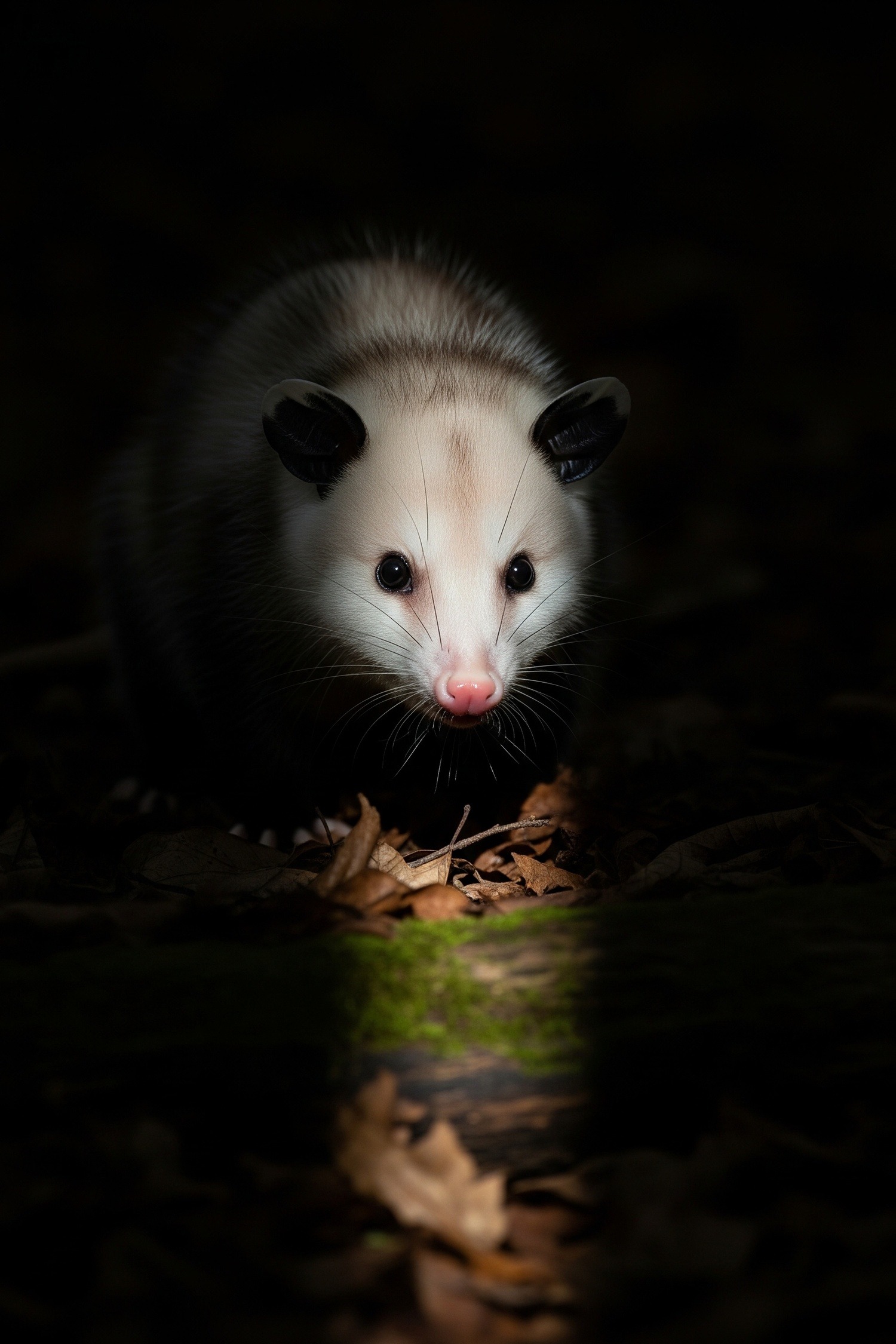
An opossum’s core body temperature runs between 94 and 97 degrees Fahrenheit. That’s cold for a mammal. Cold enough that the rabies virus can’t replicate efficiently inside them. Documented cases of rabid opossums are so rare that wildlife rehabilitators sometimes joke the animals are basically immune. They’re not quite immune — but they’re closer than almost any other mammal on the planet.
Two biological advantages. One animal. And we’ve spent the last hundred years calling it a pest.
An Immune System Built by Deep Time
None of this is luck. It’s the product of an evolutionary head start almost too long to picture. The opossum lineage traces back tens of millions of years, surviving the mass extinction that ended the age of dinosaurs and outlasting countless mammal families that came and went after it. Spend that long on a continent crawling with pit vipers, and natural selection does the obvious thing: the individuals whose blood chemistry shrugs off the occasional venomous bite live longer and leave more offspring. Over thousands of generations, that pressure sculpts a defense.
The opossum is a generalist in almost everything it does. It eats nearly anything, lives nearly anywhere from swamps to suburbs, breeds prolifically, and is not picky about much. That low-stakes, opportunistic lifestyle puts it in regular contact with snakes — both as predators to be avoided and, sometimes, as prey. An animal that occasionally eats venomous snakes has a powerful reason to evolve resistance to their venom. The biology and the behavior reinforce each other.
This is the deeper lesson hiding inside the medical story. Animals that have been solving survival problems for tens of millions of years are walking libraries of chemistry we never had to invent. We look for breakthroughs in clean rooms. Sometimes they’re already finished, road-tested across geological time, sitting inside an animal we drive past on the highway.
The Internet Lied About the Ticks
For years the narrative went viral: opossums eat up to 5,000 ticks per season. Heroes of Lyme disease prevention. The memes were everywhere. The number felt too good to check — so nobody did. But controlled studies found something different. Opossums do groom obsessively. They do consume ticks. But the actual numbers? Far lower than the legend. We had the story wrong.
It’s a useful reminder. We overcorrected into loving the opossum for invented reasons. And that pattern works in reverse, too — we’ve been ignoring its actual superpowers because the animal looks like a special effect gone wrong and hisses at you when you get close.
The real story was always in its blood.
We almost missed it entirely.
From Lab Discovery to Medicine: The Brutally Slow Path
The World Health Organization listed snakebite envenomation as a neglected tropical disease in 2017. That designation unlocked something: money, attention, institutional support. Before that? Researchers knew about LTNF for decades and mostly worked in obscurity.
- Snakebite kills approximately 100,000 people per year globally according to WHO estimates
- LTNF was identified in Virginia opossum blood by researchers at UC San Francisco — decades ago, still no approved human treatment
- Virginia opossum lineage stretches back roughly 70 million years
- An opossum’s body temperature of 94–97°F inhibits rabies virus replication dramatically, though not completely. The virus still can’t replicate efficiently enough to establish infection in most cases.
Synthetic biology has advanced enough that what felt impossible twenty years ago is now just very hard. The opossum’s version of LTNF evolved for opossum biology. Adapting it for humans means understanding exactly how it binds to toxins, what doses would be safe, whether the human immune system would recognize a synthetic version as a threat or attack it. Those are solvable problems. Scientists are working on them right now.
But “very hard” still takes time, and the drug-development pipeline is unforgiving. A promising peptide in a test tube has to survive cell studies, then animal trials, then a long ladder of human trials checking first that it’s safe, then that it actually works, then that it works better than what already exists. Each rung costs years and money. For a disease that overwhelmingly affects the rural poor — people without the purchasing power that drives pharmaceutical investment — that money has historically been hard to find. The science was never the only bottleneck. The economics were the bigger one. The WHO’s 2017 designation matters precisely because it begins to shift that calculus.
Why This Animal Deserves Your Attention
Snakebite is a problem concentrated in the poorest parts of the world. Rural sub-Saharan Africa. South and Southeast Asia. Latin America. The people dying from it can’t access refrigerated antivenom. Can’t afford it. Live too far from a clinic to reach one in time. A stable, synthetic, broadly effective treatment based on opossum venom immunity could reach people that the current system simply doesn’t.
That’s the difference between life and death for tens of thousands of people every year.
And the deaths are only part of the toll. For every person killed by a snakebite, several more survive with permanent damage — lost limbs, ruined kidneys, scarred lungs, blindness. Many are farm workers and children, struck while walking barefoot to a field or fetching water at dusk. The loss of a wage-earner’s hand or leg can push an entire family deeper into poverty. A treatment that could be manufactured cheaply, stored without a fridge, and given regardless of which snake did the biting wouldn’t just save lives. It would protect livelihoods in the places that can least afford to lose them.
What the Opossum Teaches Us About Where Cures Hide
It’s worth stepping back from the snakebite story for a moment, because the opossum is a case study in something larger. Some of medicine’s most important tools came not from designing molecules from scratch but from noticing what nature had already built. Diabetes patients once relied on insulin extracted from pigs and cattle; several modern drugs began as compounds first found in animal blood or saliva. The natural world has spent billions of years running chemistry experiments we are only beginning to read.
The danger is that we read those experiments only after they’ve been published — and far too many of nature’s “papers” are being erased. Every species that disappears takes its private library of compounds with it, unstudied and gone. We have no idea how many quiet solutions to human problems are encoded in animals we consider unremarkable or expendable. The opossum survived long enough for us to start looking. Others won’t.
So the next time you see one frozen in headlights, mouth gaping, looking like the least impressive animal in the forest — remember what’s circulating in its veins. The most valuable thing about an organism is rarely the part we can see.
Why This Animal Deserves Your Attention (Field Notes)
- Opossums are North America’s only native marsupial — young are born underdeveloped and crawl to a pouch, just like kangaroos. A single litter can contain up to 20 joeys.
- The “playing dead” behavior — called thanatosis — isn’t a choice. It’s involuntary. The animal passes out, sometimes for hours, while anal glands produce a foul smell. Most predators lose interest.
- LTNF isn’t the only unusual protein in opossum blood. Researchers have found multiple peptides with potentially useful properties, suggesting the entire immune chemistry is far more complex than anyone initially assumed.
The opossum isn’t majestic. Nobody puts it on a conservation poster. But somewhere in its blood is a molecular solution to a problem that’s been killing people for all of human history. We found it almost by accident, in an animal most people consider a pest.
Frequently Asked Questions
Q: Can an opossum really survive being bitten by a venomous snake?
Far better than most mammals, yes. The opossum’s blood carries a peptide called Lethal Toxin-Neutralizing Factor (LTNF) that binds to and disarms a wide range of venom toxins. It isn’t a force field — a large enough dose can still harm the animal — but its built-in resistance is dramatically higher than ours, which is exactly why scientists are so interested in it.
Q: If this protein has been known for decades, why isn’t there an opossum-based antivenom yet?
Because finding a useful molecule and turning it into an approved human medicine are very different challenges. A synthetic version has to be proven safe and effective through years of laboratory, animal, and human testing — and snakebite mainly affects the rural poor, so the funding to push that process forward has historically been scarce. The WHO’s 2017 recognition of snakebite as a neglected tropical disease is beginning to change that.
Q: Are opossums really immune to rabies?
Not fully immune, but remarkably resistant. Their unusually low body temperature, between 94 and 97°F, makes it hard for the rabies virus to replicate efficiently inside them. Confirmed cases of rabid opossums are extremely rare, though “rare” is not the same as “impossible,” so they should still be treated as wild animals.
Seventy million years. That’s how long this creature has been adapting, surviving, carrying solutions to problems it didn’t know it was solving. We’re just now starting to pay attention. Sometimes the most important discoveries are hiding in plain sight, disguised as something unremarkable. More stories like this at this-amazing-world.com.
Illustrations are AI-generated. Article fact-checked and human-edited. Our editorial standards.