Wolf Moon 2026: The Supermoon That Will Stop You Cold
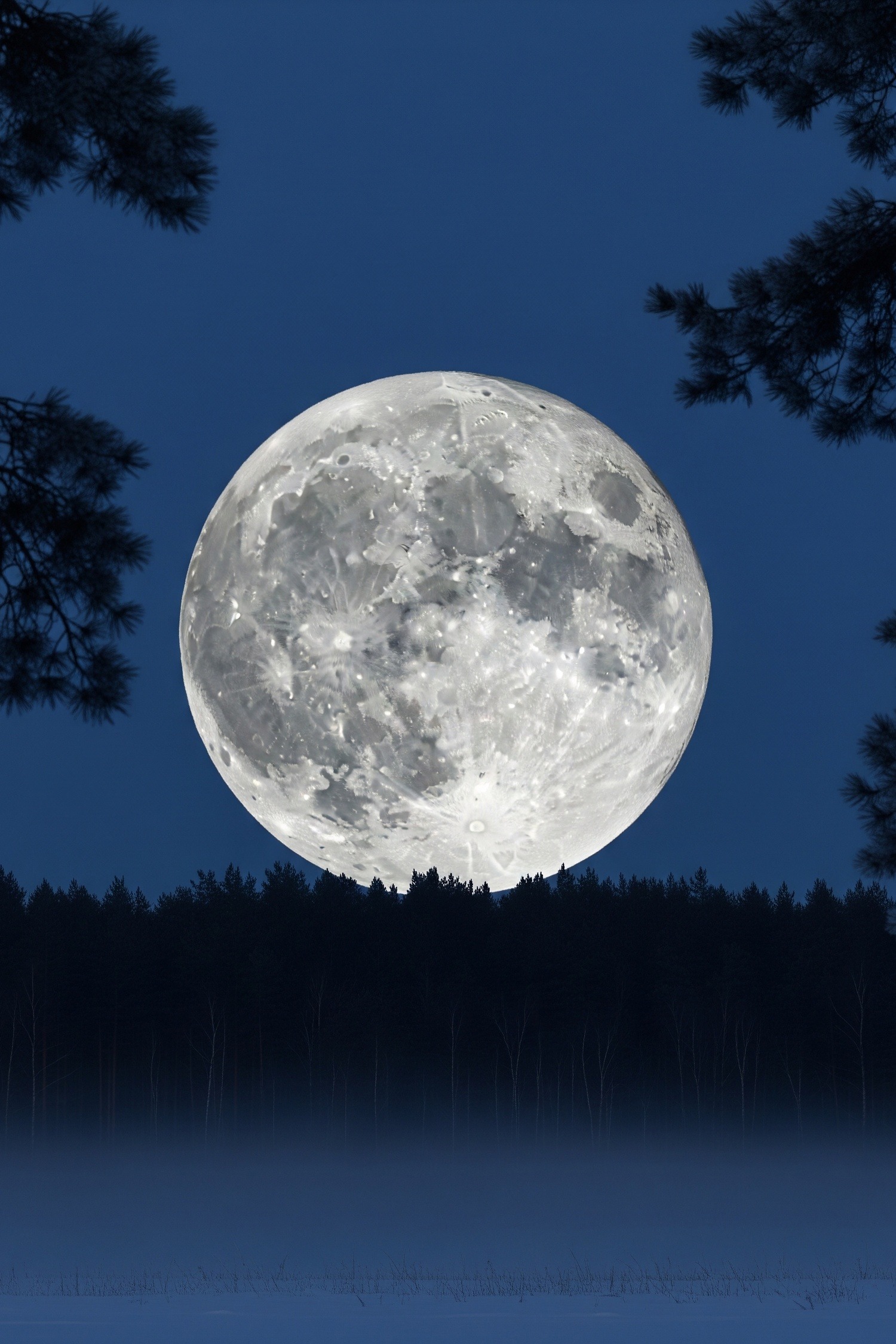
Supermoons arrive in January 2026 with a particular kind of drama — not because they’re rare, but because they interrupt the winter sky so completely that you stop what you’re doing. The Wolf Moon 2026 Supermoon rises on the 3rd, and when it clears the horizon, something shifts in how you perceive scale, distance, and the sheer size of what’s overhead. This happens because perigee — the Moon’s closest orbital point to Earth — aligns within hours of full illumination, producing what astronomers call a Supermoon: roughly 14% larger in apparent diameter, up to 30% brighter than a full Moon at apogee.
The spectacle is free. The timing is precise: January 3rd, 2026. And yet the question that matters most isn’t astronomical at all — it’s whether you’ll actually step outside and look.
Key Facts
- The Wolf Moon 2026 Supermoon rises on January 3, 2026, with perigee within hours of full illumination.
- At perigee the Moon sits about 356,000 kilometers from Earth, versus an average distance of 384,400 km and an average apogee around 405,500 km.
- A Supermoon appears roughly 14 percent larger in apparent diameter and up to 30 percent brighter than a full Moon at apogee.
- The term “Supermoon” was coined by astronomer Richard Nolle in 1979 for a full or new Moon within 90 percent of its closest approach to Earth.
- The “Wolf Moon” name comes from Indigenous peoples of North America, including the Ojibwe, Cree and Algonquin, and was popularized by the Maine Farmer’s Almanac in the 1930s.
In short: The Wolf Moon 2026 Supermoon peaks on January 3, 2026, when the Moon reaches perigee about 356,000 km from Earth within hours of full illumination. It will appear roughly 14 percent larger and up to 30 percent brighter than a full Moon at apogee. The horizon Moon illusion further amplifies its apparent size.
What Makes the 2026 Wolf Supermoon Different
Astronomer Richard Nolle coined “Supermoon” in 1979 to describe a full or new Moon occurring within 90% of its closest approach to Earth. Not every full Moon earns the label. For the Wolf Moon 2026 Supermoon, the Moon reaches perigee within hours of full illumination, placing it approximately 356,000 kilometers from Earth — compare that to the Moon’s average distance of 384,400 kilometers, and the average apogee distance of around 405,500 kilometers. The physics of the Moon’s elliptical orbit means this isn’t a rare cosmic accident. It’s a predictable consequence of geometry.
But knowing the mechanics doesn’t diminish the sight.
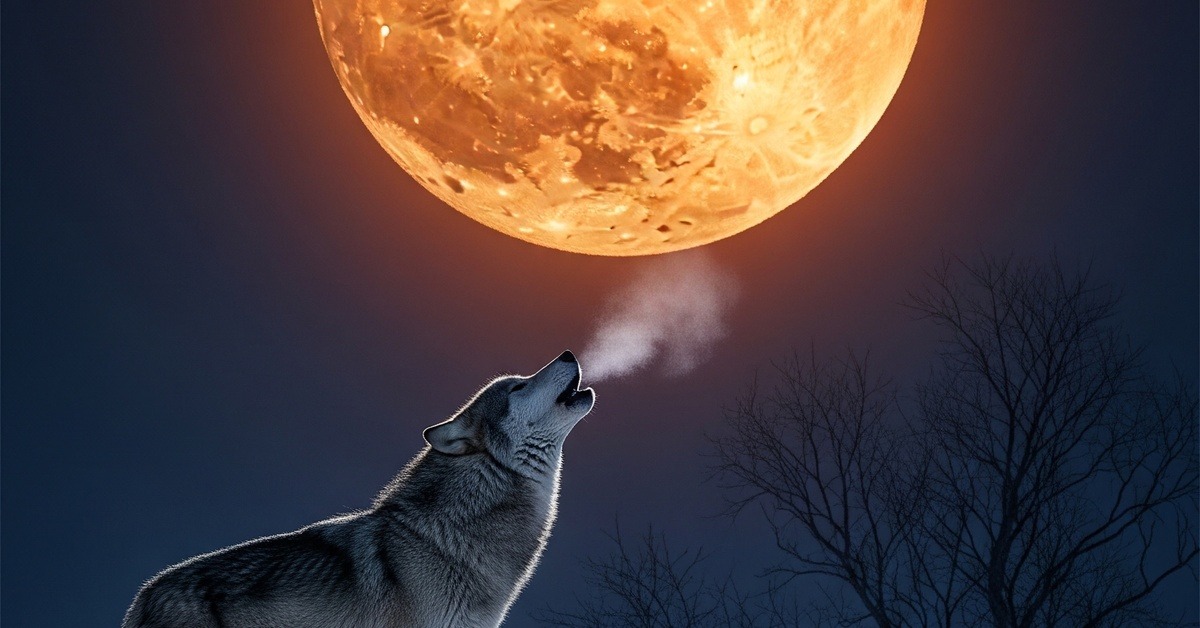
A 14% increase in apparent diameter sounds modest on paper. In the sky, particularly when the Moon sits low and heavy on the horizon, it doesn’t feel modest at all. The brightness difference — up to 30% more than a Moon at apogee — changes how shadows fall across snow. It changes how frost looks on a car roof. It changes the texture of a frozen field. Here’s the thing: this is the sensory payoff nobody talks about in the headlines.
Step outside just after moonrise for the full effect. That’s when the Moon is still close to the horizon, still framed against earthly objects, still working with your brain rather than floating alone in featureless sky. That’s when the Wolf Moon looks like it means something — and to the cultures who named it, it always did.
The Name That Outlasted the Wolves
“Wolf Moon” doesn’t come from astronomy. It comes from survival. Indigenous peoples of North America — including the Ojibwe, the Cree, and the Algonquin — assigned names to each full Moon as a way of tracking the year, marking seasons, and organizing the rhythms of life in landscapes that didn’t forgive inattention. January’s Moon was named for what January sounded like: wolf packs howling across frozen terrain, audible over vast distances in the brittle cold air, hunting on nights when prey animals were weakened by hunger and deep snow. The name wasn’t poetic embellishment. It was field observation.
Colonial European settlers adopted the lunar naming tradition, and the names were eventually popularized by the Maine Farmer’s Almanac, which began publishing Moon names in the 1930s. What’s striking is how durable these names have proven. “Wolf Moon” has outlasted the wolves themselves in most of the landscapes where the name was born. Gray wolf populations were driven to functional extinction across the American Midwest and Eastern United States through the early twentieth century. The howling that gave January its name went silent across millions of square kilometers. The name stayed. We preserved the word long after we eliminated the thing it described, and watching a species disappear at this speed, you stop calling it history — you start calling it indifference.
The Moon Illusion: Why Your Brain Betrays You
The most dramatic thing about watching the Wolf Moon 2026 Supermoon rise has nothing to do with the actual physics of perigee. Why does the Moon appear so much larger near the horizon? Because a perceptual phenomenon that has puzzled philosophers and scientists for more than two thousand years kicks into effect the moment you look.
Aristotle noted it. René Descartes tried to explain it. Ptolemy proposed a theory in the second century AD that was wrong but logical. The Moon illusion — the apparent enlargement of the Moon when it sits near the horizon compared to when it hangs high in the sky — still doesn’t have a fully settled scientific explanation. According to research published by NASA’s Goddard Space Flight Center, the leading hypothesis involves the brain’s size-distance interpretation: when the Moon is near the horizon, the presence of reference objects like buildings, trees, and mountains triggers the brain’s depth-perception system, which interprets the Moon as farther away and therefore renders it as larger to maintain perceptual consistency (and this matters more than it sounds — because the Moon’s actual angular diameter hasn’t changed by a single arc-second). But your experience of it has.
For the Wolf Moon 2026 Supermoon, this illusion compounds the genuine optical effect of perigee. You’re getting a Moon that is measurably closer — producing a real 14% increase in angular diameter — and a brain that is simultaneously amplifying that size through perceptual distortion. The result can feel startling even to people who know exactly what’s happening. Astronomers who’ve watched hundreds of moonrises still describe the low-horizon Moon as arresting. Knowledge of the mechanism doesn’t short-circuit the experience. If anything, it intensifies it.
Photography tip, if you want to capture it: shoot within the first 20 minutes of moonrise. Use a telephoto lens and place a recognizable foreground element in the frame — a barn, a silhouetted figure, a mountain ridge. The illusion photographs beautifully. Your phone camera, on its own, will flatten and diminish the Moon into something unremarkable. Give the image context. That’s what makes a photograph feel like a memory.
Wolf Moon 2026 Supermoon: How to Watch It Right
January 3rd, 2026 — that’s the date. Moonrise times will vary by latitude and longitude, so check a local astronomy app like SkySafari or Stellarium for your precise location. Perigee occurs within hours of full phase, so the difference in apparent size is negligible to the naked eye whether you step outside on the 3rd or the 2nd or the 4th. The basic strategy doesn’t change: get outside within 30 minutes of moonrise, find a clear eastern horizon, and position yourself so that the rising Moon is framed against something with scale. A roofline. A ridgeline. A harbor. Anywhere that gives your brain the reference points it needs to register the full scale of what it’s seeing.
Timing matters more than location for this event. But the Royal Astronomical Society has noted that Supermoon events produce measurable increases in public astronomy engagement — first-time telescope purchases spike, star-gazing club memberships rise — and 2025 data suggested that social media sharing of Moon photography has increased by roughly 340% on Supermoon nights compared to ordinary full Moons.
Weather, of course, is the variable nobody controls. January in the Northern Hemisphere means cloud cover is a genuine threat across much of North America, Europe, and northern Asia. If your local sky is overcast on the 3rd, the Moon will be nearly as impressive on the nights immediately before and after — the 2nd and the 4th will both show a Moon within 1-2% of full illumination, still technically at perigee proximity, still worth the cold. Don’t let a single cloudy evening cause you to miss it entirely. The window is wider than a single night.
Southern Hemisphere observers — Australia, southern Africa, South America — will see the Moon appear slightly higher in the sky, reducing the horizon illusion somewhat, but the Supermoon effect remains fully intact. New Zealand’s South Island, with its dark skies and dramatic mountain backdrops, is one of the finest places on Earth to watch a January full Moon rise. And the cold is real there too.
Where to See This
- Yellowstone National Park, Wyoming, USA — January moonrises over the Lamar Valley, where wild wolf packs were reintroduced in 1995, offer one of the few places on Earth where the name “Wolf Moon” is still literally accurate. Winter wolf activity in the valley peaks in January.
- The Royal Astronomical Society (ras.org.uk) and the American Astronomical Society (aas.org) both maintain event calendars listing public Moon-gazing events, dark-sky site recommendations, and observer guides for Supermoon events.
- Download Stellarium (free, stellarium.org) and enter your location to get the precise moonrise time, azimuth, and altitude for January 3rd, 2026 — then scout your viewing location the evening before so you’re not hunting for a clear horizon in the dark.
By the Numbers
- 356,000 km — approximate distance from Earth to the Moon at perigee during the Wolf Moon 2026 Supermoon, compared to the average distance of 384,400 km.
- 14% — increase in apparent lunar diameter at perigee compared to apogee (farthest point), equivalent to a difference of roughly 0.07 degrees of arc.
- 30% — increase in apparent brightness of a Supermoon compared to a full Moon at apogee, due to the inverse-square relationship between distance and illumination intensity.
- 1979 — the year astronomer Richard Nolle first defined and published the term “Supermoon” in the astrology journal Dell Horoscope.
- 4-6 — the typical number of Supermoons that occur per calendar year, though the January 2026 event is notable for its particularly close perigee proximity to full phase.
Field Notes
- In 2016, the November full Moon was the largest Supermoon since 1948, prompting NASA’s Jet Propulsion Laboratory to release tidal modeling data showing measurable — though minor — increases in ocean tidal range during extreme perigee events. The Wolf Moon 2026 Supermoon won’t match that record, but it falls in the upper tier of perigee proximity for the decade.
- The Moon illusion works even when you know it’s an illusion. Experimental psychologist Lloyd Kaufman and his son James Kaufman published research in 2000 demonstrating that informing subjects about the perceptual mechanism does not reduce its effect — the brain’s size-estimation system operates below conscious override.
- Wolves don’t actually howl more during full Moons — that’s mythology, not biology. Research from the Yellowstone Wolf Project found no statistically significant correlation between lunar phase and howling frequency. Wolves howl to communicate location, rally pack members, and reinforce social bonds. The full Moon simply makes it easier for humans to hear — and romanticize — what was always there.
- Astronomers still can’t fully explain why the Moon illusion varies so dramatically between individuals. Some people experience the horizon Moon as twice the size of the zenith Moon; others barely notice a difference. The neural mechanism appears to involve individual variation in how the brain calibrates the “sky dome” — but whether that’s learned, innate, or some combination remains genuinely unresolved.
Frequently Asked Questions
Q: When exactly does the Wolf Moon 2026 Supermoon peak, and when should I go outside?
The Wolf Moon 2026 Supermoon reaches full phase on January 3rd, 2026, with perigee occurring within hours of that moment. For the best visual experience, go outside within 30 minutes of your local moonrise — check a free app like Stellarium for your exact time. The Moon will appear largest and most dramatic when it’s still low on the eastern horizon, before it climbs into the mid-sky and loses the scale provided by foreground objects.
Q: What actually makes a Supermoon look bigger — is it real or just an illusion?
It’s both, and the two effects stack. Perigee genuinely increases the Moon’s angular diameter by about 14% compared to apogee — that’s a real, measurable optical difference. Simultaneously, the Moon illusion amplifies perceived size when the Moon is near the horizon by triggering the brain’s depth-perception system. When you watch the Wolf Moon 2026 Supermoon rise, you’re experiencing a real physical effect compounded by a perceptual one. Neither cancels the other. Both are legitimate.
Q: Is a Supermoon actually rare, and should I feel lucky to see this one?
Supermoons are often overhyped as rare events — they’re not. Between four and six Supermoons occur each year. What’s less common is a Supermoon where perigee falls within just a few hours of the full phase moment, which intensifies the effect compared to Supermoons where perigee and full Moon are separated by a day or more. The Wolf Moon 2026 Supermoon is a strong example of the latter — a tightly aligned event. Rare? No. Worth your January evening? Absolutely yes.
Editor’s Take — Dr. James Carter
What strikes me about the Wolf Moon isn’t the physics — it’s the persistence of the name. We called January’s Moon after wolves. Then we spent a century killing wolves across most of their range. The name survived; the howling didn’t. Now, in places like Yellowstone, the wolves are slowly coming back, and January nights in the Lamar Valley sometimes sound exactly the way they must have sounded to the people who coined the name in the first place. That’s not sentiment. That’s a conservation story hiding inside a calendar.
The Wolf Moon 2026 Supermoon is, in the end, a piece of machinery — orbital mechanics, angular geometry, perceptual neuroscience, all running on schedule. But stand outside on the night of January 3rd, in the cold, with no screen between you and the sky, and the machinery disappears. What remains is something older: a full Moon rising over a frozen landscape, larger than you expected, brighter than seems possible, filling the kind of silence that used to be filled with howling. What does it still stir in you, if you let yourself stand in it long enough to find out?
Illustrations are AI-generated. Article fact-checked and human-edited.