The Wolfdog Who Crashed a World-Class Ski Race
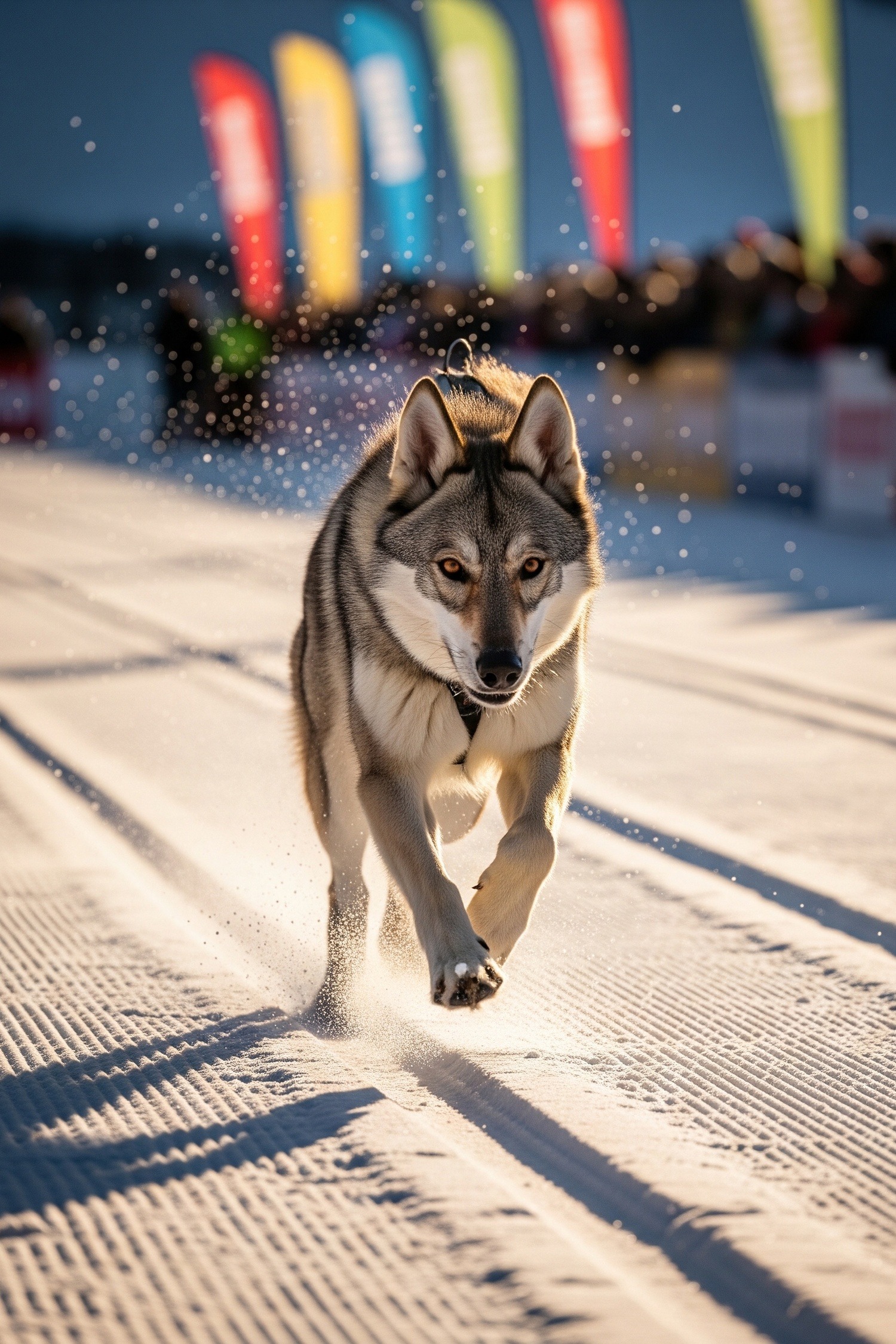
A wolfdog sprinting a ski race at Val di Fiemme — that sentence is real, and it broke something in how we think about sport. Two-year-old Nazgul bolted onto the course mid-race, ears flat, full stride, completely committed to a competition he’d never entered. Croatian skier Tena Hadzic crossed the finish line seconds later and genuinely questioned whether she was hallucinating. The wolfdog ski race at Val di Fiemme wasn’t just absurd. It was the moment an animal rewrote what a sporting event could mean.
Val di Fiemme sits in the Dolomites of northern Italy, a valley so synonymous with Nordic skiing that its name appears on the trophy boards of the sport’s greatest athletes. The venue has hosted World Championships, produced Olympic medalists, and written decades of cross-country skiing history. When Nazgul escaped from the nearby bed-and-breakfast owned by Alice Varesco and joined the women’s team sprint qualification, something happened that no race director had protocols for — and that the internet absolutely did not let go of.
Why did this moment land harder than the race itself? That question is worth sitting with, because the answer reveals something about what humans actually care about when they’re watching sport.
Key Facts
- A two-year-old wolfdog named Nazgul sprinted onto the cross-country course during a women’s team sprint qualification at Val di Fiemme, Italy.
- Val di Fiemme sits at roughly 1,000 meters elevation in Trentino-Alto Adige and hosted the FIS Nordic World Ski Championships in 2013.
- Nazgul belongs to Alice Varesco, whose bed-and-breakfast sits near the course; Croatian skier Tena Hadzic witnessed the run.
- Gray wolves can sustain chase speeds of 56 to 64 km/h in short bursts, the template Nazgul is built on.
- Video of the incident reached millions of views across social platforms within 48 hours.
In short: The wolfdog ski race at Val di Fiemme happened when two-year-old Nazgul escaped his owner’s nearby B&B and sprinted onto the cross-country course mid-competition. Announcers noted he ‘wasn’t interfering with anyone’s race.’ No athletes were injured, and video reached millions of views within 48 hours, outlasting the actual race results.
When a Wolfdog Entered the Val di Fiemme Arena
Roughly 1,000 meters elevation. That’s where Val di Fiemme sits in Trentino-Alto Adige, a valley so committed to Nordic skiing that the Stadio del Fondo di Tesero has become one of the sport’s most technically demanding venues. The Val di Fiemme valley hosted FIS World Championships multiple times — most recently in 2013 — and draws tens of thousands of spectators to events that rank among the most watched in winter sport. When Nazgul hit that course mid-competition, he wasn’t wandering into a quiet field. He was crashing one of the most prestigious Nordic skiing circuits in the world, in front of a packed crowd and a live broadcast, with no off-ramp.
Nazgul belongs to Alice Varesco, whose bed-and-breakfast sits close enough to the course that the crowd noise apparently felt like a direct provocation. Here’s the thing: the moment the skiers passed — poles driving, legs pumping, the crowd surging — something clicked in Nazgul’s brain. Not confusion. Not panic. Decision. He cleared whatever barrier stood between him and the course and ran as if he’d been entered in the race himself. His stride, by all accounts, was not embarrassing.
Wolfdogs carry the build of a gray wolf with the socialized confidence of a domestic dog, and Nazgul used every inch of both. The announcers kept their composure. Barely. Their official on-air assessment — that he “wasn’t interfering with anyone’s race” — is the kind of deadpan understatement that deserves its own bronze medal. Meanwhile, Tena Hadzic crossed the finish line, clocked her time, and later admitted she’d needed a moment to confirm that what she’d seen was, in fact, real.
Wolfdogs: What’s Actually Running Through That Brain
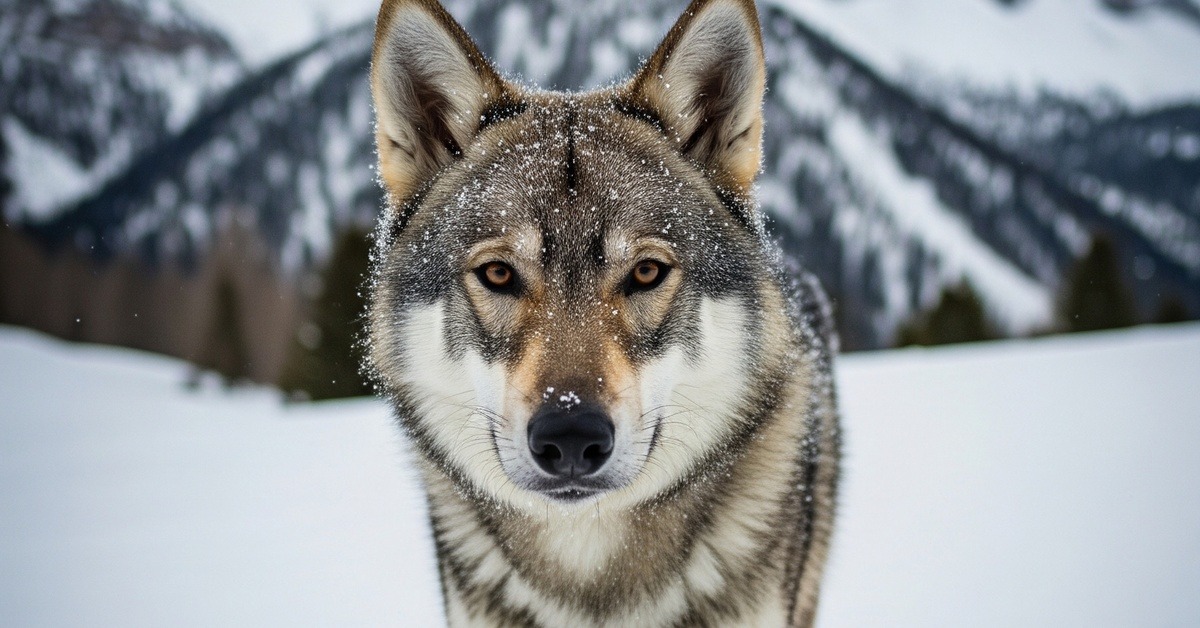
A wolfdog is not a domesticated wolf, and it’s not simply a very wild-looking dog. To understand what Nazgul did, you have to understand that exact middle ground.
Wolfdogs are hybrids of domestic dogs and gray wolves — organisms that occupy a genuinely complicated biological and behavioral space. Research published by the Wolf Science Center in Ernstbrunn, Austria, consistently shows that wolves retain independent problem-solving tendencies that domestication has largely suppressed in dogs. Founded in 2008, the institution has conducted some of the most rigorous comparative cognition studies on wolves and dogs, and their data is unambiguous: wolfdogs inherit a mixture of both impulses, which makes their behavior genuinely harder to predict.
Intense attachment to a specific person or place is a documented trait. So is the tendency to act on that attachment in ways that feel, from the outside, extreme. Nazgul’s response to the race wasn’t just curiosity — it was pursuit. That’s a wolf behavior wired deep, the kind that survives inside a hybrid even when the animal has spent its life bonded to humans.
What makes the wolfdog’s behavior at Val di Fiemme particularly legible, once you know the science, is the trigger. Wolfdogs don’t tend to bolt randomly. They respond to movement — fast, directed, socially charged movement especially. A cross-country ski race is essentially a perfect wolfdog stimulus: athletes moving at speed, crowd energy spiking, noise amplifying. The same instinct that drives wolves to track prey across kilometers of terrain translated, in Nazgul’s case, into joining a ski race in Italy.
After the race, Nazgul collected pets from volunteers and athletes with the calm satisfaction of someone who had completed what they came to do. He didn’t resist. He didn’t flee. He just — stopped. Mission accomplished, apparently. Then he went home.
And that combination of wild instinct and domestic attachment is something we see reflected across the animal world — much like the baby monkey clinging to a stuffed toy for years, Nazgul’s behavior reveals how deeply wired attachment and pursuit really are in mammals who’ve grown up bonded to a human presence.
The Crowd Reaction Science Never Quite Prepares You For
Here’s where Nazgul becomes something bigger than himself: the internet didn’t just enjoy this story. It consumed it. Videos of the wolfdog ski race at Val di Fiemme accumulated millions of views within days. Comment sections filled with people who had no prior interest in cross-country skiing suddenly narrating Nazgul’s motivations with the confidence of sports analysts.
Sports psychologists and behavioral researchers have spent years studying what they call “unexpected agent” phenomena in competitive contexts — moments when an unscripted, non-human, or otherwise anomalous participant enters a high-stakes human event. A 2019 analysis published by the National Geographic Society on human-animal emotional bonding found that surprise animal appearances in human social contexts trigger disproportionately high emotional engagement — measurably higher than comparable human-only moments. Nazgul didn’t just go viral. He triggered a documented psychological response.
Why does this matter?
Because the wolfdog ski race at Val di Fiemme worked on people for several reasons operating simultaneously: the sheer absurdity of the image (a wolfdog in full sprint on a groomed race course in the Italian Alps), the vulnerability of it (an animal acting on pure instinct in a human-built environment, somehow not getting hurt), and the joy of the athletes themselves, who, rather than complaining, reportedly sought Nazgul out afterward for photos. Croatian skier Tena Hadzic’s bewilderment was everyone’s bewilderment, translated into competitive sport. (Researchers actually call this emotional mirroring, and it’s one of the most powerful mechanisms for viral spread in modern media.)
This is why sports moments involving animals stick in cultural memory in a way that purely athletic achievements sometimes don’t. They’re unrepeatable. They can’t be trained for, predicted, or replicated. They happen once, and then they become the story that outlasts the scoreboard.
The Wolfdog Ski Race Val di Fiemme Won’t Let Go Of
Ten years from now, ask someone who was watching the cross-country circuit at Val di Fiemme what they remember from this period, and a meaningful percentage will say: the dog.
University of Southern California’s sports media research group has tracked “peripheral viral moments” in major sporting events since 2015, finding that unscripted, non-competitive incidents — a streaker, a bird on the field, an animal on the course — generate media lifespans between three and seven times longer than the athletic results from the same event. The 2014 FIFA World Cup had the octopus predictions from 2010 still circulating in coverage. The wolfdog at Val di Fiemme will almost certainly outlast the podium results from the same day’s race in public memory, which is a strange and genuinely interesting fact about what humans choose to archive emotionally.
But this is where it gets interesting: watching a species’ wild instinct override every boundary humans have built to contain sport, you stop treating the moment as comedy. It becomes something else. It becomes evidence.
Cross-country skiing at the level of Val di Fiemme is extraordinary — athletes enduring lactate thresholds and oxygen demands that would incapacitate most people, executing technique refined over decades of training, competing for fractions of seconds in conditions that punish every error. The wolfdog ski race moment didn’t diminish any of that. But it reminded a global audience, briefly and without warning, that sport exists inside a larger, stranger, more chaotic world — one where a two-year-old wolfdog with strong opinions about racing can simply decide to participate, and there is absolutely nothing anyone can do about it in time.
Alice Varesco has reportedly taken all of this with good humor. Nazgul, by all accounts, has not changed his behavior meaningfully. Some lessons don’t stick. That’s also very wolfdog.
How It Unfolded
- 2013 — Val di Fiemme hosts the FIS Nordic World Ski Championships, cementing its reputation as one of the sport’s most storied venues in Europe.
- 2024 — Nazgul, a two-year-old wolfdog, escapes from Alice Varesco’s nearby bed-and-breakfast and sprints onto the cross-country course during the women’s team sprint qualification.
- Within 48 hours — Video of the wolfdog ski race at Val di Fiemme reaches millions of views across social platforms, with commentary in over a dozen languages.
- 2026 — The Winter Olympics approach, and Val di Fiemme stands as a reference point for the circuit — now carrying, in the popular imagination, a wolfdog-shaped asterisk beside its otherwise immaculate competitive record.
By the Numbers
- Wolfdogs typically inherit between 30% and 85% wolf content depending on breeding generation, according to the International Wolf Center (2022).
- The Val di Fiemme stadium course covers approximately 2.5 kilometers per loop, on groomed tracks maintained at elevations around 1,000–1,100 meters.
- Gray wolves can sustain chase speeds of 56–64 km/h over short bursts — Nazgul, built on that template, was reportedly moving at a pace that impressed even the athletes.
- The FIS World Cup cross-country circuit draws a combined global broadcast audience estimated at over 150 million viewers annually (FIS, 2023).
- Wolfdogs in Italy are subject to regional regulations that vary by province; Trentino-Alto Adige has specific ownership guidelines distinct from national law.
Field Notes
- Wolfdog behavior researchers at the Wolf Science Center in Ernstbrunn documented in 2021 that high-content wolfdogs show significantly stronger “following” responses to fast-moving targets than domestic dogs of comparable size — Nazgul’s sprint wasn’t random; it fits a behavioral profile precisely.
- Cross-country ski courses at World Cup level use electronic timing systems accurate to one-hundredth of a second — there is no official record of how Nazgul’s split compared to the field, which feels like a missed opportunity.
- Val di Fiemme has a documented history of wildlife proximity: the surrounding Dolomites are home to reintroduced gray wolf populations that have expanded steadily since the 1990s, making wolf-adjacent animals in the region less ecologically surprising than they might seem.
- Researchers studying human-animal viral moments still can’t fully explain why some animal incidents produce weeks of cultural engagement while others fade within hours — the emotional “stickiness” formula remains genuinely unresolved in behavioral science.
Frequently Asked Questions
Q: What exactly happened during the wolfdog ski race at Val di Fiemme?
During a women’s cross-country team sprint qualification at Val di Fiemme, Italy, a two-year-old wolfdog named Nazgul escaped from his owner’s nearby property and sprinted directly onto the race course. He ran at full speed alongside the athletes, was noted by announcers as “not interfering with anyone’s race,” and afterward accepted attention from volunteers and athletes before being taken home. No athletes were injured, and Nazgul appeared entirely satisfied with the outcome.
Q: Are wolfdogs legal to own in Italy, and are they safe around people?
Italy’s regulations on wolfdog ownership vary by region. Trentino-Alto Adige, where Val di Fiemme is located, has specific provincial guidelines that differ from national law. High-content wolfdogs — those with significant gray wolf ancestry — require specialized handling and environments. They can bond deeply with their owners, as Nazgul clearly did with Alice Varesco, but their instincts remain substantially more wolf-like than a domestic dog’s, particularly around movement triggers like fast-moving athletes.
Q: Why did this story go so viral when the actual race results didn’t?
A common assumption is that viral animal moments succeed because they’re cute — but behavioral research suggests the mechanism is more specific than that. Unexpected non-human agents appearing in high-stakes human contexts trigger a documented spike in emotional engagement, according to studies on crowd psychology and sports media. The wolfdog ski race at Val di Fiemme combined surprise, physical comedy, zero harm, and genuine athlete bewilderment into a moment that was simultaneously funny, warm, and completely unrepeatable. That combination is extremely rare, and human brains reward it accordingly.
Editor’s Take — Alex Morgan
What gets me about Nazgul isn’t the sprint. It’s what came after: athletes who’d just competed at elite level actively sought out the wolfdog for photos. No complaints, no protests to officials, no social media grievance. Just — delight. That tells you something real about what sport costs people at that level, and what they’re still hungry for underneath the competition. The wolfdog at Val di Fiemme didn’t interrupt the race. He reminded everyone in that stadium why they were there in the first place.
Sport is built on control — of body, technique, time, and environment. Val di Fiemme exists precisely because humans have found ways to impose extraordinary precision onto a frozen landscape. And then a two-year-old wolfdog decided none of that applied to him, and the entire apparatus of elite sport paused, collectively, to watch him run. The 2026 Winter Olympics will produce records that stand for decades. But somewhere in the Dolomites, a wolfdog named Nazgul is sleeping off a race he entered without registering, and the people who watched him are smiling without quite knowing why.
Illustrations are AI-generated. Article fact-checked and human-edited. Our editorial standards.