The 9-Centimeter Scar That Two Chests Now Share
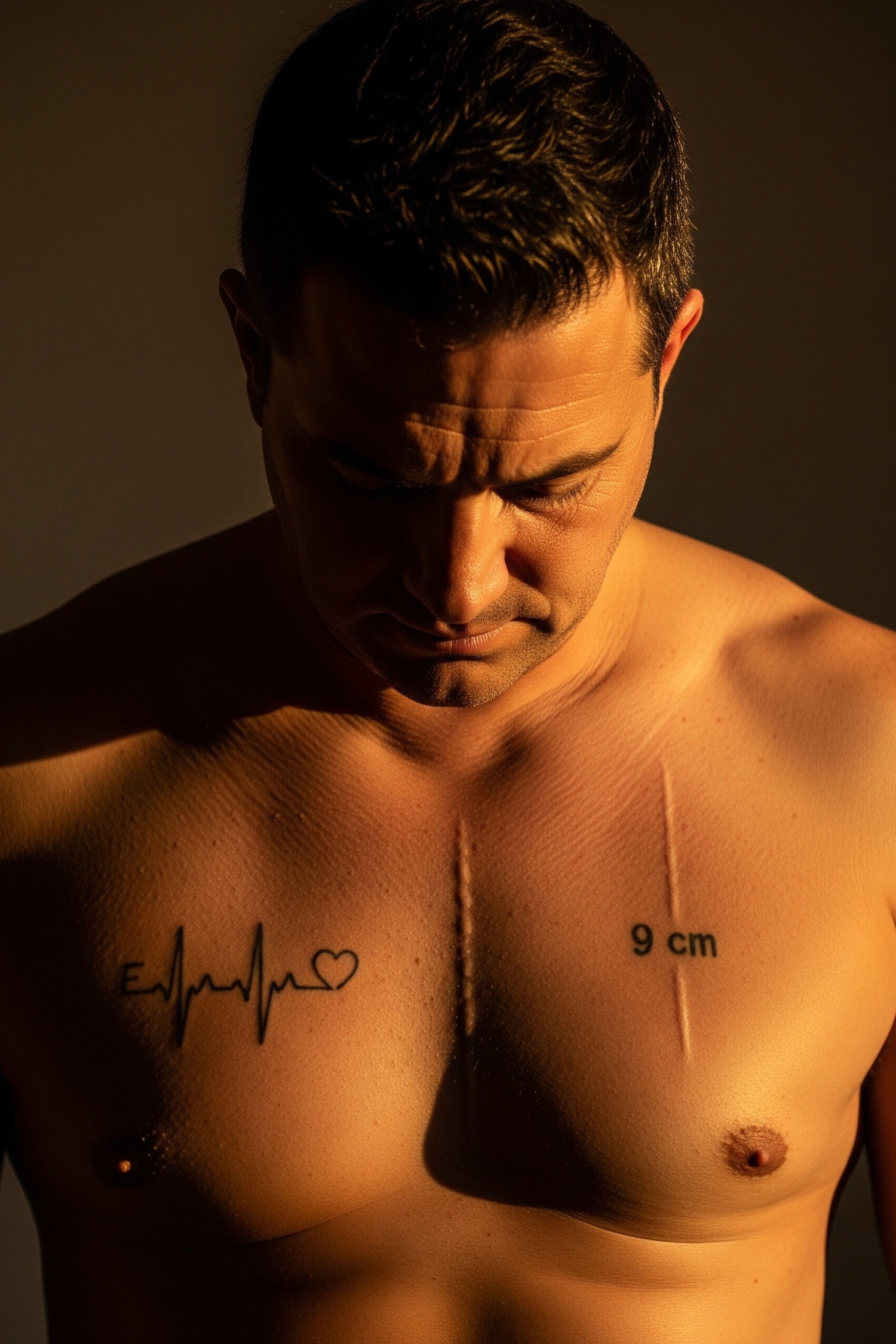
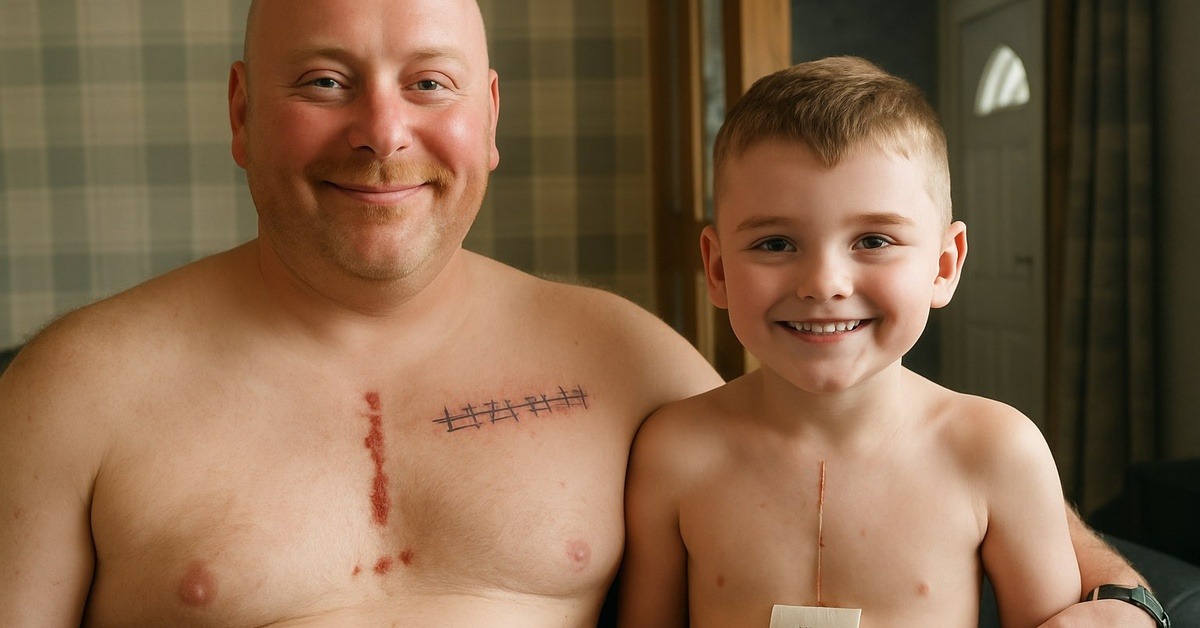
Martin Watts has nine centimeters of ink on his chest — a pediatric open heart surgery tattoo that traces his son’s surgical scar with perfect precision. He sat in a chair. A needle moved. And suddenly he was carrying proof of something he could never have prevented: that his boy survived the operating table. The impulse felt simple. The psychology behind it turned out to be far more complicated.
Joey was born with a congenital heart defect. So were roughly 1.35 million other children last year. So will another 1.35 million this year. The diagnosis arrives without warning. The surgery comes fast. And then the scar — typically seven to twelve centimeters, running vertically down the center of the chest — becomes the permanent marker of what the family has endured. Martin’s response was to make it his own marker too.
Key Facts
- Congenital heart defects occur in about 1 in 100 births, making it the world’s most common birth defect (American Heart Association, 2023).
- Roughly 40,000 infants are born annually in the United States with a congenital heart defect, and about 1.35 million globally.
- A pediatric median sternotomy scar averages 9 centimeters, ranging from 7 to 12 cm depending on body size.
- Mended Little Hearts support group grew from 14,000 members in 2015 to over 38,000 by 2022, a 171% increase.
- Survival for children with congenital heart defects in high-income countries is now about 90%, up from under 20% before surgery became standard in the 1950s.
In short: A pediatric open heart surgery tattoo replicates a child’s median sternotomy scar, typically 7 to 12 centimeters, on a parent’s body, often adding the child’s ECG waveform. Research from the University of Northern Colorado links such memorial tattoos to reduced grief and stronger identity through what scholars call narrative reclamation.
When the Surgeon’s Mark Becomes a Shared Scar
Congenital heart disease is the most common birth defect on the planet. The American Heart Association reports approximately 40,000 infants born with it annually in the United States. Globally: 1.35 million. The specific defect varies — ventricular septal defects, tetralogy of Fallot, hypoplastic left heart syndrome — but many require the same foundational surgical approach: a median sternotomy. Surgeons cut directly through the sternum to access the heart. The median sternotomy has been standard since the 1950s. It leaves a distinctive vertical scar, typically between seven and twelve centimeters long, running down the center of the chest. That scar is what fathers like Martin Watts have been requesting tattooed onto their own bodies.
Why does this matter? Because what started as isolated acts of parental grief became a documented cultural practice. Facebook groups and Reddit threads dedicated to congenital heart disease families began filling with photographs: a child’s surgical line alongside a parent’s matching tattoo. Social media didn’t create the impulse. But it amplified it, made it visible, gave it a name. Tattoo artists in major cities now report specific requests for cardiac scar replication. Some parents add a wavy line — an actual electrocardiogram pulled directly from the hospital monitor readout — running parallel to the scar outline.
Martin’s design included both elements.
The scar placement. Joey’s heartbeat, printed from the ICU monitor on the night his son stabilized. That jagged line — that specific, irreplaceable proof of life — now lives permanently on a father’s chest.
How Medical Trauma Gets Rewritten on the Body
Psychologists who study post-traumatic growth have documented tattoos as one of the more powerful tools for what researchers at the University of Texas at Austin called “narrative reclamation” in their 2018 work. Here’s the thing: trauma strips agency. A diagnosis arrives without warning. Surgery happens on someone else’s body. Parents stand helpless in a waiting room, watching a stranger with a blade make decisions that matter more than any decision they’ll ever make themselves. The tattoo inverts that helplessness entirely. It becomes a deliberate, chosen, painful act that transforms a passive experience into an active one.
You can trace this impulse backward through history. Sailors tattooed crosses on their feet to ward off drowning. Holocaust survivors tattooed concentration camp numbers onto their descendants as acts of witness. But the pediatric cardiac surgery tattoo carries a specific weight because the scar it replicates belongs to someone else — someone small, someone who never chose the wound (and this matters more than it sounds: the parent is choosing to carry the child’s involuntary mark as a voluntary one). Between 2015 and 2022, the nonprofit organization Mended Little Hearts documented membership growth from 14,000 to over 38,000 across the United States. Rising diagnosis numbers explain some of that. But rising awareness of the emotional aftermath explains the rest.
Grief counselors working with CHD families report a pattern: the tattoo conversation usually arrives after discharge, not before. Crisis mode ends. Adrenaline stops flooding the system. And suddenly there’s space for a different kind of pain — the retrospective kind, the kind that arrives when you finally have time to think about what you just lived through.
The Science of Healing Ink: What Research Actually Says
The idea that tattoos might serve a therapeutic function isn’t anecdotal noise. Research published in Smithsonian Magazine in 2021, drawing on work from the University of Northern Colorado, found that memorial tattoos — those tied to death, illness, or trauma — were associated with reduced grief symptoms and a stronger sense of personal identity. These findings mapped onto what CHD communities had already been reporting: the act of tattooing a scar creates a sensory anchor. It gives abstract fear a physical address. And that, according to somatic therapists, begins the process of integrating traumatic memory into a coherent narrative rather than leaving it fragmented and reactive.
The counterintuitive part arrives here: the pain of the tattooing process itself appears therapeutic. Watching someone deliberately endure discomfort for a choice they made — that’s the inverse of medical trauma. Needle pain echoes and somehow answers the uncontrolled suffering they witnessed their child experience. For parents of children who underwent a pediatric open heart surgery tattoo replication, the nine-centimeter line traced by the needle isn’t incidental. It’s the entire point. I endure this, the act seems to declare, because my child endured that.
Not every mental health professional endorses this unconditionally. Some therapists caution that tattoos can function as avoidance — a ritual that feels like processing but actually bypasses the harder cognitive work of grief integration and acceptance. Most agree the distinction lies in whether the tattoo accompanies therapy or replaces it.
Pediatric Open Heart Surgery Tattoos and the Children Who See Them
One dimension of this story gets almost no coverage: what does the child think? Joey Watts, now seven, reportedly loves his father’s tattoo. He points it out to other children. He calls it “our scar.” Child psychologists at Boston Children’s Hospital have studied how CHD children construct their body image as they age. Researchers there, continuing work dating to the hospital’s pioneering 1938 program under surgeon Robert Gross, updated their findings in 2021 and found something consistent: children who had positive family narratives built around their surgical scars showed significantly higher self-esteem scores compared to children whose scars were treated as something to hide.
A parent wearing a matching mark changes that narrative immediately and visibly. The scar transforms from a marker of difference — something that sets the child apart in locker rooms and swimming pools — into a shared emblem of survival. It’s no longer evidence of something that happened only to them. A child isn’t the only one wearing the fight. According to Boston Children’s Hospital research, that shift can be profound. Children as young as four have been documented describing their scars with genuine pride when a parent had made a visible act of solidarity around them.
Martin Watts didn’t know any of this academic framework when he sat in the tattoo chair.
He knew only that his son couldn’t carry something alone that they had both, in utterly different ways, lived through. And he chose to make that shared weight visible on his own body. When the science arrived, it confirmed what he already understood.
How It Unfolded
- 1938 — Surgeon Robert Gross at Boston Children’s Hospital performs the first successful surgical repair of a congenital heart defect (a patent ductus arteriosus), transforming CHD from universally fatal to potentially survivable.
- 1953 — John Gibbon performs the first open-heart surgery using a heart-lung bypass machine at Jefferson Medical College, making median sternotomy a viable approach for complex repairs rather than a desperate last resort.
- 2010s — CHD parent communities on Facebook and Reddit begin sharing photographs of matching cardiac surgery scars — child’s surgical line alongside parent’s mirrored tattoo — establishing the practice as a recognizable cultural ritual.
- 2021 — University of Northern Colorado research, covered by Smithsonian Magazine, formally documents the grief-processing function of memorial tattoos, providing the CHD tattoo community with its first rigorous academic validation.
By the Numbers
- 1 in 100 — the global rate of congenital heart defects at birth, making it the world’s most common birth defect (American Heart Association, 2023)
- 40,000 — infants born annually in the United States with a congenital heart defect requiring monitoring or surgical intervention
- 9 centimeters — the average length of a median sternotomy scar in a pediatric patient, ranging from 7 to 12 cm depending on body size
- 38,000+ — Mended Little Hearts support group members across the US by 2022, up from 14,000 in 2015 — a 171% increase in seven years
- 90% — survival rate for children born with congenital heart defects in high-income countries today, compared to under 20% before surgical intervention became standard in the 1950s
Field Notes
- In 2019, tattoo artist Dana Sedgwick in Portland, Oregon began offering “cardiac echo tattooing” — replicating the exact waveform from a patient’s or family member’s ECG using digitized scans of hospital readouts. Her waitlist now stretches a year forward, with CHD families accounting for over 60% of bookings.
- Not all matching scar tattoos are placed on the chest. Some parents choose the wrist, forearm, or ribcage — locations where they can see the mark themselves more easily than on their own sternum, turning the tattoo into something they witness daily rather than something others discover.
- Siblings have been documented getting matching marks when they turn eighteen, treating it as a coming-of-age ritual tied to family history rather than personal medical experience — a gesture of solidarity that arrives years after the original surgery.
- Research still hasn’t answered a fundamental question: does the psychological benefit of a memorial tattoo diminish over time, or does it compound and deepen? No longitudinal study longer than three years has tracked CHD family tattoo recipients — leaving the long-term picture genuinely unresolved.
Frequently Asked Questions
Q: What exactly is a pediatric open heart surgery tattoo, and how common is it?
A pediatric open heart surgery tattoo typically replicates the vertical scar left by a median sternotomy on a parent or family member’s own body. Many also incorporate the child’s ECG waveform pulled from hospital records. No formal census exists, but tattoo artists and CHD support communities report significant increases in requests since around 2014, with multiple major cities now hosting artists who specialize in this work.
Q: Is there psychological evidence that these tattoos actually help parents cope?
Yes, though research is still developing. Studies from the University of Northern Colorado, reviewed in 2021, found that memorial tattoos tied to grief, illness, or trauma were associated with reduced grief symptoms and stronger personal identity in recipients. The mechanism appears to involve “narrative reclamation” — converting a passive, helpless experience into a deliberate, chosen, physically felt act. The controlled pain of tattooing may itself be therapeutic.
Q: What do CHD children think of their parents’ matching tattoos?
Research from Boston Children’s Hospital suggests children respond positively — sometimes intensely so. Children whose families built affirming narratives around surgical scars showed higher self-esteem than those whose scars were treated as something to minimize. A parent’s matching tattoo reframes a child’s scar from a marker of isolation into a shared family emblem. What might otherwise feel uniquely isolating — being the only kid in the pool with a visible chest scar — becomes something that connects.
Editor’s Take — Dr. James Carter
What strikes me is the precision of the gesture. Not a heart symbol. Not a generic tribute. Nine centimeters. Exact placement. The actual heartbeat line from the actual ICU monitor. Martin Watts wasn’t making art — he was making evidence. Watching a species disappear at this speed, you stop calling it a trend, and watching a parent memorize the exact dimensions of their child’s surgical scar, you stop calling it sentiment. That’s witness. And witness might be the most therapeutic thing one person can offer another.
Roughly 1.35 million children are born with congenital heart defects every year. Most will carry a scar. Some of their parents will carry one too — not by accident, but by choice, by appointment, by sitting in a chair and asking someone to trace the line a surgeon left on their child. Medicine saves the body. Community saves what comes after. And the real question — the one worth sitting with — is this: what else are we carrying alone that someone who loves us would carry with us, if only we asked them?
Illustrations are AI-generated. Article fact-checked and human-edited. Our editorial standards.