Posts written

Photo: Cold Pasta Spikes Your Blood Sugar 50% Less. Here's Why

Cold Pasta Spikes Your Blood Sugar 50% Less. Here’s Why

Your leftover pasta isn't just convenient — it's chemically different from the pasta you cooked last night. When starch cools, it restructures itself at the molecular level into something your body can barely absorb. The result? A blood sugar spike up to 50% lower. And reheating it doesn't undo the change. Science just made leftovers feel like a superpower.

Read More
Photo: Why Chinese Travelers Now Carry a Second Passport After Seoul Surgery

Why Chinese Travelers Now Carry a Second Passport After Seoul Surgery

Seoul's Gangnam district transforms hundreds of thousands of faces every year — many of them belonging to Chinese medical tourists who return home barely recognizable. At the border, passports don't lie, but faces sometimes do. The result is a peculiar new ritual: delays, detentions, and a doctor's letter that now travels alongside every visa.

Read More
Photo: The Two-Headed Turtle That Defied Every Odd to Survive

The Two-Headed Turtle That Defied Every Odd to Survive

Most two-headed animals don't survive their first day in the wild. Two heads mean two brains, two opinions, and one body that has to somehow cooperate. Yet one remarkable turtle named Thelma and Louise just celebrated her 25th birthday — and her story reveals something genuinely strange about how life negotiates with itself.

Read More
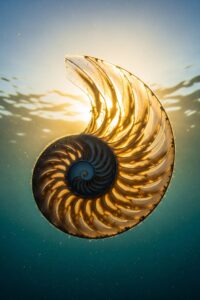
Photo: Why Every Track Runs Counterclockwise — And the Universe Agrees

Why Every Track Runs Counterclockwise — And the Universe Agrees

In 1896, Olympic runners went clockwise — and left the track limping. Within two decades, the world standardized counterclockwise running forever. The reason lies in human biomechanics. But the stranger discovery? That same rotational preference seems to echo far beyond our bodies, into the orbital paths of planets, moons, and possibly galaxies themselves.

Read More
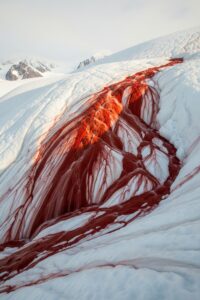
Photo: The Ancient Blood Bleeding From Antarctica's Ice

The Ancient Blood Bleeding From Antarctica’s Ice

Somewhere beneath Taylor Glacier in Antarctica, a pocket of brine has been sealed in total darkness for five million years. When it finally escapes, it bleeds rust red across the ice. And living inside it — without sunlight, without oxygen — are microbes running on rust chemistry. What they're telling us about life on other worlds is even stranger.

Read More
Photo: How One Bad Night of Sleep Hijacks Your Hunger Hormones

How One Bad Night of Sleep Hijacks Your Hunger Hormones

One poor night of sleep is all it takes to throw leptin and ghrelin — your fullness and hunger hormones — into dangerous imbalance. Add a cortisol surge and blunted insulin sensitivity, and your body starts storing fat instead of burning it. Studies show sleep-deprived adults consume 385 extra calories daily. Not a willpower problem. A biology problem.

Read More
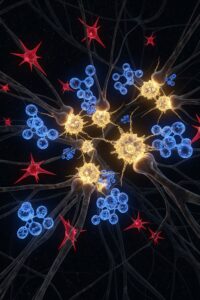
Photo: A Sour Candy Can Interrupt a Panic Attack Mid-Spiral

A Sour Candy Can Interrupt a Panic Attack Mid-Spiral

Clinicians are recommending sour candy as a rapid panic circuit-breaker — and the neuroscience behind it is surprisingly solid. When citric acid floods your senses, your brain literally cannot sustain a fear spiral at the same time. The amygdala loses its grip in seconds. Here's exactly what's happening inside your head when the panic starts — and why a piece of candy might matter more than you'd think.

Read More
Photo: The Man Who Found T. Rex Wore a Fur Coat to Do It

The Man Who Found T. Rex Wore a Fur Coat to Do It

In 1902, a Kansas farmboy turned fossil hunter dropped to his knees in the Montana badlands — and pulled the most famous predator in history out of the earth. Barnum Brown discovered the first Tyrannosaurus rex skeleton ever found, changed paleontology forever, and somehow did it all while wearing a full-length fur coat. This is his story.

Read More
Photo: Metal Foam Armor Stops Bullets at 70% Less Weight

Metal Foam Armor Stops Bullets at 70% Less Weight

A bullet engineered to pierce steel meets its match in a material that looks like a metallic sponge. Researchers at North Carolina State University have developed composite metal foam armor that stops armor-piercing rounds at 70% less weight than standard steel plate — and its implications stretch from the battlefield all the way to deep space.

Read More
Photo: The Brazilian Doctor Who Accepts Eggs Instead of Fees

The Brazilian Doctor Who Accepts Eggs Instead of Fees

He carries no invoice book and charges no fees. In the remote highlands of Minas Gerais, Dr. Douglas Ciríaco walks into communities that Brazil's healthcare system forgot — and accepts eggs, mangoes, and warm bread as payment. In a country where 45 million people lack adequate medical access, one doctor is practicing something older than medicine: human dignity.

Read More
Photo: The Tiny Harness That Taught a Broken Fish to Swim Again

The Tiny Harness That Taught a Broken Fish to Swim Again

When a goldfish lost the ability to swim upright, its owner didn't give up — they built a tiny flotation harness from foam and tubing and watched it level out for the first time in weeks. Behind that act of ingenuity lies a fascinating and surprisingly complex piece of biological engineering: the swim bladder, a gas-filled organ that controls buoyancy with extraordinary precision.

Read More
Photo: Supermoon: How 30% More Brightness Rewrites Nature

Supermoon: How 30% More Brightness Rewrites Nature

When the Moon reaches perigee on the same night as a full moon, it hangs 30% brighter in the sky — and the natural world notices. Barn owls hunt with deadly precision, migrating songbirds delay their departures, and coastal tides surge with extra gravitational pull. The supermoon isn't just a spectacle. It's an ecological event.

Read More