THIS AMAZING WORLD

The Most Amazing Stories
From Around The World

Incredible inventions. Unbelievable animals.
Breakthrough research. New wonders every week.

This Amazing World
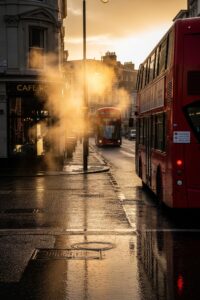
A red London double-decker bus on a wet city street at dawn beside a café

Coffee Grounds Powered London Buses on Real Routes

London drinks roughly 200,000 cups of coffee before most cities finish breakfast. A company called Bio-Bean asked what would happen if the spent grounds didn't go to landfill. The answer: a biofuel that helped power the city's red double-decker buses on real routes, with real passengers, running partly on yesterday's flat white.

Read More
This Amazing World

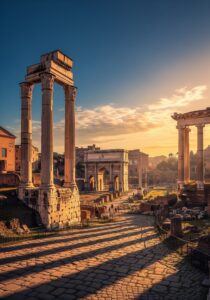
How Did Ancient Rome Fall? The Real Story Behind 476 CE

The textbook says Rome fell on 4 September 476 CE. The historians say it took three centuries, three plagues, a volcanic winter, and a currency that lost 95% of its silver.

Read More
A massive polar bear standing at an Arctic shoreline staring across open water where ice once stretched

The Ice Is Gone. Now What Does a Polar Bear Do?

Arctic sea ice is melting three to four weeks earlier than it did in the 1980s — and polar bears are paying the price. These animals were engineered by evolution to hunt on frozen seas. But the ice is disappearing faster than any adaptation can keep up with. What happens to an apex predator when its entire ecosystem quietly dissolves?

Read More
Close-up of a massive hippo emerging from murky African river water at dusk

The Hippo Makes Its Own Sunscreen — And That’s the Least Weird Thing About It

That reddish liquid seeping from a hippo's skin isn't blood — and it isn't sweat. It's a self-manufactured sunscreen unlike anything else in the animal kingdom. But the skin secretion is just the opening act. Beneath it lives a creature built like a biological tank, capable of snapping a boat in two and walking along riverbeds like it's taking a casual stroll. You've been underestimating hippos your entire life.

Read More
This Amazing World

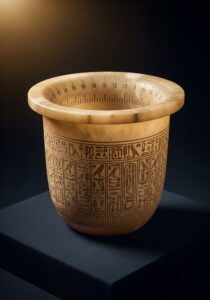
How Did Ancient People Tell Time Before Clocks?

Before clocks, people read the sun, the stars, dripping water and burning candles. Here is the global story of how ancient civilizations told time.

Read More
Bald eagle mother leaning forward attentively over eggs in a large nest

How Bald Eagles Turn Their Eggs — And Why It Matters

High in a California mountain nest, a bald eagle named Jackie shifts her weight and tilts — almost imperceptibly. She's turning her eggs. During a 35-day incubation, eagle parents reposition each egg multiple times daily, using a bare, blood-vessel-rich brood patch to distribute warmth with quiet precision. It's meticulous parental work that almost no one notices.

Read More
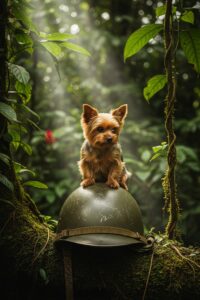
Tiny Yorkshire Terrier sitting among WWII soldiers in a jungle warzone camp

The $6 Dog Who Changed History From a Foxhole

She weighed four pounds. She was found abandoned in a jungle foxhole in the middle of World War II. A soldier paid $6.44 for her — and had no idea he'd just bought a piece of history. Smoky the Yorkie survived air raids, flew combat missions, and then did something no dog had ever been documented doing before. This is the story they left out of the history books.

Read More
This Amazing World

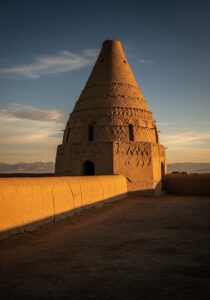
How Did Ancient People Make Ice in the Desert?

From Persian yakhchals to Bengali clay pans, ancient engineers froze water in the desert using radiative cooling, evaporation, and brilliant insulation.

Read More
This Amazing World

How Did Ancient People Get Salt? 4 Methods That Built Empires

Ancient people got salt in four overlapping ways — sea evaporation, inland brine springs and wells, rock-salt mining, and plant-ash leaching — and built the world's first long-distance trade routes around it.

Read More
This Amazing World

How Did Ancient People Drink Water Safely?

From Egyptian alum and Sanskrit charcoal filters to Roman aqueducts, Persian qanats and the new science of Maya reservoirs — how ancient civilisations turned river water into safe drinking water.

Read More
A white-faced capuchin monkey crouched at a forest stream edge holding a piece of fruit

Capuchin Monkeys Washing Fruit: A Glimpse of Culture

A wild capuchin picks up a mango, walks to the water's edge, and scrubs it clean before eating. Not because anyone taught it. And here's the strange part: not every monkey in the group does it. That selective gap is what turns a habit into something closer to culture.

Read More
This Amazing World

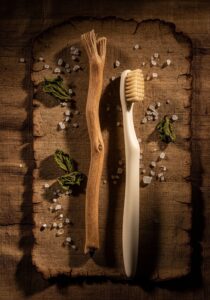
How Did Ancient People Brush Their Teeth? A 7,000-Year Story

Long before nylon bristles and fluoride, Babylonians chewed twigs, Egyptians ground pumice and mint into paste, and Romans rinsed with imported urine — and the skeletons they left behind prove it actually worked.

Read More