How a Female Shrimp Carries and Tends Hundreds of Eggs
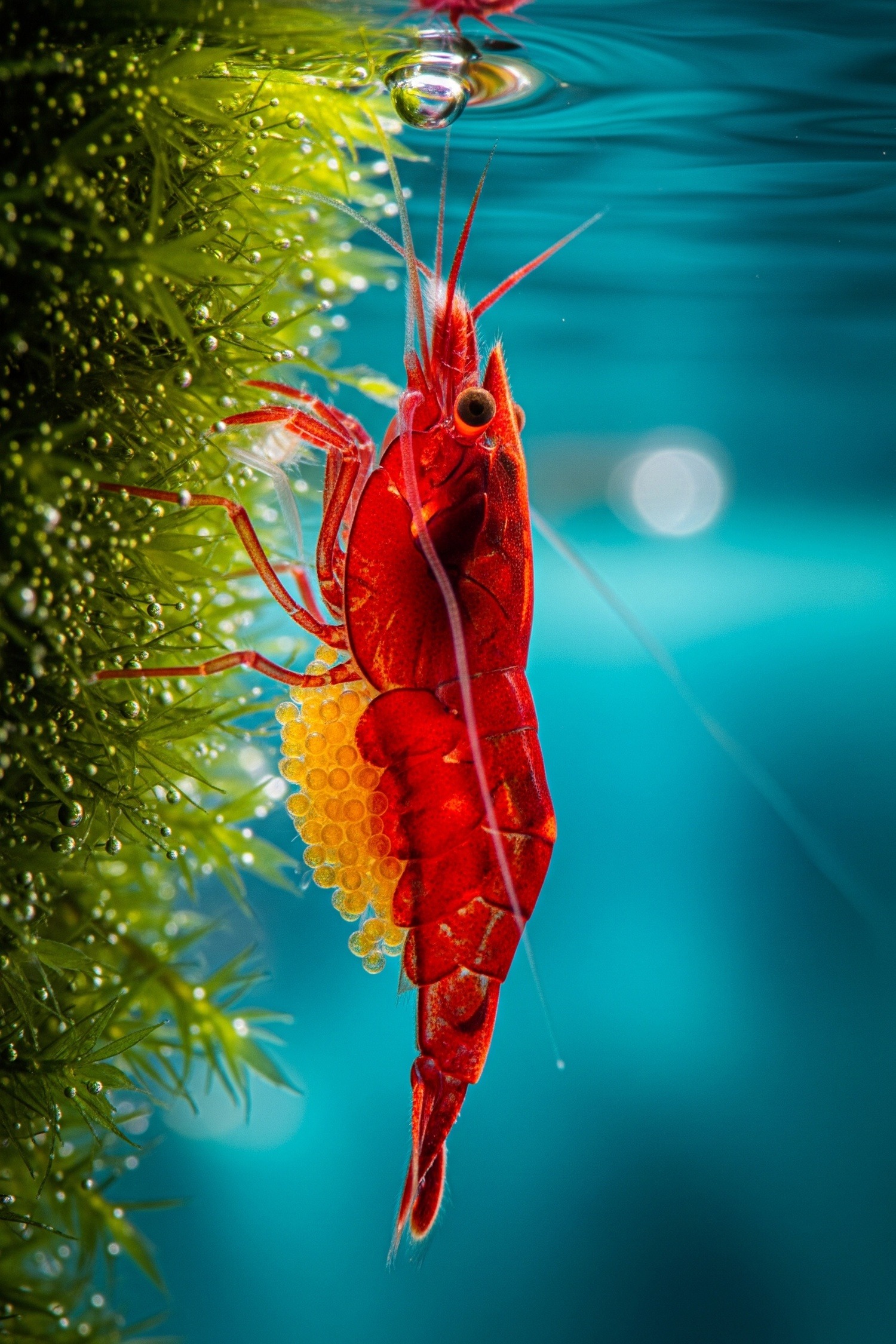
Hundreds of lives, cradled by something the size of your thumb. A female shrimp carrying eggs tucks her entire clutch beneath her abdomen, attached to feathery limbs called pleopods, and fans them continuously with a wave-like rhythm that looks, unnervingly, like breathing. No arms. No nest. Just legs, repurposed by evolution for a single, relentless task — and we’ve barely noticed.
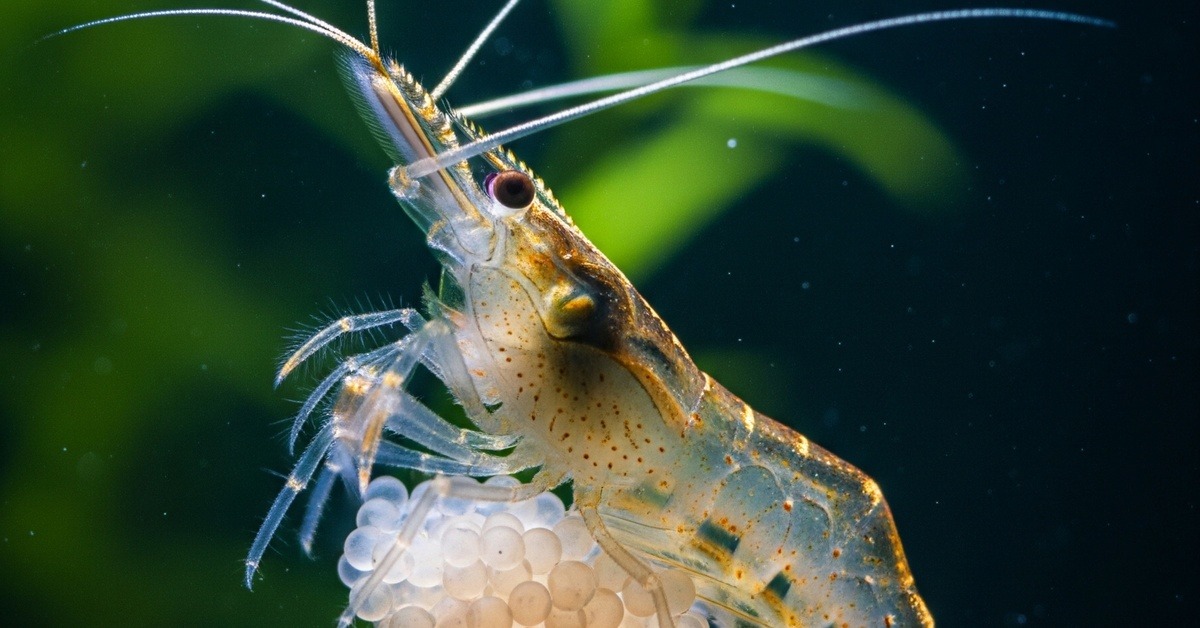
She’s everywhere. We eat her by the ton, keep her in glass tanks for decoration, pass her through our fingers without a second thought. But look closely — really closely — at a gravid female, and you’ll see something that stops you cold. Hundreds of translucent eggs, each one pulsing faintly with life, cradled and tended by a creature we’ve systematized into invisibility. How did something this intricate happen in plain sight?
Key Facts
- Neocaridina davidi, the cherry red shrimp, typically carries 20 to 30 eggs per clutch (aquaculture industry data, 2022).
- Commercial Pacific white shrimp (Litopenaeus vannamei) can produce up to 250,000 eggs per spawning event.
- Active pleopod fanning increases oxygen delivery to inner-layer eggs by more than 40% (University of Plymouth Marine Institute, 2011).
- Tropical species hatch in as few as 12 days at peak temperatures, while cold-water species can brood up to 8 weeks at 5-8C.
- Global shrimp aquaculture production exceeded 5.8 million metric tons in 2022 (FAO, 2023).
In short: A female shrimp carrying eggs tucks her clutch beneath her abdomen on feathery legs called pleopods, fanning them continuously to deliver oxygen. That fanning boosts oxygen to inner eggs by over 40%, and a single Neocaridina female can brood three to five clutches yearly, tending hundreds of eggs from fertilization to hatching.
The Biology Behind a Female Shrimp Carrying Eggs
When a female shrimp is ready to reproduce, the sequence moves fast. She molts — shedding her exoskeleton — and releases pheromones into the water. Males detect the chemical signal almost instantly. Mating happens within hours of the molt, while her new shell is still soft. The fertilized eggs are then transferred to the underside of her abdomen, where they attach in dense clusters to her pleopods — the specialized swimming legs that, in brooding females, become something closer to a nursery than a locomotive tool.
Research from the Marine Biological Laboratory in Woods Hole, Massachusetts, established through systematic shrimp reproductive studies in the 1990s that the adhesion between eggs and pleopod setae — the tiny hair-like structures — is remarkably secure. The eggs don’t fall. They don’t drift. They stay locked in place through turbulence, predator evasion, and weeks of continuous movement. Here’s the thing: this isn’t just mechanical anchoring. The adhesive itself is selectively permeable, allowing oxygen to reach the embryos while keeping harmful pathogens at a distance (and this matters more than it sounds, because a single fungal infection can cascade through the entire clutch in 48 hours).
Clutch size varies enormously by species. Neocaridina davidi — the cherry red shrimp beloved by aquarium hobbyists worldwide — typically carries between 20 and 30 eggs per clutch.
Litopenaeus vannamei, the Pacific white shrimp that dominates global aquaculture, can produce 100,000 to 250,000 eggs in a single spawning event, though commercial breeding conditions differ radically from brooding in the wild. Mid-range marine species like common caridean shrimp tend to brood between a few hundred and a few thousand eggs, depending on their body size and the temperature of their environment. Warmer water accelerates development. Cold water slows it. The female has no control over that variable — she simply tends what she has, for as long as it takes.
Watch a berried female — the aquarist’s term for a shrimp visibly carrying eggs — in a home tank and the pleopods never stop. Not for an hour. Not for a night. The fanning is continuous and rhythmic, a constant microwave of oxygenated water washing over the clutch. Stop it, and the eggs suffocate. She doesn’t stop it. Not once.
Comparing Shrimp Parental Care to Other Small Creatures
Why does a brooding shrimp’s strategy matter when so many other animals don’t care for their young at all? Because the comparison itself reveals something that standard evolutionary biology textbooks skip over. Many bony fish broadcast their eggs into open water and never return. Oysters release larvae into the current and leave survival entirely to chance. The shrimp, by contrast, maintains continuous physical contact with her eggs from fertilization to hatching — a brooding strategy that, in the invertebrate world, is far from universal.
Consider how the pygmy seahorse, a creature equally easy to overlook, demonstrates the same theme: small animals doing extraordinary things that we’ve historically failed to notice. If you haven’t read about how a pygmy seahorse disappears inside coral, the parallel between invisible complexity and overlooked biology runs deeper than you’d expect. Evolution keeps solving the same problem — protect offspring in a hostile world — with radically different tools. Shrimp got repurposed legs. Seahorses got a pouch. Neither solution looks impressive until you slow down and actually look.
The fanning behavior itself has a measurable effect. Studies conducted at the University of Plymouth’s Marine Institute in 2011 quantified the oxygen gradient across shrimp egg clutches and found that active pleopod fanning increased oxygen delivery to inner-layer eggs — those farthest from the surrounding water — by more than 40% compared to clutches where fanning was experimentally reduced.
Those inner eggs, without active maternal ventilation, showed significantly higher mortality rates within 72 hours. The implication is stark: the fanning isn’t decorative. It’s the difference between a viable clutch and a dead one.
But here’s what really stops you: a gravid female, when stressed by a predator or a sudden change in water chemistry, doesn’t abandon the clutch — she flees with it. The weight slows her down. She becomes more vulnerable. The eggs cost her survival odds in real time. And still, she carries them. Watching a species prioritize its offspring over its own protection odds, you stop calling it mere instinct.
Water Temperature, Species Range, and Hatching Time
Brooding duration is one of the most temperature-sensitive variables in shrimp reproduction. In tropical species — particularly those living in shallow reef environments or warm freshwater streams — eggs hatch in as few as 12 to 17 days. In cold-water species, the same developmental process can stretch to six or even eight weeks. This isn’t lethargy; it’s chemistry. Lower temperatures slow the enzymatic reactions driving cell division inside each egg.
The Smithsonian Tropical Research Institute has documented brooding durations across multiple caridean species in Panamanian waters, noting that females brooding in the dry season — when water temperatures peak — hatched clutches measurably faster than those brooding during cooler, wetter months. Smithsonian researchers have consistently highlighted how these thermal sensitivities make shrimp valuable biological indicators. A population’s reproductive timing can tell you a great deal about the health of its surrounding environment without a single water sample being taken.
A female shrimp carrying eggs during a temperature spike faces a compounding problem. The eggs develop faster, yes — but warmer water also holds less dissolved oxygen, which means the fanning effort required to deliver adequate oxygen to the clutch actually increases precisely when the female is already under thermal stress. It’s a physiological double-bind that researchers tracking wild Palaemon serratus populations along the Atlantic coast of France in the early 2000s couldn’t ignore. Egg mortality rates climbed sharply during marine heat events, not because the embryos couldn’t tolerate warmth directly, but because the females couldn’t fan fast enough to compensate for the oxygen deficit in superheated water.
Climate change is quietly reshaping this calculus. Warmer baseline ocean temperatures mean more frequent oxygen-depleted brooding conditions. Shorter brooding windows mean larvae hatch before the seasonal plankton blooms they depend on for first food. The timing, refined over millions of years, is being nudged out of alignment — one degree at a time.
What Hatching Looks Like — And What the Female Does After
When the eggs are ready to hatch, the process is rapid and choreographed. The female fans her pleopods with noticeably increased intensity in the hours before release. In many caridean species, hatching happens at night — a strategy that reduces predation risk on the newly released larvae, which are tiny, translucent, and essentially defenseless. Research published by Swansea University’s College of Science in 2018 confirmed that Palaemonid shrimp larvae released during dark hours in estuary environments had significantly higher short-term survival rates than those released during daylight. The timing isn’t coincidental. Her body may be responding to light-level cues, timing the final release accordingly.
Once the larvae leave the pleopods, they’re on their own — carried by currents into the water column, where they’ll pass through a series of larval stages before resembling anything like an adult shrimp. The female doesn’t shepherd them after that point.
What happens to the female immediately after hatching is equally striking. In many species, she molts again within 24 to 48 hours of releasing the clutch — resetting her reproductive cycle. Males, which have been tracking her pheromone output throughout the brooding period, are often already waiting. The cycle can begin again almost immediately. In optimal conditions, a single Neocaridina female can complete three to five brooding cycles in a single year. That’s potentially 150 individual eggs brought from fertilization to hatching, tended continuously, per female, per year — in a tank you might keep on a bookshelf.
The molt-to-molt reproductive cycle means a female in good health rarely has a shell that’s fully hardened. She spends much of her adult life in a state of partial vulnerability, prioritizing reproduction over the protection a fully calcified exoskeleton would provide. It’s a trade-off built into the species’ biology, and it tells you something about the evolutionary pressure driving it: getting the eggs to hatch matters more than the female’s own armoring.
Where to See This
- Any freshwater aquarium stocked with Neocaridina davidi (cherry red shrimp) — widely available at pet stores globally — offers the best close-up view of a brooding female, particularly in well-planted tanks where females feel secure enough to remain visible. Best observed year-round in a home aquarium maintained at 22–26°C.
- The Monterey Bay Aquarium in California (montereybayaquarium.org) regularly features live shrimp exhibits and deep-sea invertebrate displays where brooding behavior can be observed in naturalistic conditions.
- For those who want to go deeper: the Marine Biological Laboratory in Woods Hole, Massachusetts, publishes accessible research on crustacean reproductive biology, and their online resources are a strong starting point for understanding pleopod ventilation mechanics in full scientific detail.
By the Numbers
- 20–30 eggs per clutch in Neocaridina davidi (cherry red shrimp), the most commonly kept freshwater shrimp species globally (aquaculture industry data, 2022)
- Up to 250,000 eggs per spawning event in commercial Pacific white shrimp (Litopenaeus vannamei), the world’s most farmed crustacean
- 40% increase in oxygen delivery to inner-layer eggs from active pleopod fanning vs. suppressed fanning (University of Plymouth Marine Institute, 2011)
- 12 days minimum brooding duration in tropical species at peak water temperatures; up to 8 weeks in cold-water species at 5–8°C
- Global shrimp aquaculture production exceeded 5.8 million metric tons in 2022, making shrimp the most traded seafood product by value worldwide (FAO, 2023)
Field Notes
- In 2019, marine biologists observing wild Stenopus hispidus (banded coral shrimp) in the Red Sea documented a female that continued fanning her egg clutch for 11 minutes after a predatory fish passed within centimeters — despite having flattened herself against the reef in an apparent threat-freeze response. The fanning never fully stopped, even under active predator pressure.
- Female shrimp can detect and remove unfertilized or fungus-infected eggs from the clutch individually — using their chelipeds (clawed legs) to pluck out compromised eggs before the infection spreads. This selective grooming behavior is rarely discussed outside specialist literature but has been observed across multiple caridean species.
- The color of a shrimp’s egg clutch changes as development progresses — from a dense, opaque mass at fertilization to increasingly transparent eggs near hatching, as the embryos’ own bodies become visible through the egg membrane. Experienced aquarists use this color shift to predict hatch timing within 24–48 hours.
- Researchers still can’t fully explain how a female shrimp coordinates the fanning rhythm across multiple pleopods simultaneously, given her relatively simple nervous system. The neurological mechanism behind continuous, regulated ventilation in crustaceans remains an open question — and the answer might reshape our understanding of invertebrate motor control.
Frequently Asked Questions
Q: How long does a female shrimp carrying eggs take to hatch her clutch?
Hatching time depends on species and water temperature. In warm-water freshwater species like Neocaridina davidi, a female shrimp carrying eggs typically sees them hatch within 21 to 28 days at around 24°C. Tropical marine species can hatch in as few as 12 days. Cold-water species may brood for up to eight weeks. Temperature is the single biggest variable — warmer water speeds development, cooler water slows it significantly.
Q: Why does a brooding shrimp fan her eggs constantly — can she stop?
The fanning isn’t optional. The pleopods push oxygenated water across the egg clutch continuously because the eggs buried deepest in the mass can’t access sufficient dissolved oxygen through passive diffusion alone. Without active ventilation, those inner-layer eggs suffocate and die within hours. The female’s nervous system appears to maintain the fanning rhythm even during stress or partial threat-freeze responses — it’s a deeply automated behavior that the female physiologically cannot simply switch off without catastrophic egg mortality.
Q: Do shrimp abandon their eggs if disturbed or stressed?
A common misconception is that shrimp will drop their egg clutch when startled. In reality, the eggs are physically anchored to the pleopod setae with a sticky adhesive secreted at fertilization — they can’t simply be dropped on command. What does happen under extreme stress is that some females may molt prematurely, which detaches the egg mass and effectively ends the brooding cycle. This is why aquarists are advised to minimize disturbance to gravid females — the risk isn’t abandonment, but stress-triggered early molting that destroys the clutch entirely.
Editor’s Take — Alex Morgan
We’ve built an entire global industry around boiling these animals, and most of us have never once considered what the female was doing 20 minutes before she reached the pot. That’s not sentiment — it’s a gap in attention. The fanning behavior alone, a 40% oxygen delivery differential from a creature with no brain structure we’d recognize as sophisticated, should be sitting in every introductory biology textbook. It isn’t. We reserve that kind of coverage for animals that are large, or cute, or endangered enough to make the news. The shrimp just keeps fanning, indifferent to our categories.
The ocean is full of animals doing intricate, ancient things that we’ve simply decided don’t count because they’re small, or cold-blooded, or commercially inconvenient to think about too carefully. A female shrimp carrying eggs, fanning her pleopods through the dark hours of a warm tide, is running a process that predates vertebrate life on this planet by hundreds of millions of years. She doesn’t need our recognition. But something shifts when you finally give it — because once you’ve watched those legs moving, steady and ceaseless, you start to wonder what else you’ve been too busy to notice.
Illustrations are AI-generated. Article fact-checked and human-edited. Our editorial standards.