How Humans Survived the Toba Supervolcano
New genomic and archaeological evidence overturns the Toba doomsday story: humans didn't nearly go extinct — they adapted with fishing, bows, and mobility.
Read MoreTHIS AMAZING WORLD
Incredible inventions. Unbelievable animals.
Breakthrough research. New wonders every week.


New genomic and archaeological evidence overturns the Toba doomsday story: humans didn't nearly go extinct — they adapted with fishing, bows, and mobility.
Read More
Around 80 two-tonne stones dragged 240 km from the Preseli Hills to Salisbury Plain — how they made the journey, and how a hand-sized boulder closed a 100-year debate in 2025.
Read More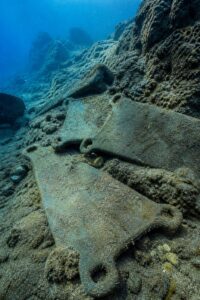
For 30 years no one knew where the Uluburun ship's ton of tin was mined. In 2022, isotope science traced it to mines in Uzbekistan and Anatolia — and started a fresh scholarly fight.
Read More
Recovered from a sacred bog at El Manatí in Veracruz, the oldest rubber balls in the world date to ~1700–1600 BC — and new 2023 science just overturned how we thought the Olmec made them.
Read More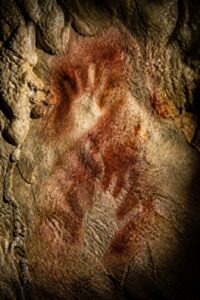
The famous claim that Neanderthals painted the El Castillo hand stencils is half-true and hotly disputed. Here's what the dates really say — and why scientists still disagree.
Read More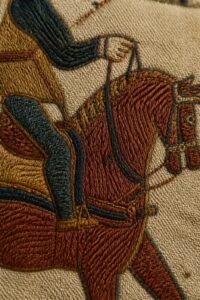
The world's most famous 'tapestry' isn't woven at all - it's an embroidery. Here's why the name is a misnomer, how it was made, and where to see it in 2026-27.
Read More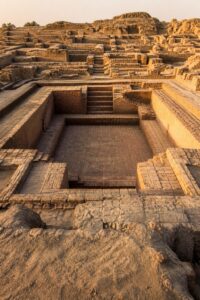
Around 2500 BCE, Bronze-Age Indus cities had private flush toilets and covered municipal sewers — some two thousand years before Rome's first great drain.
Read More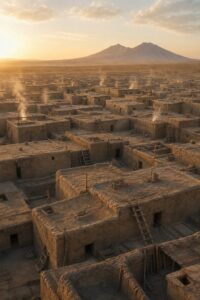
Çatalhöyük, a 9,000-year-old town on Turkey's Konya Plain, had no roads or doors — just mudbrick houses entered through the roof. New 2025 DNA evidence reframes why.
Read More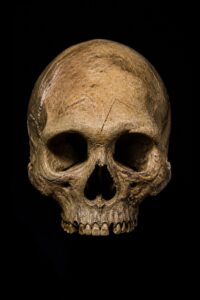
A child's skull rebuilt from 200 fragments, dated to 160,000 years, carries a fully modern braincase and the earliest solid evidence of people caring for their dead.
Read More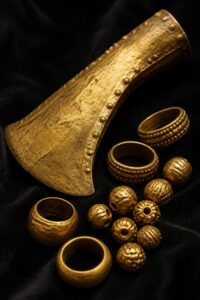
On the Black Sea coast, a 1972 accident uncovered the oldest crafted gold on Earth — six kilograms buried two millennia before the Great Pyramid, with a discovery that rewrites who wore it.
Read More
The popular story blames poorly soldered tins for poisoning Franklin's 129 men. Forty years of forensic science tells a far stranger, multi-cause tale.
Read More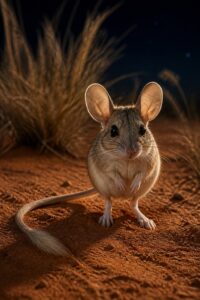
How Notomys alexis, a tiny Australian desert rodent, lives without ever drinking — by making water from dry seeds and holding the mammal record for the most concentrated urine.
Read More