Why Do Cats Knead? The Science of Making Biscuits
Veterinary behaviorists agree cat kneading begins at the milk bar. The rest — scent glands, neoteny, bonding, and the popular myths — is more interesting than the usual answer.
Read MoreTHIS AMAZING WORLD
Incredible inventions. Unbelievable animals.
Breakthrough research. New wonders every week.


Veterinary behaviorists agree cat kneading begins at the milk bar. The rest — scent glands, neoteny, bonding, and the popular myths — is more interesting than the usual answer.
Read More
Velvet worms fire glue jets at 5 m/s and can lock prey down in under a second — but they are completely harmless to people. Here's the real biology behind the slime cannon.
Read More
A landmark 2025 Consumer Reports study compared prices across three dozen U.S. retailers — and Costco won every single test market, beating Walmart by a stunning 21 percent. With grocery costs still climbing since 2020, the counterintuitive math behind a $65 membership fee may be the most important financial decision families can make right now.
Read More
A clear, sourced guide to the world's beetle types: how many species exist, the four suborders, the biggest families, size extremes, and why beetles took over the planet.
Read More
For 50 years, biology said the woodpecker skull was a tiny biological helmet. A 2022 high-speed study proved that wrong — and the real reason is stranger.
Read More
A dog named Hank walked 11 miles across Memphis to reach a porch he'd known for days. The story sits on top of a real scientific puzzle: how dogs navigate home using scent memory, possible magnetic sensitivity, and spatial reasoning that researchers still can't fully explain. The mechanisms are measurable. The full map inside a dog's head is not.
Read More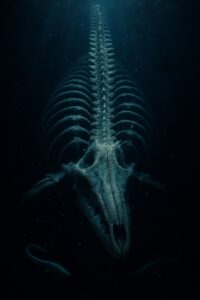
A whale dies. Its body sinks for hours through cold darkness until it hits the seafloor — and then something extraordinary happens. What follows isn't decay. It's the birth of an entire ecosystem that can last 100 years, run on toxic gas, and host creatures science only just discovered. Welcome to the most fascinating event in the deep ocean.
Read More
A Pakistani teenager couldn't stand straight. Her spine had curved so severely that normal life had been stolen from her — until a surgeon in India agreed to help. The catch? These two countries have fought four wars. Travel between them is nearly impossible. And yet, somehow, she walked out standing upright. This is that story.
Read More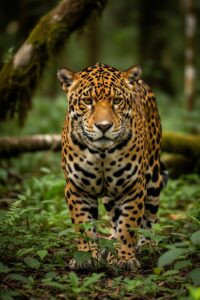
A 2024 national census put the jaguar population in Mexico at 5,326 — the highest confirmed count in decades and nearly 30% above the 2010 figure. The recovery wasn't an accident. It came from protection corridors, camera traps, DNA from scat, and Indigenous communities turning their lands into buffer zones for the Americas' largest cat.
Read More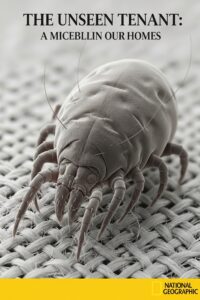
Roughly two million dust mites can share a single mattress with you tonight. They engineer their survival around one thing: moisture from your body. A 2005 Kingston University study found a fix that costs nothing and contradicts everything your parents told you about tidiness. Leave the bed unmade.
Read More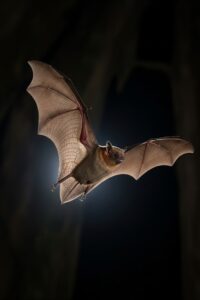
Flying squirrels glide. Sugar gliders drift. But bats actually fly — and it all comes down to what is technically a very weird hand. Stretched between freakishly elongated finger bones is a membrane that took 50 million years to perfect. The result? The fastest self-powered flight ever recorded in any animal, and nearly 1,400 species quietly holding entire ecosystems together.
Read More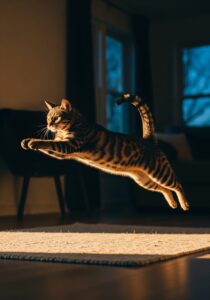
The 3 a.m. sprint across your bed has a name — a Frenetic Random Activity Period — and a surprisingly honest scientific answer. Here's what we know, what we don't, and the one change that means it's time to call the vet.
Read More