Why Do Cicadas Come Out Every 17 Years? The Real Science
Periodical cicadas spend 99.5% of their lives underground, then surface together on a 17-year prime-number clock. Here is how they count — and why.
Read MoreTHIS AMAZING WORLD
Incredible inventions. Unbelievable animals.
Breakthrough research. New wonders every week.


Periodical cicadas spend 99.5% of their lives underground, then surface together on a 17-year prime-number clock. Here is how they count — and why.
Read More
The cat righting reflex looked like it broke the laws of physics for two centuries — until a French scientist filmed it in 1894. Here is the elegant trick, and why cats don't always land on their feet.
Read More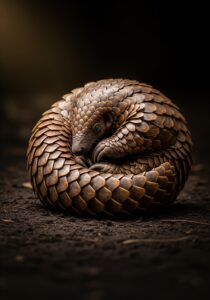
All eight pangolin species are endangered. Inside the industrial trade in scales and meat, why their defensive 'ball' makes them easy prey for poachers, and what changed in 2025.
Read More
Meet the great horned owl, North America's biggest 'earless' owl — strong enough to carry off prey heavier than itself, fearless enough to eat skunks, and silent enough to sneak up on a mouse in the snow.
Read More
Crows really do score like 5-to-7-year-olds on a famous reasoning test — but only that test, and only that species. The honest neuroscience is even more impressive.
Read More
A praying mantis can technically bite, but it's almost always painless and far rarer than people think. Here's what actually happens when one grips your hand.
Read More
Out of the flat Wyoming prairie, with nothing to warn you it's coming, a 386-foot tower of ribbed rock simply erupts from the earth. Geologists have debated its origin for over a century. Indigenous nations had an answer long before scientists arrived. And the two explanations might not be as different as we assumed.
Read More
For coastal communities from northern Europe to the Pacific Northwest, driftwood wasn't debris. Folklore insisted the sea deliberately chose which pieces survived the storm and reached the shore. A log that washed up whole was a delivery, a sign you'd been selected. The belief runs older than written charts.
Read More
In 2011 an American blogger in Kunming photographed what looked like a flawless Apple Store. Then she found more of them. Inspectors eventually counted 22 fake Apple Stores in a single city, and the strangest detail wasn't the storefronts. It was the staff who genuinely believed they worked for Apple.
Read More
In 2011, a retired Brazilian fisherman named João Pereira de Souza nursed an oil-soaked Magellanic penguin back to life and released him into the sea. The following June, the penguin — now named Dindim — came back. Then again. Then again. For nearly a decade, he crossed 5,000 miles of open ocean to return to the one man who saved him.
Read More
For decades, one Dead Sea Scroll fragment was simply set aside — too darkened by age and mineral-laced sand to read. Then scientists flooded it with invisible light, and ancient Hebrew letters emerged from the void. What they found suggests scripture itself was still being written. And this may not be the last secret those desert caves are hiding.
Read More
One locust eats its own body weight in food every single day. Harmless, right? Now multiply that by 80 million — packed into a single square kilometer, moving like a living storm. The 2020 outbreak in East Africa was the worst in 70 years. Ancient Egyptians wrote about this. The Bible, the Quran, Sanskrit texts. Thousands of years of human civilization, and we still haven't stopped them.
Read More