THIS AMAZING WORLD

The Most Amazing Stories
From Around The World

Incredible inventions. Unbelievable animals.
Breakthrough research. New wonders every week.

This Amazing World
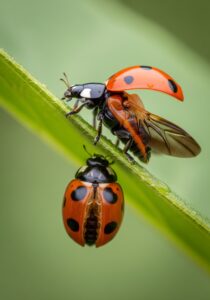
A freshly emerged seven-spotted ladybug drying its wings beside an empty pupal case on the underside of a green leaf

Ladybug Life Cycle Facts: From Egg to Spotted Beetle

A ladybug spends 4 to 8 weeks moving from a 1 mm yellow egg through an alligator-shaped larva and an immobile orange pupa to the polka-dotted adult — with planned sibling cannibalism and four hunter instars along the way.

Read More
A Zapotec woman in Juchitán, Oaxaca holding hand-selected ears of small native zapalote chico corn over a clay seed-storage vessel

Oaxaca Women Save Native Corn Seeds: Zapalote Chico

A women-led cooperative in Juchitán banks the seeds of zapalote chico, a rare native maize — the grassroots model behind Mexico's 2025 GMO corn ban and 2026 National Native Corn Plan.

Read More
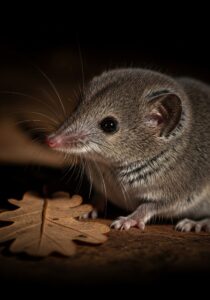
Etruscan shrew (Suncus etruscus), the smallest mammal with the fastest heart rate, foraging in leaf litter

Etruscan Shrew Heart Rate: 1,511 Beats a Minute Explained

At up to 1,511 beats per minute, the Etruscan shrew has the fastest heart of any vertebrate — and that record is the same equation as its four-hour hunger clock.

Read More
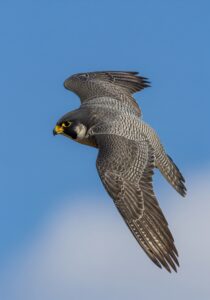
A peregrine falcon in a near-vertical stoop, wings tucked tight against its body, mid-dive against a deep blue sky.

The Fastest Bird in the World: Peregrine Falcon at 242 MPH

The peregrine falcon's 242 mph stoop is the fastest movement of any animal — but the headline hides a richer story about physics, missile-guidance math and one of conservation's greatest comebacks.

Read More
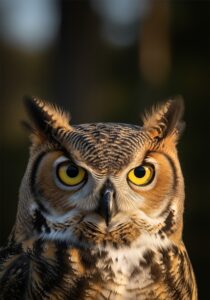
Close-up portrait of a Great Horned Owl with golden eyes against a dark forest background

Owl Facts for Kids: How Silent Night Hunters Really Work

More than just hoots and big eyes — the real science behind silent flight, 270-degree heads, and 3D hearing, with a clean comparison of five owls kids might actually spot.

Read More
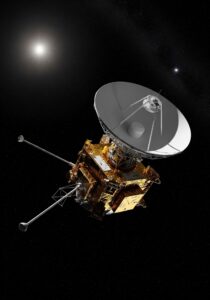
How far is Voyager 1 from Earth — the interstellar probe drifting through deep space, 25.8 billion km away

How Far Is Voyager 1 From Earth? (2026 Light-Day)

As of March 2026 Voyager 1 is ~25.8 billion km from Earth and gaining 1.46 million km a day — about to become the first human-made object one full light-day away.

Read More
Close-up of a black dung beetle perched on a perfectly rounded ball of dung on red African earth at twilight, faint Milky Way visible above.

Dung Beetle Facts: The Insect Guided by the Milky Way

From rolling balls under the Milky Way to saving U.S. ranchers $380 million a year, dung beetles are the planet's strangest and most useful cleaners.

Read More
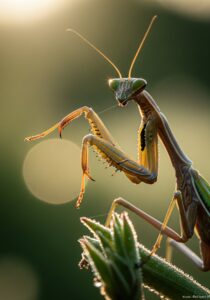
Close-up portrait of an adult Chinese praying mantis on a dewy stem at golden hour, head turned toward the camera.

Praying Mantis Life Cycle: From Ootheca to Garden Predator

From a foam-hardened egg case in January to the autumn adult that lays the next generation, here is the full praying mantis life cycle — with the sibling and sexual cannibalism science most articles skip.

Read More
Close-up of a butterfly perched on a flower with clubbed antennae clearly visible against soft natural light.

Butterfly vs Moth: How to Really Tell Them Apart

The honest answer to butterfly vs moth: a one-minute field test built on antennae and the frenulum, and the surprising truth that butterflies are a single day-flying lineage of moths.

Read More
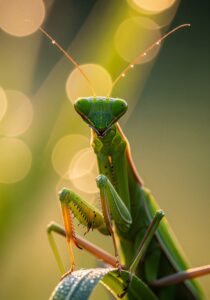
Close-up portrait of a green praying mantis on a dewy stem at dawn, large triangular head and folded raptorial forelegs in classic prayer pose

Praying Mantis Facts for Kids: The Garden Ninja

From five eyes and a swivel head to true 3D vision proven at Newcastle University, here is the real science behind the praying mantis — explained for kids, no myths.

Read More
Close-up frontal portrait of a Common Barn Owl showing its heart-shaped facial disc and large dark eyes

How an Owl Hears a Mouse Under Snow: The Truth About Owl Ears

From Roger Payne's dark-room mouse experiment to Masakazu Konishi's owl headphones — the real science of how an owl locates prey by sound alone, to within one degree of arc, in total darkness.

Read More
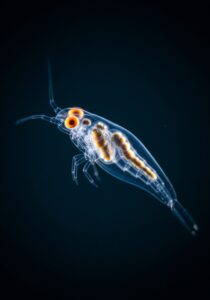
Close-up of the transparent planktonic copepod Copilia showing its two large orange telescope-like eye lenses in dark water

Copilia: The Copepod Scanning Eye That Works Like a TV

Copilia, a 3 mm transparent copepod, may scan the ocean with a single light-receptor swept across a two-lens image — the strangest eye in the sea, explained.

Read More